

Before and after photos are one of the most persuasive tools in the semi-permanent makeup industry. They are designed to capture attention quickly, communicate transformation visually, and create an immediate emotional response. And they do that very well. The problem is not that they are powerful. The problem is that they are often misunderstood.
A polished image can suggest expertise, but it does not always prove it. Beautiful lighting, ideal angles, and freshly completed work can make almost any result appear more refined in the moment. That is why learning how to interpret before and after photos correctly becomes one of the most valuable skills a client can develop. The difference between choosing based on appearance and choosing based on understanding is significant, especially when it comes to correction work. The success of any correction depends on several factors, which we explain in our eyebrow tattoo correction guide.
Correction is not evaluated the same way as fresh application. It involves existing pigment, structural change, and long-term behavior within the skin. That means the images that represent correction must be read differently. They must be studied rather than simply viewed. They must be understood rather than admired.
Not All Transformations Are Correction
One of the first and most important distinctions to make is that not all before and after photos represent correction. A transformation can occur on clean, untouched skin. It can be visually impressive, technically precise, and aesthetically appealing, while still having nothing to do with correction at all.
Correction begins where something already exists. There is pigment in the skin. There is a previous shape. There is history. Without that starting point, the image is not demonstrating the ability to work through complexity. It is demonstrating the ability to create something new. This is why the first question to ask when looking at any before photo is simple: is there actually something to correct? If the starting point appears to be bare skin, the image does not provide meaningful insight into how the artist handles layered pigment, faded tones, or structural shifts that develop over time.
Real correction work shows a real problem first. That problem may not always be dramatic, but it should be visible. It should be identifiable. It should explain why the correction was needed in the first place. Without that clarity, the result becomes less informative. Understanding this difference also reinforces why eyebrow correction requires a different skill set than standard brow application. The starting point defines the process, and in correction, the starting point is never empty. Correction photographs should demonstrate the full range of outcomes possible through eyebrow tattoo redos, refreshes, revisions, and corrections, not merely show newly completed brows under flattering lighting.
The After Photo Is Only Part of the Story
It is natural to be drawn to the after image. It is clean, defined, and often presented in a way that highlights the best possible version of the result. But focusing only on the after can create a distorted understanding of what the work actually represents.
Correction is not about achieving perfection in a single moment. It is about improving what already exists in a way that feels balanced and controlled. This means the after image should not be interpreted as a final destination, but as part of a process. Real correction looks like improvement, not magic. When a result appears overly dramatic without a clear explanation of how that shift occurred, it is worth pausing. Dramatic results are not impossible, but they should be supported by visible reasoning. Without that reasoning, the image may be relying more on presentation than on process.
This is particularly important because most before and after images are captured immediately after the procedure. At that moment, the pigment is at its most defined, the skin is freshly prepared, and the visual clarity is at its peak. This is not how the brows will live long term.

Why Healed Results Matter More Than Immediate Results
Brows do not exist in their immediate state. They exist after healing, after the skin renews, and after the pigment settles into its final tone. This is why healed results carry more weight than fresh ones. A strong correction portfolio should include multiple healed examples. Not just one or two, but a pattern. Consistency across healed work is one of the clearest indicators of real experience. It shows that the approach is not dependent on ideal conditions. It shows that the result holds over time.
One successful result can happen for many reasons. Consistent results across different cases, skin types, and starting points indicate a deeper level of understanding. That understanding is what supports predictable outcomes. This is also why reviewing how eyebrow correction heals over time is essential. Healing reveals what the initial image cannot. It shows how the pigment integrates, how the color stabilizes, and how the structure holds.
Lighting Can Change Everything
Lighting plays a significant role in how brows appear in photographs. It can soften edges, enhance blending, and reduce the visibility of underlying pigment. It can also exaggerate clarity and create a more polished appearance than what is typically seen in everyday conditions.
This does not mean that well-lit photos are misleading by default. It means they should be interpreted with awareness. If every image appears as though it has been captured in controlled, studio-level lighting, it becomes more difficult to understand how the brows will look in real life.
Brows exist in natural light, in mirrors, in movement, and in varied environments. They are not static. They are not consistently framed in ideal conditions. A strong portfolio often includes a range of lighting situations, showing how the work holds up beyond a single controlled setting.
This variation provides a more complete picture. It reduces the reliance on presentation and increases the focus on actual performance.
What Control Looks Like in Correction Work
When evaluating correction work, the most important quality to look for is control. Control is not defined by how dark the brows appear or how bold the transformation is. It is defined by how well the different elements work together.
Control appears in color, structure, and blending. In color, it means the tones feel balanced rather than conflicting. It means the new pigment integrates with what was already present instead of sitting on top of it. If the color appears to be competing with underlying tones, it suggests that the correction may not have fully addressed the original issue.
In structure, control means the brow shape feels intentional. It follows a clear direction. It does not appear overworked or inconsistent. It respects the natural flow of the brow while improving its balance.
In blending, control means the transition between old and new pigment feels connected. There should not be a visible separation between what was there and what has been added. Integration is the goal. When integration is missing, the correction may feel incomplete.
This level of control is what distinguishes thoughtful correction from simple application. It is also why color cannot simply cover color in correction. It must be adjusted in a way that works with the existing pigment, not against it.
Variety Reveals Experience
A portfolio that shows only one type of result provides limited information. Correction work involves a wide range of variables, including different skin types, ages, pigment histories, and levels of complexity. The more variety that appears in the work, the more likely it is that the artist has experience handling different situations.
This variety may include cases with heavier saturation, more noticeable color shifts, or more complex structural changes. These are not imperfections to hide. They are opportunities to demonstrate skill. Difficult cases reveal far more about an artist’s ability than easy ones.
When a portfolio includes multiple types of challenges and shows consistent improvement across them, it becomes easier to trust that the approach is adaptable. Adaptability is essential in correction because no two cases are exactly the same.
Experience Is Reflected in Patterns
Experience is not only measured in years. It is measured in patterns. An experienced correction artist has seen repeated outcomes, recurring pigment behaviors, and similar structural changes across many clients. This repetition creates recognition. Recognition leads to predictability. Predictability leads to more controlled decisions. And controlled decisions lead to better results. This progression is what separates theoretical knowledge from practical experience. Understanding this helps clarify why experience carries such weight in correction work. It is not about time alone. It is about what has been observed and learned during that time.
What the Work Feels Like Matters Too
Beyond the technical elements, there is also an overall feeling to strong correction work. It tends to feel calm, controlled, and intentional. It does not feel aggressive, rushed, or overly heavy. The result appears refined rather than forced. This feeling is subtle but important. It reflects the approach behind the work. Correction is not about applying more pressure or more pigment. It is about making precise adjustments that guide the brows back into balance.
When this approach is consistent, it becomes visible even in still images. The work appears considered. It appears stable. It appears aligned with the long-term behavior of the skin rather than just the immediate appearance.
How to Shift From Reaction to Understanding
The most important shift when viewing before and after photos is moving from reaction to understanding. Instead of asking whether the result looks good, the question becomes whether the result makes sense. Whether the improvement is clear. Whether the process feels consistent across different cases. This shift changes how decisions are made. It reduces the influence of presentation and increases the focus on substance. It creates a more reliable way of choosing an artist, especially in situations where correction is needed.
That is also why reviewing how people transition to a new artist after microblading can provide additional context. It highlights how repeated outcomes lead to new decisions, and how those decisions benefit from deeper understanding.
The Real Takeaway
Before and after photos are not just images. They are information. When interpreted correctly, they reveal how an artist thinks, how they approach complexity, and how consistent their results are over time. Choosing based on the single most impressive image is rarely the strongest decision. Choosing based on consistent, understandable work is far more reliable. Consistency is what carries forward into real results. It is what creates outcomes that hold, evolve, and remain balanced beyond the initial moment.
In correction work, that long-term result is what matters most. A credible eyebrow tattoo correction specialist should be able to show cases with challenges similar to yours and explain what was changed.
Why “Perfect” Can Be Misleading
One of the most common misunderstandings when reviewing before and after photos is the idea that the best result is the most perfect-looking one. In correction, perfection is not the goal. Control is. Balance is. Integration is. When a result appears overly perfect without visible context, it is worth stepping back and asking what is actually being shown.
Perfection in a photograph can be influenced by many external factors. Lighting, angle, skin preparation, and timing all play a role in how the final image appears. A highly polished after photo may look ideal in isolation, but if the before does not clearly show the problem, or if the healed results are not visible, the image provides limited insight into how meaningful the correction actually was. This is why it is more useful to look for work that appears controlled rather than flawless. Controlled work reflects decision-making. It reflects restraint. It reflects an understanding of how far to go and when to stop. These qualities are far more valuable in correction than a visually perfect moment that may not represent long-term reality.
How to Identify True Improvement
Improvement in correction is often subtle rather than dramatic. It may involve neutralizing an unwanted tone, softening a heavy area, refining the structure, or creating a more balanced overall appearance. These changes are not always bold, but they are meaningful.
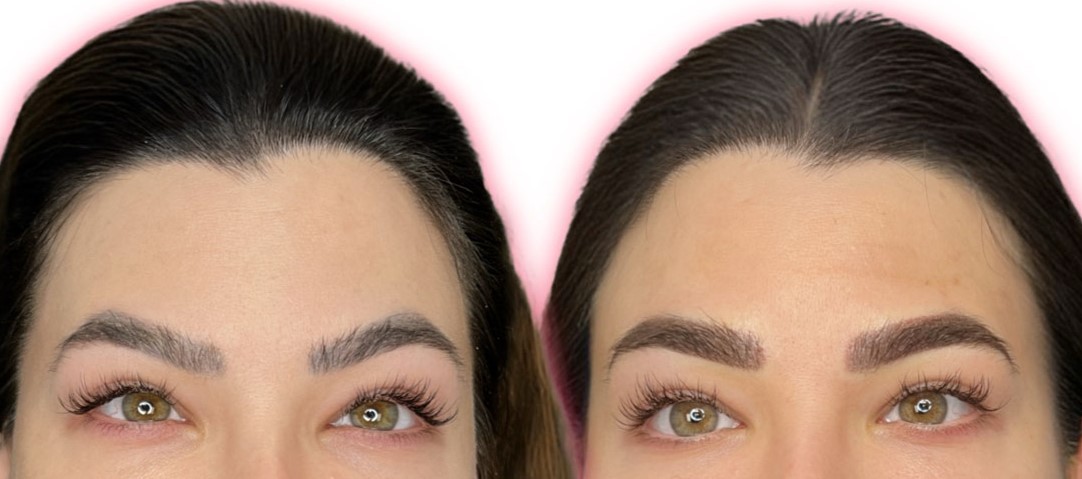
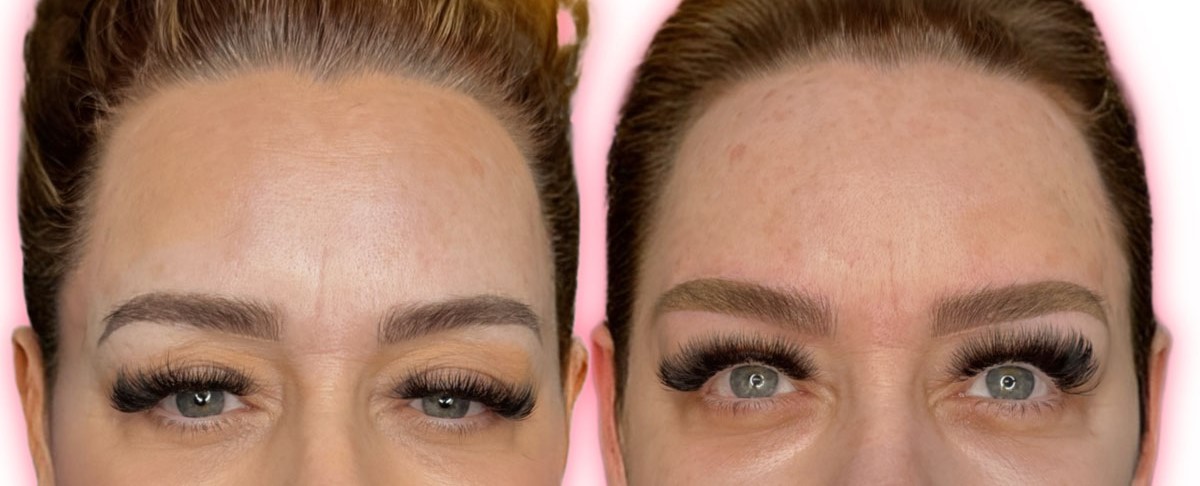
The key is to evaluate whether the after image resolves the issue shown in the before. If the before shows visible gray pigment, does the after show a more balanced tone? If the structure appears uneven, does the after feel more intentional? If the pigment looks layered or heavy, does the after feel more controlled and integrated? Look closely for improvements in symmetry, density, color, and overall structure, especially in examples involving an eyebrow tattoo revision.
True improvement answers the problem. It does not distract from it. When the improvement aligns clearly with the issue, the work becomes easier to trust. When it does not, the image may be relying on presentation rather than resolution. This is also why understanding the difference between aged pigment and poorly executed work is important. Not every correction is about fixing something that was done incorrectly. Many are about managing how pigment has changed naturally over time.
Why Consistency Matters More Than One Strong Image
A single strong result can create a powerful impression, but it does not establish reliability. Correction work should be evaluated across multiple cases. The question is not whether the artist can produce one good outcome. The question is whether they can produce good outcomes consistently. Consistency appears in patterns. Similar levels of control across different clients. Similar quality of healed results. Similar clarity in color and structure. When these patterns repeat, they indicate that the process behind the work is stable.
This stability is what supports predictable results. Without it, each case becomes more uncertain. In correction, predictability is one of the most valuable qualities an artist can offer. It reduces risk and creates confidence in the process.
Recognizing When Work Is Overdone
Another important aspect of reading before and after photos is recognizing when work may have gone too far. Overworking can appear as excessive density, overly sharp edges that do not soften naturally, or pigment that looks heavy rather than balanced.
In correction, more is not always better. In fact, adding too much pigment can reduce flexibility for future adjustments and create a less natural long-term appearance. A refined result often involves restraint. It allows the brows to settle, evolve, and maintain balance over time. This is why it helps to understand how microblading naturally softens and spreads over time. When this behavior is taken into account, the work can be designed to age more gracefully rather than becoming heavier with each session.
Integration vs Separation
One of the clearest indicators of strong correction work is integration. The new pigment should feel connected to what was already present. It should not appear as though it has been placed on top without regard for the underlying structure. Separation, on the other hand, is often visible when the new work looks distinct from the old. This can appear as uneven tone, inconsistent blending, or areas that feel disconnected. Separation suggests that the correction did not fully address the existing pigment.
Integration requires understanding how pigment behaves in layers. It requires adjusting color, density, and placement in a way that brings the entire brow into balance. This is a key component of real correction and one of the most important elements to look for in before and after photos.
The Importance of Case Variety
A strong correction portfolio does not rely on one type of case. It reflects a range of situations. Different levels of saturation. Different pigment histories. Different skin behaviors. This variety demonstrates adaptability, which is essential in correction work. When only one type of case is shown, it becomes difficult to understand how the artist handles complexity outside of that specific scenario. Variety provides a more complete picture. It shows that the approach can be adjusted based on the needs of each individual case.
This is also why reviewing broader collections of work, such as educational correction content and case discussions, can provide deeper insight. It reveals how the artist thinks across different situations, not just within a single controlled example.
Why Time Is Part of the Result
Time plays a critical role in correction. The way pigment settles, the way color stabilizes, and the way structure holds all become clearer as time passes. This is why it is important to look for evidence that extends beyond the immediate after photo.
Healed images, follow-up results, and examples that show how the brows evolve provide a more accurate understanding of the work. They demonstrate whether the initial approach was sustainable or whether it relied on temporary visual impact. This also connects to understanding why brows change over time. When that behavior is anticipated and accounted for, the correction process becomes more stable and predictable.
Trust Comes From Clarity, Not Presentation
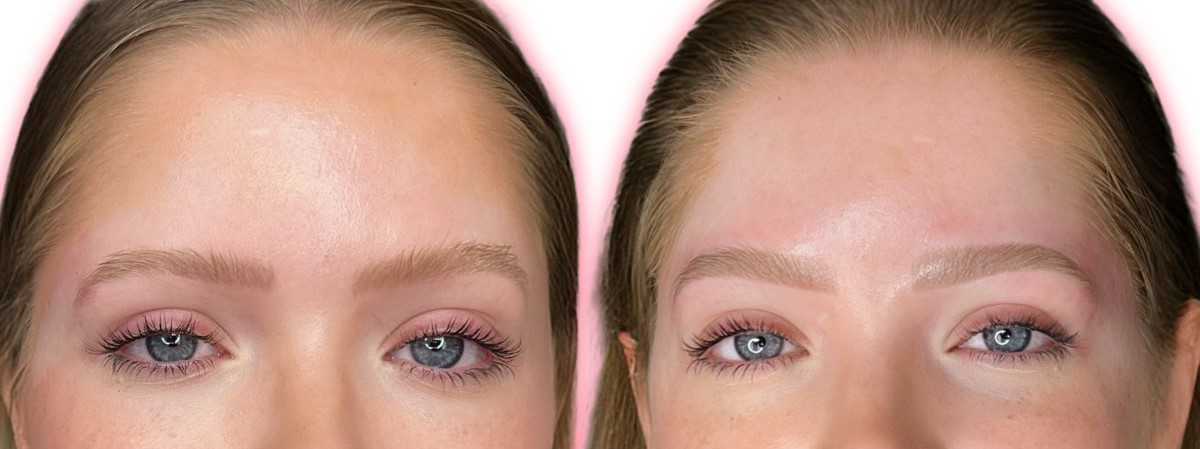
At its core, the purpose of reviewing before and after photos is to build trust. That trust should come from clarity. From understanding what is being shown, why the changes occurred, and how consistently those changes are achieved. Presentation can enhance clarity, but it should not replace it. When clarity is present, the images feel informative. When it is missing, the images may feel impressive but uncertain.
This is why choosing based on the most visually striking photo is rarely the strongest approach. Choosing based on consistent, understandable work creates a more reliable outcome. The best portfolios also show that many brows can be thoughtfully improved, supporting the possibility that your brows may be fixed without completely starting over.
Making the Right Decision From What You See
Once the ability to read before and after photos shifts from reaction to analysis, decision-making becomes clearer. The focus moves from surface-level appeal to deeper understanding. The question is no longer whether the image looks good, but whether it makes sense. Does the result address the problem? Does the work appear controlled? Is there evidence of healed outcomes? Is there consistency across multiple cases? These are the questions that lead to stronger decisions.
For those ready to move forward, reviewing dedicated correction-focused services and case examples can help reinforce that understanding. It provides a clearer connection between what is seen and what can realistically be achieved.
The Final Perspective
Before and after photos are not simply visual proof. They are a form of communication. When read correctly, they reveal how an artist approaches correction, how consistently they perform, and how well they understand the behavior of pigment over time. Choosing based on that understanding leads to better outcomes. It reduces uncertainty. It creates alignment between expectation and result. And it ensures that the decision is based on substance rather than presentation. In correction work, that distinction is everything.
FAQs
What is the most important thing to look for in correction before and after photos?
Look for clear evidence of a real problem in the before and meaningful improvement in the after, supported by results and consistency across multiple cases.
Are fresh after photos reliable indicators of final results?
No. Fresh photos show the immediate appearance. Healed results provide a more accurate representation of how the brows will look over time.
Why is the before photo so important?
The before photo reveals the starting point. Without a clear problem, the after result does not provide meaningful information about the correction.
How can lighting affect the way brows look in photos?
Lighting can soften edges, enhance blending, and create a more polished appearance, which may not reflect how the brows look in everyday conditions.
What does good color correction look like in photos?
It looks balanced and integrated, without visible conflict between the new pigment and the existing pigment.
Why is consistency more important than one strong result?
Consistency indicates that the process is reliable and repeatable, which is essential for predictable outcomes in correction work.
What are signs that correction work may be overdone?
Excessive density, heavy appearance, or overly sharp edges that do not appear natural can indicate that too much pigment has been applied.
What does integration mean in correction work?
Integration means the new pigment blends seamlessly with the existing pigment, creating a unified and balanced result.
Why is variety in a portfolio important?
Variety shows that the artist can handle different types of cases, which reflects adaptability and broader experience.
How should before and after photos influence decision-making?
They should be used to understand the artist’s approach, consistency, and ability to improve real problems, rather than to simply choose the most visually appealing image.