

There is a quiet assumption many people carry when they begin searching for help with their brows. It sounds simple on the surface. If someone can create beautiful brows, then surely they can fix them. But this assumption is where many correction journeys begin to go wrong, because eyebrow correction does not sit on the same level as creating a fresh set of brows. It is not a continuation of the same service. It is a completely different discipline, requiring a different way of seeing the skin, understanding pigment, and approaching every decision with long-term consequences in mind.
When someone comes in asking for a microblading touch up, a brow refresh, or even a simple color boost, what they are often describing is not maintenance at all. In many cases, it is the early stage of a correction case. The pigment has shifted, the structure has softened, or previous layers have begun to interact in ways that are no longer predictable. This is why understanding why microblading blurs, spreads, and loses its shape over time is essential before any new work is considered.
Creating brows on untouched skin is about placement, balance, and artistry. Correcting brows is about restraint, analysis, and control. The artist is no longer working on a blank canvas. They are working through history, through layers, through decisions that may have been made years ago by different hands using different techniques. This is why eyebrow correction is often misunderstood, and why not every artist chooses to offer it.
The Difference Between Application and Correction
In a standard brow appointment, the artist is working with clarity. The skin has not been altered by repeated pigment deposits. The skin is visible and predictable. The structure can be mapped without interference. Even when subtle adjustments are made, the behavior of the pigment is relatively consistent. This is the environment most artists are trained in, and it is where their skills are developed.
Correction work removes that clarity entirely. There is pigment that already exists in the skin. It has diffused, softened, and interacted with the body over time. In some areas it may appear cooler, in others warmer, and in others almost invisible until new pigment is introduced. This is why placing new color over existing pigment does not simply replace what is there. As explored in color corrections on microblading and tattoo being a normal part of the process, pigment does not cover pigment. It blends within the skin and existing pigment, creating a combined result that must be anticipated before the work even begins.
This is where many traditional approaches fall short. Repeating the same technique that was used before, even with good intention, can lead to further complexity. It is the reason why repeating the same technique changes results over time, often in ways that are not immediately visible but become more pronounced months later.
Why Many Artists Avoid Correction Work
There is a reason why so many artists hesitate when faced with previous work. It is not simply about difficulty. It is about unpredictability. Once pigment has been placed into the skin, its behavior is influenced by factors that extend beyond technique alone. Skin type, previous saturation, depth of application, and even the passage of time all contribute to how that pigment now sits beneath the surface.
For an artist trained primarily in application, stepping into correction requires a shift in mindset. It requires understanding not just how to place pigment, but how to work with what is already there. It means accepting that the goal is not always immediate perfection, but gradual improvement over time. This is why many artists choose not to fix old microblading, and instead refer clients elsewhere or decline the service altogether.
It is also why experience becomes more critical in correction than in almost any other area of semi-permanent makeup. When you are working with existing pigment, every decision compounds. There is very little room for error, and even less room for assumption.
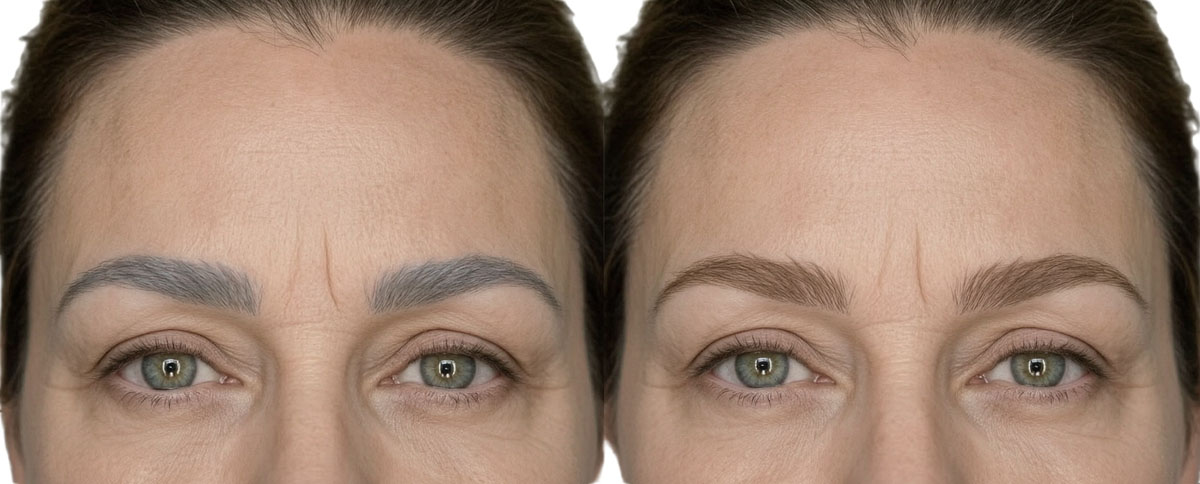
Correcting previous work requires a completely different eye than creating brows on untouched skin, which is why professional eyebrow tattoo repair and redo work should be approached as its own specialty.
The Role of Time in Brow Correction
One of the most important distinctions in correction work is understanding that results are not always immediate. Unlike a fresh set of brows, where the outcome is largely visible once healed, correction often unfolds in stages. The first session may focus on neutralizing color, the next on refining shape, and the next on balancing density. Each step builds upon the last.
This staged approach is not a limitation. It is a necessity. The skin needs time to respond, and the pigment needs time to settle before the next adjustment can be made. This is why understanding why eyebrow correction can take multiple sessions is so important for setting expectations and protecting long-term results.
For clients who have previously experienced multiple touch ups, this concept can feel unfamiliar. Correction, when done properly, is measured and intentional. Before adding more pigment, an experienced artist must understand why an earlier eyebrow correction may have failed and what needs to change in the new treatment plan.
Why “Touch Ups” and “Refreshes” Are Often Misunderstood
The language used in the industry plays a significant role in how clients approach their brows. Terms like microblading touch up, tattoo refresh, and brow maintenance suggest a simple continuation of the same process. But in reality, these terms do not always reflect what the skin needs.
After one or two sessions, a touch up may still function as maintenance. But beyond that point, the accumulation of pigment begins to change how the skin responds. The strokes soften, the edges blur, and the overall appearance becomes more solid. This is not a failure of the original work. It is a natural evolution, and it is why brows often look more solid over time.
At this stage, continuing to approach the brows as if they are still in need of simple maintenance can lead to further layering rather than improvement. What is often needed instead is a shift into correction, where the focus is on balance, color, and long-term structure rather than repetition.
The Correction Mindset
At its core, eyebrow correction is about seeing differently. It is about recognizing not just what is visible, but what is happening beneath the surface. It requires patience, both from the artist and the client, and a willingness to move away from quick fixes in favor of controlled, thoughtful progression.
This is why the most successful correction work often begins with education. Understanding how pigment behaves, how skin changes over time, and why certain approaches no longer work creates a foundation for better decisions moving forward. It also allows clients to approach the process with clarity rather than frustration.
For those beginning this journey, starting with a clear understanding of what eyebrow correction actually is can provide that clarity. It shifts the conversation away from quick adjustments and toward long-term results that respect the skin and the history within it. This is exactly where the judgment of an experienced eyebrow tattoo correction specialist becomes more important than simply choosing another general permanent makeup artist.
Building Structure Again
One of the most overlooked aspects of correction is structure. Over time, even well-placed brows can lose their original definition. The tail may soften, the arch may shift visually, and the front may become more diffused. These changes are subtle at first, but they accumulate.
Correction is not about removing what exists. It is about working with it, guiding it, and in many cases, rebuilding the structure in a way that feels balanced again. This is a process that requires both technical precision and an artistic eye, and it is why correction work often sits at the highest level of the craft.
When done properly, the result does not look like a correction. It looks like refinement. It looks like the brows have settled into themselves in a way that feels natural and cohesive. But achieving that result requires understanding the difference between adding more and doing less with intention.
Even difficult cases may have options, but the answer depends on pigment depth, skin condition, shape, and whether the existing eyebrow tattoo can realistically be fixed.
Why This Matters When Choosing an Artist
For anyone considering correction, this distinction is one of the most important factors in choosing the right artist. It is not enough to look at beautiful fresh results. The ability to create brows does not automatically translate into the ability to fix them.
This is why many clients find themselves searching again, looking for someone who approaches their brows differently. If you are in that position, understanding how to navigate finding a new artist after microblading becomes part of the process itself.
Correction is not about starting over. It is about moving forward with a deeper understanding of what the skin needs and what the process requires. When approached with the right mindset and the right expertise, it becomes less about fixing a problem and more about guiding the brows back into balance over time.
And that is where the difference truly lies.
When Brows Reach the Point Where Technique Alone Is Not Enough
There comes a stage in many brow journeys where the question is no longer which technique to use, but whether technique alone is even the right approach anymore. Microblading, shading, and combination techniques each have their place, but once pigment has been layered over time, the conversation shifts. It is no longer about choosing a style. It is about understanding what the skin can realistically hold, how previous pigment is behaving, and what can be adjusted without creating further imbalance.
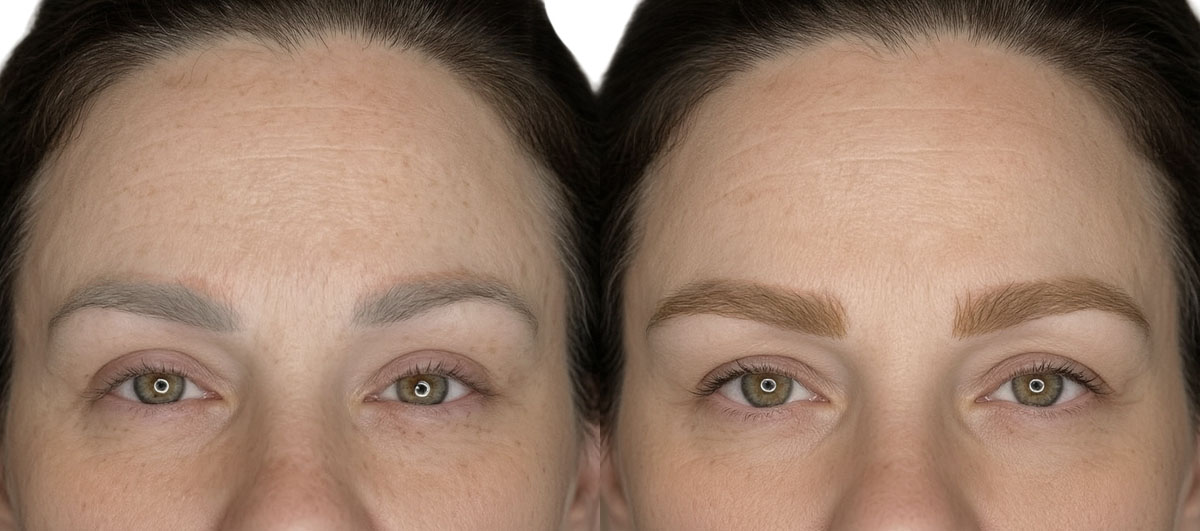
This is where correction becomes a form of restraint rather than addition. It requires the artist to step back and assess whether adding more pigment will actually improve the result, or simply intensify what is already present. In many cases, what appears to be a lack of color is not an absence at all, but a diffusion of pigment that has softened into the surrounding skin. This is why understanding the difference between bad brows and old pigment is critical before any new work is introduced.
The instinct to “fix” brows by adding more can be strong, especially when gaps or uneven areas are visible. But in correction work, those gaps are often part of a larger picture. Filling them without addressing tone, density, and surrounding pigment can create a heavier, less flexible result. The goal is not to chase perfection in a single session, but to create a balanced foundation that can evolve naturally over time.
Color Behavior Beneath the Surface
One of the most misunderstood aspects of eyebrow correction is how color behaves once it is inside the skin. Pigment does not remain static. It softens, it shifts, and it interacts with the body in ways that are influenced by both the original application and the passage of time. This is why a brow that once appeared crisp and defined may gradually take on a softer, more diffused appearance.
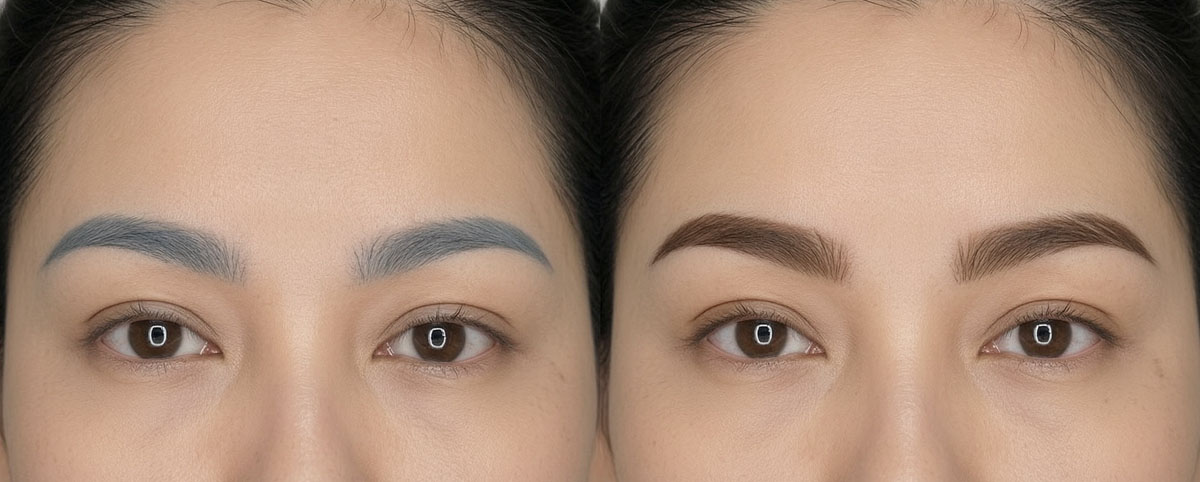
When new pigment is introduced, it does not sit independently of what is already there. It combines visually with the existing tones, creating a blended result that must be anticipated in advance. This is particularly important when working with cooler or warmer shifts, as the underlying pigment will influence the final appearance. As discussed in why faded brows can appear blue, gray, orange, or red over time, these color changes are not uncommon. They are part of how pigment ages within the skin.
Correction work is about guiding that color back into balance. It is not about covering it. This distinction is subtle, but it is what allows the final result to feel natural rather than heavy or artificial. It is also why correction must be approached with a clear understanding of how each layer will interact with the next.
The Importance of Controlled Progression
In correction, progress is measured differently. It is not defined by how much change can be achieved in a single appointment, but by how well each step sets up the next. This is where patience becomes a defining factor. Both the artist and the client must be aligned in understanding that improvement happens in stages, not in a single transformation.
This approach allows the skin to respond gradually, reducing the risk of over-saturation and preserving the ability to refine the result over time. It also creates space for adjustments, as each healed stage provides new information about how the pigment is settling. This is part of why color changes in the skin over time, and why those changes must be observed rather than rushed.
For clients who have experienced multiple touch ups in the past, this slower, more measured process can feel unfamiliar. But it is precisely this pacing that allows correction to remain flexible, controlled, and ultimately more successful.
Why Some Brows Take Longer Than Others
Not all correction journeys follow the same timeline. Some brows respond quickly, while others require a more gradual approach. This variation is influenced by factors such as the depth of previous pigment, the number of prior applications, and the way the skin has healed over time.
Brows that have been worked on repeatedly may have areas of increased density where pigment has accumulated. In these cases, the goal is not to add more, but to redistribute and balance what already exists. This often requires a series of smaller adjustments rather than one larger intervention.
Understanding this variability is essential for setting realistic expectations. It also reinforces the idea that correction is not a one-size-fits-all process. Each set of brows carries its own history, and that history informs the approach moving forward.
When Correction Is Not the Right Choice
There are also moments when the most appropriate decision is not to proceed with correction at all, at least not immediately. This can occur when the skin is still in the early stages of healing, or when the existing pigment needs more time to settle before it can be accurately assessed.
In some cases, waiting allows the pigment to soften naturally, creating a more stable foundation for future work. In others, it provides clarity about whether correction is needed at all. This is why understanding when eyebrow correction may not be the right choice is just as important as knowing when it is.
This level of discernment is part of what defines experienced correction work. It is not driven by urgency, but by timing and precision.
The Role of Technique in Correction
While technique remains an important part of correction, it is no longer the primary focus. Instead, it becomes one of several tools used to achieve balance. Whether working with soft shading, targeted color adjustments, or subtle structural refinements, the technique is chosen based on what the brows need, not on what is most commonly used.
This flexibility is what allows correction to adapt to different situations. It also prevents the repetition of approaches that may have contributed to the current state of the brows. As explored in the evolving understanding of microblading touch ups, the industry is still refining how pigment should be reapplied over time. Correction work sits at the forefront of that learning.
Reframing Expectations
For many clients, the most significant shift in correction is not physical, but mental. It is the transition from expecting an immediate fix to understanding a progressive process. This shift creates space for better outcomes, as it allows each stage to be approached with clarity rather than urgency.
It also changes the way results are evaluated. Instead of focusing on perfection in a single moment, the emphasis moves toward consistency over time. This perspective aligns more closely with how semi-permanent makeup behaves, and it supports results that feel more natural and sustainable.
For those considering correction, exploring the work of experienced specialists, such as artists with a dedicated focus on correction, can provide valuable insight into what this process looks like in practice.
Moving Forward with Clarity
Eyebrow correction is not about undoing the past. It is about working with it in a way that creates balance moving forward. This requires a level of understanding that goes beyond application, beyond technique, and into the behavior of pigment and skin over time.
For clients who are ready to begin this process, taking the time to explore options, ask questions, and understand the approach being offered is an essential first step. Visiting a gallery of real correction work can help set expectations, while learning more about specialized correction services can provide clarity on what is possible.
And when the time feels right, choosing to schedule an appointment becomes less about fixing something that has gone wrong, and more about guiding the brows into a place that feels balanced, intentional, and aligned with how they have evolved.
That is the difference between application and correction.
Frequently Asked Questions
Is eyebrow correction the same as a touch up?
Not always. While touch ups are often intended as maintenance, many cases labeled as touch ups involve underlying pigment changes that require a more advanced correction approach rather than simple reapplication.
Can old microblading always be corrected?
In many cases, improvement is possible, but the approach depends on the existing pigment, skin condition, and previous work. Each case is unique, and results develop over time rather than instantly.
Why does pigment change color over time?
Pigment shifts are a natural part of how semi-permanent makeup ages within the skin. Factors such as depth, saturation, and individual skin response all contribute to how color evolves.
How long does eyebrow correction take?
Correction is typically a staged process. Each session is followed by a healing period of approximately 4–8 weeks, allowing the pigment to settle before further refinement.
Will correction make my brows look darker?
Not necessarily. The goal is balance, not intensity. In many cases, correction focuses on adjusting tone and distribution rather than simply adding more depth.
Can I keep getting touch ups forever?
Yes, however it is a refresh. Refresh treatments have correction techniques built in inside the treatment steps. Repeated touch ups without adjusting the approach can lead to pigment buildup and less flexibility over time. This is why many cases transition into correction rather than continued maintenance.
Why do my brows look more solid now than before?
Over time, individual strokes can soften and blend together, creating a more uniform appearance. This is a natural evolution of pigment within the skin.
Is eyebrow correction permanent?
No. Like all semi-permanent makeup, correction results evolve over time and typically last around 12–18 months before further maintenance may be considered.
Does correction hurt more than regular microblading?
The experience can vary depending on the condition of the skin and the approach being used, but it is generally comparable to standard procedures.