

There is a moment in brow correction that shapes everything, and it happens long before pigment is ever placed into the skin. It happens before the chair, before the mapping, before the numbing, and before the first outline is ever considered. It happens in the decision-making stage, when a client is trying to determine whether the person in front of them truly understands correction or simply performs brow services and occasionally steps into more complicated cases. That distinction matters far more than most people realize, because in this category, the outcome is not determined by aesthetic taste alone. It is determined by judgment, by structure, and by the depth of thought behind the process. Before committing to any procedure, it’s worth understanding how eyebrow tattoo correction is customized for each client.
In standard brow work, clients are often evaluating beauty, style, and preference. In correction, the conversation changes completely. The decision is no longer based only on whether an artist can create attractive brows. It is based on whether they can correctly assess old pigment, interpret how previous work has aged in the skin, understand structural limitations, predict how color may behave over time, and communicate a path forward that is both realistic and refined. This is where the right questions become powerful, not because they make the consultation more difficult, but because they bring the process into focus. And in brow correction, focus is one of the most valuable things a client can have.
Most clients do not ask enough before booking brow correction, but more accurately, most clients do not know what to ask. That is not a reflection of carelessness. It is a reflection of how little the industry has done to explain what correction actually is. Brow correction is still often presented too casually, as though it were simply a more advanced version of a standard service. It is not. It is its own category of work, requiring a separate eye, a separate pace, and a separate kind of honesty. That is why clarity before the appointment matters so much. It protects the client from unrealistic expectations, and it reveals very quickly whether an artist thinks in a structured, strategic way or whether they are relying on vague confidence and hopeful language. In this category, vague confidence is not luxurious. It is risky. Before booking, ask the artist which of the available eyebrow tattoo redo, refresh, revision, or correction paths applies to your specific brows and why.
A refined correction experience begins with information. Not pressure. Not mystery. Not a dramatic promise. Information. When clients feel clear, they feel calmer. When they feel calmer, they make better decisions. And when they make better decisions, they are far more likely to choose an artist whose process is actually aligned with the level of complexity sitting in their skin. That is the real purpose of asking questions before booking. It is not about interrogating the artist. It is about protecting the outcome before the process even begins.
What to Ask About Experience, Process, and Sessions
One of the clearest signs of an experienced correction artist is that they do not wait passively for clients to come up with the right questions. They create clarity first. They ask for photographs. They assess what is visible. They explain what they see, what they would do, and what the client can reasonably expect. That sequence alone changes the emotional tone of the experience. It shifts the client out of uncertainty and into understanding. And understanding is where trust begins. It is also where luxury begins, because true luxury in brow correction is not just about the room, the branding, or the atmosphere. Those things matter, but they are not the foundation. The true luxury is clarity. It is the feeling that the process is intentional, that the language is precise, and that nothing important is being hidden behind vague reassurance. In correction, calm confidence is far more valuable than performance. You should also ask what qualifies the provider as an eyebrow tattoo correction specialist and how frequently they work with existing pigment.
So what should a client actually be asking before they book? The first and perhaps most important question is this: How much experience do you have in correction specifically? Not how long have you done brows. Not how long have you worked in beauty. Not how many clients you have seen overall. Correction specifically. That distinction changes everything. Doing brows and fixing brows are not the same discipline. They may sit under the same beauty category, but the decision-making behind them is entirely different. A fresh set on untouched skin is one conversation. Working over old pigment, altered tone, blurred shape, or tissue that has already been treated multiple times is another. An artist may be aesthetically talented and still not have true depth in correction.
This is one of the reasons so many clients find themselves searching for a different provider after prior work no longer looks the way it once did. They assumed experience in one area automatically translated into expertise in another. It often does not. That is why pieces like Looking for a New Artist After Microblading are so important within a correction-focused brand. They help clients understand that correction is not simply a follow-up version of the same service. It is a more complex category with different rules, different pacing, and different consequences if misunderstood.
The next question should address frequency: How many correction cases do you handle? Frequency matters because repetition builds discernment. There is a meaningful difference between an artist who handles correction occasionally and one who sees it constantly. Correction artists who work inside this category on a regular basis develop a sharper eye for old pigment, visual density, undertone behavior, blurred borders, overworked skin, and the kinds of long-term changes that less experienced providers may misread. In luxury service, repetition is what refines judgment. In correction, it is what makes judgment trustworthy.
Then comes a question that reveals far more than many clients realize: Can you explain your process? This is where a consultation becomes extremely revealing. A true correction artist will usually describe a sequence. First the existing pigment is assessed. Then the skin quality is considered. Then shape, saturation, age of the previous work, and realistic direction are discussed. Then the treatment plan is built around what can be improved now and what may need time. An inexperienced answer tends to sound flatter. It is often shorter, more casual, and less structured. It may reduce the case to “going over it,” “freshening it up,” or “adding a new shape.” Those phrases may sound simple, but simplicity in explanation is not always a virtue. In correction, oversimplification is often a red flag.
This is one of the reasons Red Flags Choosing Microblading or Brow Correction Artist is such an important conversation. Red flags are not always dramatic. Sometimes they appear as a lack of detail. Sometimes they appear as confidence without explanation. Sometimes they appear as an answer that feels polished but says almost nothing. In a category where structure is everything, language without structure should always be taken seriously.
Clients should also ask a question that many hesitate to ask because they do not want to sound pessimistic: How many sessions will I likely need? The right answer is not a magical number. The right answer is realism. Correction is rarely a one-step event. It is more often layered. Pigment settles. Skin responds. Tones soften or surface differently through healing. Some brows move quickly. Others require a slower plan. Any artist who presents correction as universally simple is not showing respect for the variables involved. Luxury does not rush the answer here. Luxury respects complexity.
What to Ask About Healing, Limitations, and Color Behavior
That same principle applies to healing. Clients should ask: What is the healing time, and what should I expect during healing? Healing is not a side note. It is part of the result. Brows can look darker at first. They can soften. They can appear uneven before they settle. They can seem warmer or cooler at different stages. A client who has not been guided through those possibilities may interpret normal changes as failure, when in reality the work is still unfolding exactly as it should. An artist who explains healing clearly is not being repetitive or overly cautious. They are protecting the emotional experience of the client. Repetition, in this context, is a form of care. It allows the client to hear the same truth at multiple stages until it becomes understandable, not just memorable.
Another question clients should ask, and often do not, is this: What are the limitations in my case? This question is powerful because it invites honesty. Not everything can be improved immediately. Not every old shape can be fully redirected in one session. Not every color issue can be solved in a single pass. And not every client is starting from the same baseline. An artist with integrity will explain what is realistic, what may take time, and what should not be expected right away. That answer may not be the most exciting one in the room, but it is often the most valuable. There is a particular kind of disappointment that happens when clients are given highly polished optimism and very little structure. They feel reassured in the moment, only to feel confused later when the process turns out to be slower or more nuanced than they were led to believe. That kind of disconnect is avoidable, but only when limitations are discussed early. A good appointment should answer the practical question of whether you need a simple refresh or an actual correction, rather than leaving you to choose a service based only on its name like “microblading redo”.
This is also where emotional maturity in matters. A luxury correction brand should never need to oversell what correction can do. The strength is in the depth of the explanation. It is in the confidence to say: this can be improved, this may take time, and this is the most intelligent path through it. Clients should also feel comfortable asking directly about risk. Not because something is expected to go wrong, but because risk is part of honest planning. What are the risks in my case? That question should not create discomfort in a qualified artist. If anything, it should create a better conversation. Risk in correction can refer to many things: the unpredictability of old pigment, the way a previous shape affects what can be restructured, the need for staged refinement, or the limitations created by multiple prior treatments. None of these realities are alarming when they are explained correctly. They simply form part of a truthful framework.
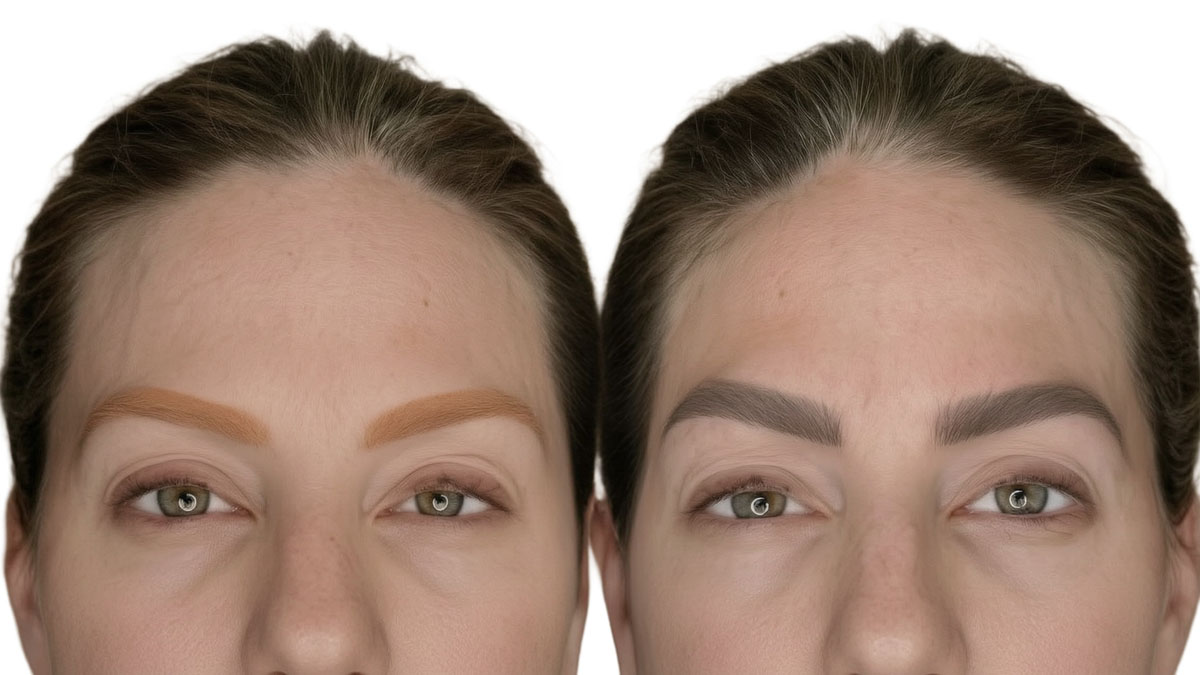
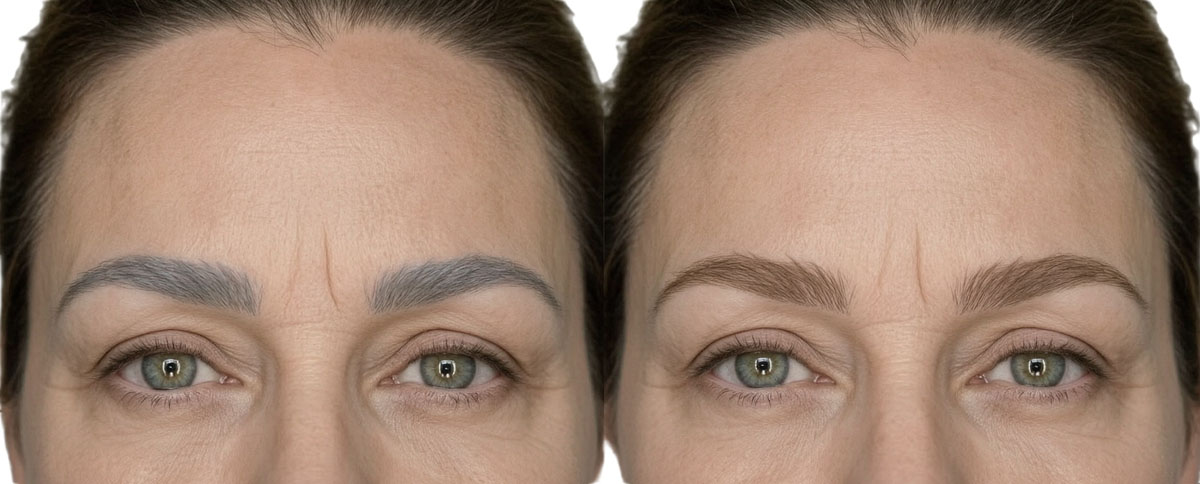
And then there is color, which sits at the center of so much confusion in this entire category. Clients should ask: How do you assess pigment, and what is your color correction approach? This is one of the clearest ways to tell whether an artist truly understands correction. If they can explain why brows may read grey, red, blue, orange, or overly solid over time, they are more likely to be working from knowledge rather than surface-level pattern recognition. If they cannot explain those shifts with any clarity, that is important information too. Color in correction is not simply a visual preference issue. It is structural to the plan. It affects whether the artist is thinking about undertones, density, age of pigment, layering history, and what can realistically be achieved without creating more visual heaviness. That is why educational pieces like Why Color Changes in the Skin Over Time and Why Microblading Turns Grey Red Orange are so essential within a correction-focused brand. They teach clients how to interpret what they are seeing before they ever book.
Technique should also be discussed. Clients should feel comfortable asking: How do you adapt your technique for different correction cases? Correction is not one-size-fits-all. It cannot be. Pigment depth differs. Skin texture differs. Old shape differs. Color history differs. Desired outcome differs. The idea that one method can be applied evenly to all correction work is one of the reasons so many clients end up with results that continue to feel heavy, flat, or unresolved. Custom strategy is a sign of expertise. And finally, every client should ask to see healed results—not only fresh results, but healed results. Fresh work can be beautiful, but it is not the full truth. Fresh work is immediate. Healed work is honest. It reveals how softly pigment settles, how the shape reads over time, and whether the artist’s work still looks refined after the initial intensity has faded.
The right questions are not there to make the appointment harder. They are there to make the outcome safer, smarter, and more refined. In a category as nuanced as brow correction, clarity is not optional. It is the standard.
How the Answers Reveal Whether You Are in the Right Place
In brow correction, the words themselves matter, but the quality of the explanation matters even more. Two artists can answer the same question and leave a client with two completely different levels of confidence. One answer may sound polished, reassuring, and pleasant, yet reveal very little. Another may feel calm, specific, and structured, making the client feel instantly more grounded. That difference is not small. It is often the difference between surface-level service language and real correction literacy.
This is why the conversation stage should never be treated as a formality. In a refined correction practice, it is one of the most important parts of the experience. It is where the artist demonstrates how they think. It is where they reveal whether they understand pigment behavior, whether they can assess shape honestly, whether they respect the pacing correction requires, and whether they are willing to tell the truth even when the truth is less dramatic than a sales pitch. That last point matters more than many clients realize, because one of the clearest signs that someone is in the right place is not that everything sounds exciting. It is that everything sounds clear. If the original shape, color, or density needs more substantial adjustment, ask whether an eyebrow tattoo revision would be the more accurate treatment category.
Correction should feel structured. It should feel measured. It should feel like the process has edges, sequence, and a plan. That sense of order is one of the most luxurious things a client can experience in this category. It creates relief. It removes the feeling of guessing. And it turns what could feel intimidating into something understandable. There is also another question clients should be asking, even if they phrase it more softly: How do you determine whether correction is actually the right choice for me? This is an exceptionally important question because not every case should move forward immediately, and not every brow issue is solved by simply scheduling treatment as quickly as possible. Sometimes a client needs more time between sessions. Sometimes the existing pigment needs to be better understood before a plan is built. Sometimes expectations need to be reset before any technical decision should be made.
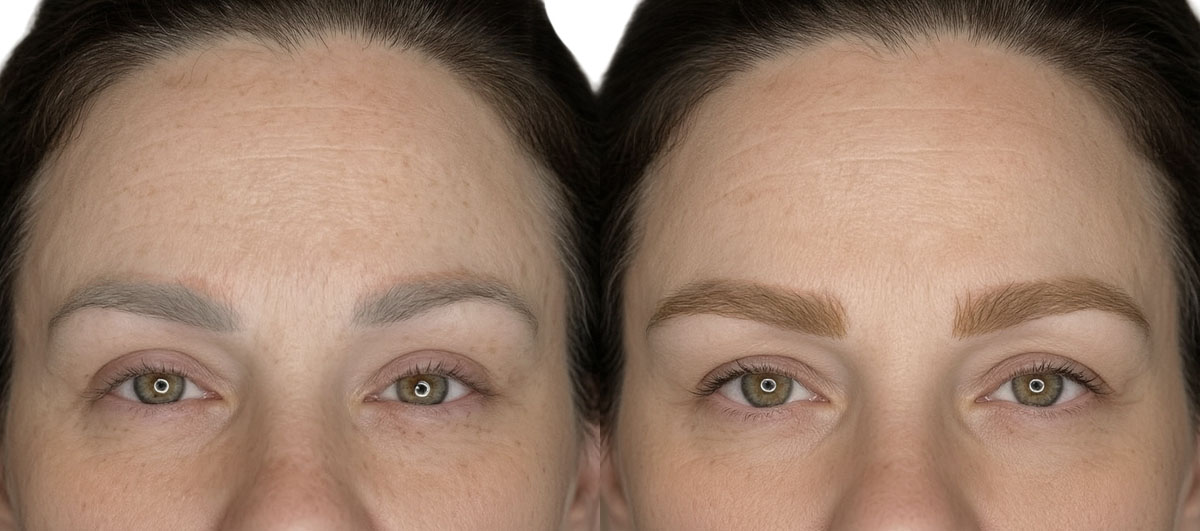
A thoughtful artist knows that moving forward is not always the same thing as moving wisely. This is precisely why educational resources such as When Eyebrow Correction Is Not the Right Choice matter. They communicate something important: not every answer should be immediate treatment. Sometimes the highest level of expertise appears in restraint. Clients should also listen carefully to whether an artist explains the difference between old pigment and poor design. This distinction is often missed. Not every brow that feels disappointing is necessarily a “bad brow.” Sometimes the issue is age. Sometimes it is fading. Sometimes it is color shift. Sometimes it is simply that the brows have changed over time and now look more solid, blurred, or diffuse than they once did.
How to Read Shape, History, and Long-Term Behavior More Intelligently
In other words, the problem may not always be that the original work was terrible. The problem may be that pigment behaves like pigment, and time changes how it reads in the skin. This is why it is so useful for clients to understand the difference between a poor result and an aged result. Those are not always the same thing, and the treatment logic behind them may be very different. A sophisticated artist should be able to explain that difference with ease, and a sophisticated brand should already be educating around it through pieces like Difference Between Bad Brows and Old Pigment. That kind of education does something powerful. It helps clients stop responding only emotionally to what they see and start understanding what they are actually looking at. And that shift changes the quality of their decisions.
Another valuable question is this: How do you know whether an old shape can really be adjusted? This question goes deeper than most clients initially realize. Shape in correction is not just about drawing a new outline. It is about negotiating with what already exists in the skin. Existing pigment can limit how dramatically shape can be shifted in one stage. Tissue history can affect how new work reads over older areas. Some brows may allow for elegant structural refinement. Others may require a slower rebuild over time. A correction artist who understands structure will speak carefully here. They will not treat old shape as something that can always be erased by confidence alone. They will explain what can be redirected, where softness can be rebuilt, and what kind of patience is needed to create a better overall architecture.
Correction is not only about color. It is also about visual balance. Clients should also pay close attention to how an artist talks about repetition of the same technique. If the answer to every problem sounds like more of the same, that should give pause. More of the same is often exactly how brows became more solid, more blurred, or less refined in the first place. Repeating the same approach over and over does not always preserve beauty. In many cases, it changes the result. It softens edges. It increases visual density. It reduces crispness. It can create the illusion that the solution is simply another appointment, when in reality the real need is a different strategy entirely.
This is why clients should not be afraid to ask direct questions such as: How would your correction approach differ from the previous work that was done? The answer should reveal intentional change, not repetition disguised as reassurance. Correction treatment plans create an intelligent framework around why previous results changed, which then makes the appointment itself easier, calmer, and more productive.
There is another question clients should consider asking if they want to quickly identify whether the artist understands long-term behavior: What do you expect these brows to look like later, not just immediately after treatment? This is where short-term beauty and long-term correction begin to separate from one another. Fresh results can impress almost anyone. Long-term behavior is where knowledge begins to show. An artist who thinks long term is evaluating what the brows may feel like months from now, how the chosen direction will settle visually, whether density is appropriate, and whether the result is being built with longevity in mind rather than immediate drama. This matters because many clients do not actually want the boldest first impression. They want the smartest long-term one.
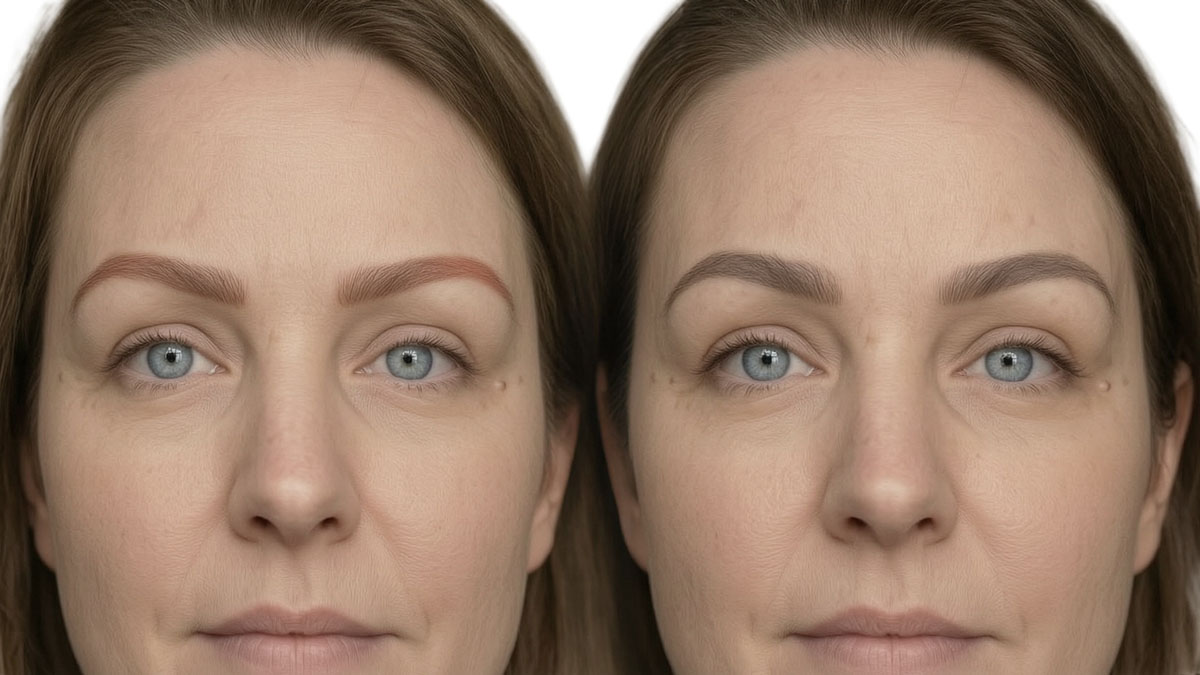
That is exactly the kind of thinking reflected in Microblading vs Shading vs Combo What Actually Matters Long Term. It moves the conversation away from trend language and toward durability, appropriateness, and better decision-making. In this same spirit, clients should also ask: What should I be looking at in your portfolio? This may seem unusual at first, but it is a remarkably intelligent question. Most people know they should review photos. Far fewer know how to interpret them. They may focus on lighting, angles, freshness, or how dramatic the transformation looks in the moment. What they should be looking for is consistency, restraint, healed softness, believable structure, and whether the result looks elegant rather than aggressively “fixed.” The best portfolios often do not scream. They reassure.
Why Clarity Before Booking Changes the Entire Experience
That is why blogs such as What to Look for in Eyebrow Correction Before and After Photos play such an important role in supporting conversion. They teach visual literacy. They help the client see with more discernment. And that kind of discernment tends to lead them toward artists with real depth. Clients should also be encouraged to ask a question that reveals communication style: How will you guide me if my case needs a slower plan than I expected? This is not a dramatic question. It is a wise one. Because the emotional experience of correction often depends not only on what is done, but on how well the client is guided through the time between stages. Some brows require more patience than others. Some need a more conservative first move. Some require the client to understand that progress may be visible, but not final, after the first session.
That does not mean the case is going poorly. It means the artist is working with reality instead of forcing the process into a timeline that flatters marketing but not the skin. In luxury service, pacing should feel intentional, never uncertain. And that intention should be communicated well enough that the client does not feel stranded inside the process. Questions can also reveal whether the artist knows how to educate beyond the appointment. A sophisticated correction brand does not rely on one conversation to do all the work. It creates an ecosystem of clarity. The client should be able to read, review, and understand the thinking behind the approach before they ever arrive.
Key pages like What Is a Correction, Gallery, and Blog support this process beautifully because they allow the client to arrive informed. They reduce fear. They improve expectations. They make the appointment more intelligent because the client is no longer starting from zero. That is one of the strongest themes inside this entire conversation: the goal is not to overwhelm the client with information. The goal is to remove uncertainty through the right kind of information. When this is done well, the client no longer feels like they are hoping for rescue. They feel like they are entering a process that has been considered carefully.
They understand why photos were requested. They understand why certain questions were answered more than once. They understand why healed work matters more than fresh work, why multiple sessions may be necessary, why color must be read intelligently, and why honesty about limitations is a sign of strength rather than weakness. That kind of clarity changes everything. It changes the booking decision. It changes the emotional tone of the appointment. It changes healing because the client interprets the process more accurately. And it changes trust, because trust is far easier to build when nothing important has been hidden under vague language.
There is also a quieter, more elegant truth underneath all of this: the best correction experiences do not feel rushed, secretive, or overly performative. They feel thoughtful. The artist sounds measured. The process sounds structured. The client leaves with more understanding than they arrived with. And if, at any point, they find themselves more confused after asking their questions than before, that confusion is information too. Sometimes the answer is not in what was said. Sometimes it is in what was never explained properly.
That is why asking until clarity increases is such an important standard. The right artist will not be irritated by thoughtful questions. They will welcome them. They will understand that questions are not resistance. They are part of intelligent decision-making. In correction especially, they are part of self-protection. And that is ultimately what these questions are for. They are not designed to test whether an artist can perform under pressure. They are designed to reveal whether the environment is right, whether the logic is sound, and whether the path ahead is being described with enough honesty and structure to deserve trust.
Because the right artist does more than answer. The right artist clarifies. They make the next step feel considered. They make the client feel informed, not dazzled. And in a field where so many people are searching for certainty after disappointment, that kind of calm authority is not just valuable. It is everything. So before booking brow correction, ask more. Ask clearly. Ask until the process makes sense. Ask until the language feels structured. Ask until the answer reflects both expertise and restraint. Because the goal is not simply to book an appointment. The goal is to book the right one.
And when that happens, the experience changes from hopeful guessing to informed confidence. The result is not only better planning, better expectations, and better long-term direction. It is a better standard of care from the very beginning. If you are ready to understand your own case with more clarity, explore and review what a correction actually involves, browse the gallery, or book an appointment when you are ready for a more structured conversation.