

There is a moment in every brow correction journey that quietly determines everything that follows, and it happens long before pigment is ever placed into the skin. It happens in the decision of who is chosen, not based on how polished something looks in a photograph or how quickly a solution is offered, but on whether what is being presented is actually grounded in understanding. In this industry, not everything that looks refined is built on refinement, and not everything that sounds confident is supported by structure. Brow correction exists in a category where surface-level presentation can be extremely convincing, which is exactly why red flags carry more weight here than anywhere else. They are not dramatic warnings, but subtle indicators that reveal how an artist thinks, how they approach complexity, and whether the process has been simplified in a way that does not fully respect what already exists in the skin. Many concerns can be addressed with professional eyebrow tattoo correction rather than guessing if your artist knows correction or not.
Most clients do not recognize these signals at first, and that is not a lack of awareness—it is a lack of exposure. Without understanding how correction actually works, it becomes easy to rely on what feels reassuring instead of what is structurally sound. This is where the experience begins to divide, because correction is not simply an extension of brow services. It is a different level of decision-making entirely, requiring the ability to interpret pigment history, structural shifts, and how results evolve over time. Once you understand what to look for, the entire process changes. You stop guessing, you begin to recognize patterns, and the decision becomes rooted in clarity rather than assumption. Anyone considering another procedure should first understand the differences among redos, refreshes, revisions, and corrective eyebrow treatments, because vague terminology can hide a poorly planned service.
When the Process Feels Too Simple, It Usually Is
One of the most consistent red flags appears in how quickly a solution is offered. When brows that clearly carry history—previous pigment, softened structure, or visible color shift—are evaluated in seconds and described as something that can be corrected immediately, it may feel efficient, but it removes one of the most important elements of correction, which is time. Anything that has been built over time requires a process that respects that timeline. Pigment does not simply disappear when something new is introduced, and structure does not always shift dramatically in a single stage. Results settle, soften, and reveal themselves gradually, which means any approach that minimizes this reality is not simplifying the process—it is overlooking it.
This is where the idea of a one-session fix often enters the conversation, and while it may sound appealing, it rarely reflects how correction actually unfolds. True correction is layered, allowing each stage to build upon the last while giving the skin time to respond and the pigment time to settle. When this progression is not part of the plan, the result is often inconsistency rather than refinement. This is also why understanding how to find a real eyebrow correction artist becomes essential, because a structured approach will always acknowledge time as part of the process rather than something to work around.
When Assessment Is Skipped, the Entire Plan Is Weak
Another red flag appears before the appointment is even confirmed, and it is often overlooked because it feels convenient. If correction is booked without reviewing photographs, without asking about previous treatments, and without understanding how the brows have evolved, the process is not beginning from a place of understanding. Correction does not start in the chair—it starts with assessment. It requires context, observation, and the ability to interpret what is already present before deciding what should come next. Without that stage, the process becomes assumption-based, and assumption is not a reliable foundation in correction.
This is one of the clearest distinctions between surface-level service and true correction work. A refined approach will always begin with analysis, not application. It will involve reviewing images, asking the right questions, and explaining what is visible before any decision is made about treatment. When that layer is missing, the plan may still move forward, but it is built on incomplete information. And in a category where small miscalculations can compound over time, that matters more than most clients initially realize. One major red flag is an artist claiming to specialize in correction without demonstrating the judgment expected from an established eyebrow tattoo correction specialist.
When Explanation Lacks Structure, the Result Usually Does Too
The way an artist explains their process is one of the most accurate reflections of how they think, and in correction, thinking is what determines the outcome. When explanations feel vague, overly simplified, or dependent on reassurance rather than detail, it becomes difficult to understand what is actually being planned. A structured correction process should feel intentional from the way it is described. It should move in sequence, reflecting stages rather than a single action, and it should clearly outline how the result will be built over time.
This is where many red flags present themselves quietly. Not in what is said, but in what is missing. If there is no clear explanation of progression, no mention of reassessment, and no indication that the process evolves from one stage to the next, the structure behind the work is limited. This is why recognizing red flags when choosing a brow correction artist is so important, because language that sounds confident without being specific often reflects a process that has not been fully developed.
When Visual Proof Doesn’t Reflect Reality
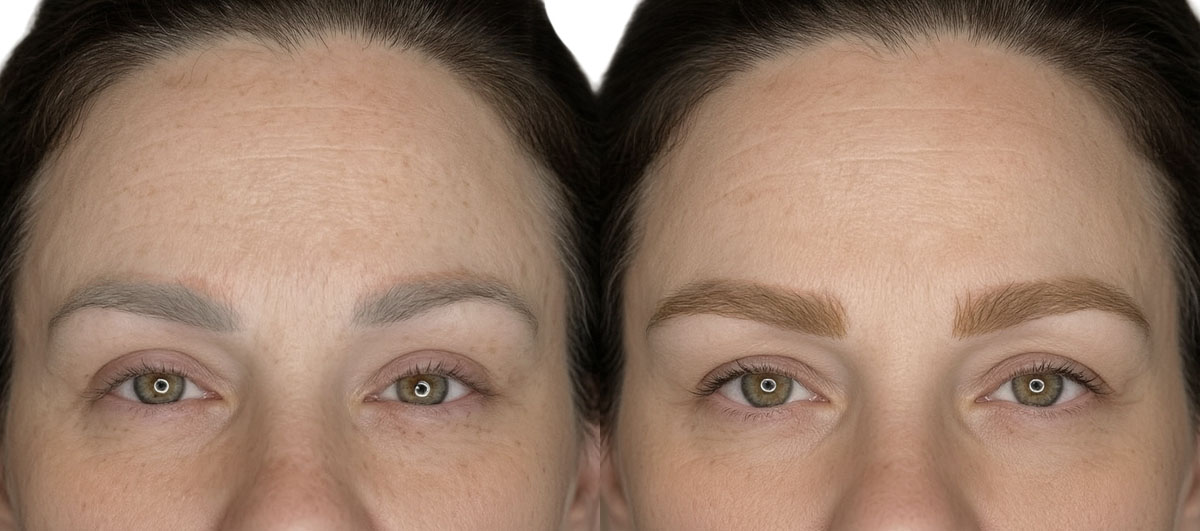
Portfolios are often the first point of reference for clients, but they can also be one of the most misleading if they are not interpreted correctly. When every result appears uniformly perfect—consistently sharp, evenly defined, and identical in presentation—it may not reflect the full scope of correction work. Real correction involves variation. Different starting points produce different results, and a portfolio that does not show this range may not be showing the full reality of the process.
Even more important is the absence of healed results. Fresh work represents the immediate appearance, but healed work reflects how the result actually lives in the skin. Without it, there is no way to evaluate how the pigment settles, how the structure softens, or how the result holds over time. This is why learning what to look for in eyebrow correction before and after photos is essential, because it shifts the focus from surface-level perfection to long-term behavior. When presentation becomes too controlled through filters or lighting, it can obscure detail rather than reveal it, and in correction, detail is where the truth exists.
Red flags are not about judgment. They are about awareness. They allow you to move from assumption to clarity, from uncertainty to structure, and from reacting to making a decision that is actually informed. Because in brow correction, the right environment does not feel rushed, simplified, or overly certain. It feels considered, it feels measured, and most importantly, it feels like the process has been thought through before it ever begins.
What Red Flags Actually Reveal About the Process Behind the Work
Once you begin to recognize red flags, the conversation shifts in a way that most clients do not initially expect. It is no longer about identifying what feels slightly off in the moment, but about understanding what that signal represents beneath the surface. Because in brow correction, nothing exists in isolation. The way an artist speaks, the way they assess what is already in the skin, and the way they describe what comes next are all reflections of how they think. And in this category, thinking is what defines the outcome far more than technique alone.
This is why the conversation stage carries so much weight. It is not simply an introduction to the service, but a window into the structure behind it. It reveals whether the approach is layered, deliberate, and grounded in long-term behavior, or whether it has been simplified in a way that focuses only on the immediate result. That distinction is not always obvious at first, but once you begin to understand what to listen for, it becomes increasingly clear. The process either feels considered, or it feels reduced. And that difference quietly determines everything that follows.
When Color Is Not Fully Understood, Everything Becomes Unpredictable
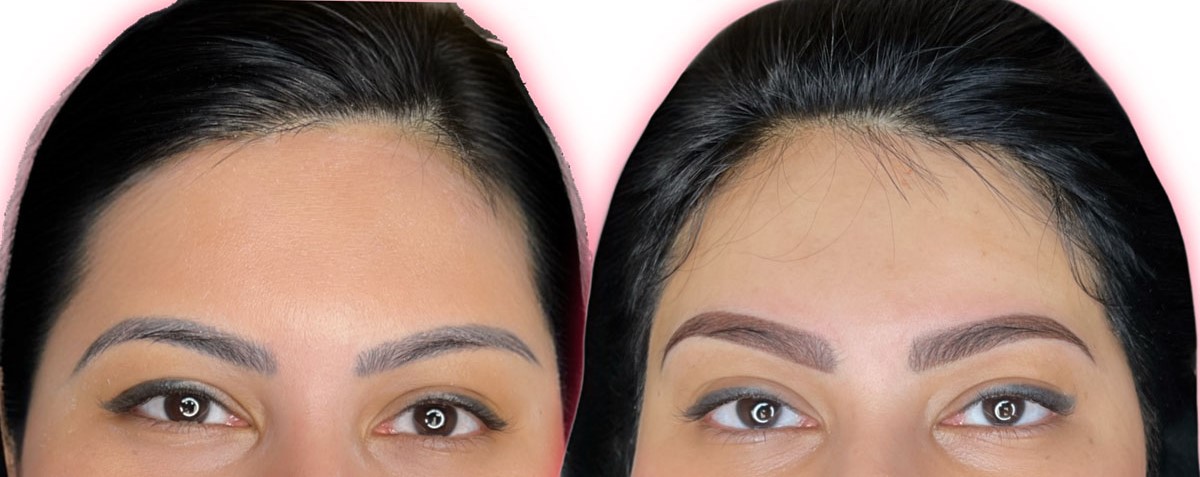
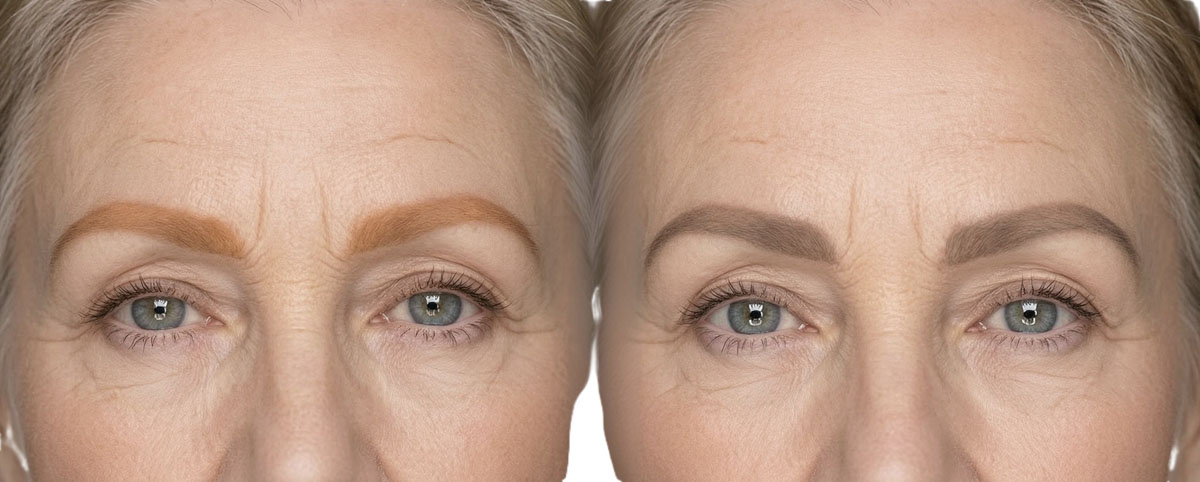
One of the most revealing areas in any correction conversation is how color is discussed, because color is not a surface detail—it is the foundation of the entire process. If pigment is treated as something that can simply be replaced, covered, or overridden, the approach is incomplete. Color in the skin does not behave in that way. It interacts with what is already present, it blends when it heals, and every new layer becomes part of a composition rather than a replacement. This is why understanding why color changes in the skin over time and why microblading turns grey red orange is not just helpful—it is essential to correction itself.
When this layer of understanding is missing, the process becomes reactive rather than intentional. Adjustments are made without fully accounting for how existing pigment will influence the result, which can lead to outcomes that feel inconsistent or unresolved over time. When it is understood correctly, however, the process becomes far more controlled. Color is guided rather than forced, and each stage builds with awareness of what is already present instead of working against it.
When the Focus Is Only on the Immediate Result, the Long-Term Outcome Is Lost
Another pattern that becomes clear when red flags are present is an emphasis on what the brows will look like immediately after the appointment, without a meaningful discussion of how they will evolve. Correction is not defined in the first hour. It is defined over time, through the way pigment settles, softens, and integrates into the skin. Brows may appear stronger at first, then soften as healing progresses. Tone may adjust before stabilizing. These changes are not flaws in the process—they are part of it.
This is why understanding why your brows look more solid over time and why microblading doesn’t stay crisp forever becomes so important. It shifts expectation away from immediate perfection and toward long-term refinement. When this is not explained, the process can feel unpredictable. When it is explained clearly, the process feels controlled, even as it evolves.
When There Is No Clear Strategy, Correction Becomes Reaction
Without structure, correction begins to rely on reaction rather than direction. Decisions are made in isolation, adjustments are introduced without a clear sequence, and the result can begin to feel inconsistent rather than refined. A structured approach does not remove flexibility—it creates a framework for it. It allows the artist to adjust while still moving toward a defined outcome, rather than making changes that exist independently of a larger plan.
This is where layering becomes essential, not as a limitation, but as a method of refinement. Layering allows color to be adjusted gradually, structure to be rebuilt with precision, and the result to evolve in a controlled way. Without it, correction often becomes too much, too quickly, leading to density rather than balance. The absence of layering is not simply a missing step—it is a missing understanding of how correction actually works. Be cautious when an artist cannot clearly explain the difference between redoing the brows and correcting the underlying problem.
When Repetition Is Used Instead of Adaptation, Results Begin to Degrade
One of the most common patterns in prolonged correction journeys is repetition without adjustment. The same technique is applied again and again with the expectation that the result will improve through persistence alone. But repetition does not preserve a result—it changes it. This is why understanding why repeating the same technique changes results and why microblading blurs spreads loses shape is critical, because it explains why more of the same is often what created the issue in the first place.
Correction requires adaptation. It requires a shift in approach, a willingness to move away from what has already been done, and the ability to respond to the skin as it exists now, not as it existed in the past. Without that shift, the process does not move forward—it simply repeats itself in a different form.
When Transparency Is Replaced with Reassurance, Clarity Disappears
Clarity should increase throughout the consultation, not decrease. If answers feel vague, if explanations feel incomplete, or if the conversation moves quickly past important details, that is information. Reassurance without explanation may feel comfortable in the moment, but it does not create understanding, and without understanding, the process begins to feel uncertain again.
An experienced correction artist will speak openly about limitations, about what can be improved, what may take time, and what cannot be achieved immediately. They will also speak about risk, not as something negative, but as part of a complete and honest explanation. Risk does not mean something will go wrong. It means the artist understands the variables involved and is willing to communicate them clearly. That level of transparency is what allows trust to exist without hesitation. You should also be wary of anyone who insists that complete removal is always necessary without assessing whether your brows can be repaired without starting over.
What the Right Correction Experience Actually Feels Like
When red flags are absent, something else becomes immediately noticeable. The process feels calm, the explanation feels complete, and the direction feels intentional. There is no urgency, no pressure, and no reliance on overconfidence to carry the conversation. Instead, there is structure, clarity, and a sense that every decision has been considered before it is made.
This is the difference between a surface-level experience and a refined one. Because correction, when approached properly, does not feel rushed, vague, or uncertain. It feels understood. And once that level of understanding is experienced, it becomes the standard for every decision that follows.
The purpose of recognizing red flags is not to create doubt. It is to remove it. It allows you to move forward with confidence, knowing that the process in front of you is built on structure, guided by experience, and designed with long-term results in mind. Because in brow correction, the goal is not simply to improve what is visible in the moment, but to create a result that continues to feel balanced, refined, and intentional over time. And that is only possible when the process behind it reflects the same level of precision.
Every correction begins with a thorough assessment during your correction appointment, where we’ll determine the safest and most effective treatment plan for your brows.