EYEBROW TATTOO CORRECTION DALLAS • DFW • NORTH TEXAS
REAL RESULTS, INDUSTRY LEADER
Eyebrow Tattoo Correction in Dallas
If you are looking in the mirror wondering why your eyebrow tattoo turned gray, healed red, looks orange, feels too dark, sits unevenly, has blurry microblading strokes, looks patchy, or simply no longer feels like you, you are in the right place. Eyebrow tattoo correction is for clients who already have pigment in the skin and need previous brow work fixed, refined, adjusted, refreshed, repaired, balanced, modernized, or completely overhauled.
This page is not written for first-time brow clients. It is written for people who already have previous microblading, powder brows, combo brows, permanent makeup, or cosmetic eyebrow tattooing and want to understand what may be possible now.
Some clients come to us because their old microblading blurred together. Some are worried about gray, red, orange, pink, salmon, purple, or ashy healed pigment. Others have brows that are uneven, too bold, too blocky, too thin, too thick, too high, too low, too saturated, or no longer flattering to their face.
This master guide explains eyebrow tattoo correction from the ground up. It connects you to our main correction resources, including microblading correction, eyebrow color correction, eyebrow tattoo repair, and corrections, redos, and refreshes.
uneven
Correction
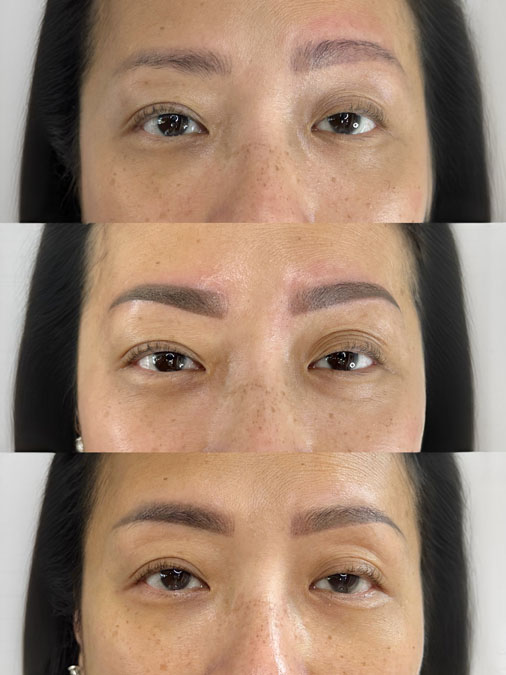
This client is a 35-year-old female with Fitzpatrick Skin Type 3 who sought eyebrow tattoo correction because she felt one eyebrow had always appeared noticeably different from the other. Although natural facial asymmetry is completely normal, she felt the previous cosmetic eyebrow tattoo exaggerated those differences rather than complementing them.
During evaluation we considered the healed pigment, overall eyebrow proportions, facial symmetry, natural eyebrow hair, previous cosmetic tattoo history, and the relationship between both brows before determining the most appropriate correction approach. Every uneven eyebrow tattoo requires individualized planning because no two faces are perfectly symmetrical. This example demonstrates how eyebrow tattoo correction focuses on improving overall facial harmony rather than attempting to create mathematically identical eyebrows. It represents one of the many structural correction cases seen in our Dallas eyebrow tattoo correction practice.
UNEVEN
Correction
This client is a 56-year-old female with Fitzpatrick Skin Type II who had previous microblading completed approximately six years earlier. Initially, she was extremely happy with her brows. As the years passed, however, some hairstrokes became less defined while other areas remained visible, creating a less balanced overall appearance.
Before planning treatment, we evaluated the remaining hairstrokes, healed pigment, natural eyebrow hair, overall brow symmetry, and how the existing microblading related to her current facial features. Every previous microblading correction appointment begins by understanding the eyebrow that exists today rather than relying on photographs taken immediately after the original procedure.
This example demonstrates how previous microblading correction focuses on improving the eyebrow as a complete design while respecting the existing cosmetic tattoo already present within the skin. It also illustrates why correction decisions should always be based on the healed eyebrow rather than simply the age of the previous microblading.

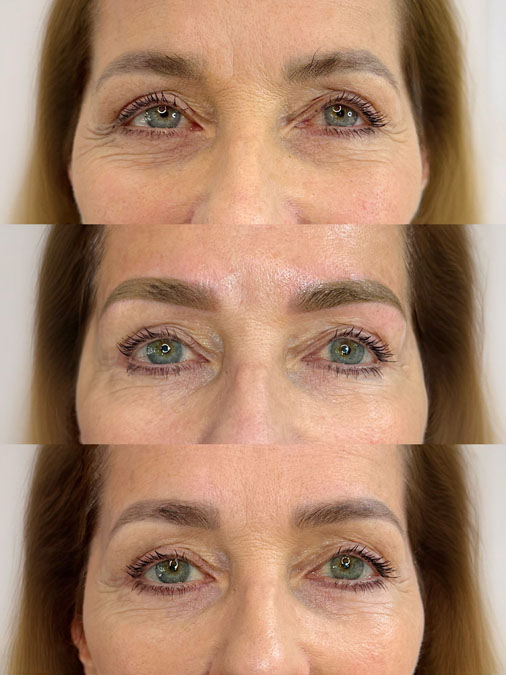
This case represents the complete eyebrow tattoo correction journey experienced by many of our clients. The client is a 32-year-old female with Fitzpatrick Skin Type 5 who presented with previous cosmetic eyebrow tattooing completed approximately 7 years earlier. Over time the brows had naturally changed in color, and no longer reflected the appearance she wanted.
The three images demonstrate the progression from the original eyebrows, to the appearance during orange color correction and immediately after correction. Throughout the process we evaluated the existing tattoo, healed pigment, natural eyebrow hair, facial balance, and long-term goals before determining the most appropriate correction strategy. This complete eyebrow tattoo correction journey helps clients understand that every correction begins with careful evaluation rather than assumptions, and that the final result is always planned around the eyebrow that exists today. It is an excellent example of the individualized approach we take for eyebrow tattoo correction throughout the Dallas–Fort Worth area.
patchy
Correction
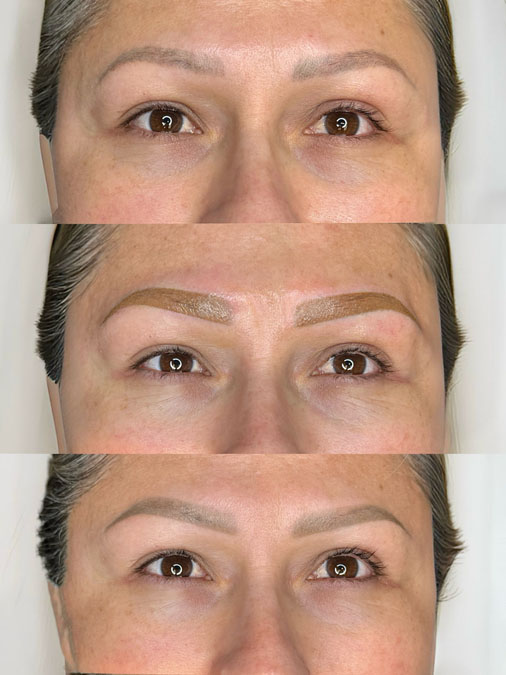
This client is a 39-year-old female with Fitzpatrick Skin Type III who originally received microblading approximately seven years earlier. She explained that her brows looked beautiful for the first several years, but gradually became patchy as some hairstrokes remained visible while others almost completely disappeared. The uneven appearance eventually led her to begin researching patchy microblading correction.
Before planning treatment, we carefully evaluated the remaining hairstrokes, healed pigment, overall eyebrow shape, natural eyebrow hair, facial balance, and previous microblading history. Every patchy eyebrow ages differently, making individual evaluation one of the most important parts of the correction process. This case illustrates why older patchy microblading is one of the most common concerns seen in eyebrow tattoo correction and demonstrates how understanding the complete eyebrow—not simply the missing strokes—helps guide the most appropriate correction strategy for each individual client in the Dallas area.
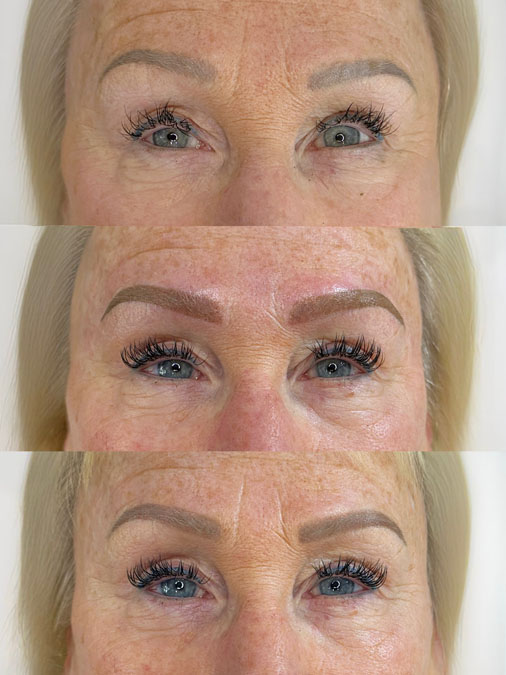
This client is a 68-year-old female with Fitzpatrick Skin Type 2 who had cosmetic eyebrow tattooing performed approximately 15 years earlier. Although she remained happy with the overall eyebrow shape, she became increasingly aware that the healed pigment appeared noticeably grey in natural daylight. Her goal was not to create dramatically different eyebrows but to better understand why the existing colour no longer looked as natural as it once had.
We carefully evaluated the healed pigment, remaining eyebrow tattoo, facial proportions, natural eyebrow hair, and previous cosmetic tattoo history before recommending an individualized eyebrow tattoo correction plan. Every grey eyebrow tattoo behaves differently, which is why correction should never be based on colour alone.
This case highlights the importance of evaluating the complete eyebrow rather than focusing only on the visible grey pigment, helping clients better understand the options available for older cosmetic eyebrow tattoos.

You may also be in the right place if your brows are not necessarily “bad,” but they are no longer current. Many clients do not need a full repair. They need a thoughtful brow redo or refresh appointment that updates older cosmetic tattooing without treating the case like a full reconstruction.
If your brow tattoo feels structurally difficult because the shape is misplaced, the tails are too long, the arches sit too high, the pigment is dense, or the brows were placed outside a flattering design, you may want to read more about repairing previous eyebrow tattoos.
Why Eyebrow Tattoo Correction Is Different From First-Time Brows
First-time cosmetic brow services and correction services attract completely different clients. A first-time client is usually deciding which brow style they want. A correction client is often trying to solve a problem that already exists on their face every day.
Correction clients are usually not asking, “Should I get microblading?” They are asking, “Can this be improved?” They want to know why the color changed, why the shape feels wrong, why the strokes blurred, why one brow looks different from the other, and what their safest next step should be.
That difference matters. Eyebrow tattoo correction requires a more careful strategy than simply choosing a color and designing a new shape. The artist must evaluate what is already present before deciding what should happen next.
Previous brow pigment affects:
- Color selection
- Technique choice
- Brow mapping
- Possible shape changes
- How much density can safely be added
- Whether old microblading can be incorporated
- Whether powder shading would be more appropriate
- Whether the case is a refresh, correction, repair, or overhaul
- How many appointments may be needed
- What healed result is realistic
In some cases, previous microblading can be refined. In others, the old strokes have blurred too much for more hairstrokes to be the best option. When that happens, a client may need a different correction plan. Our microblading correction hub explains how old hairstrokes are evaluated before deciding whether more strokes, powder shading, or a combination strategy makes sense.
In color-focused cases, the shape may be acceptable but the healed pigment may not be. Gray, red, orange, pink, or ashy brows require careful color evaluation. For those cases, our eyebrow color correction page
explains why the color visible in the skin today matters more than the pigment originally used.
Our Eyebrow Tattoo Correction Philosophy
Our correction philosophy is simple: improve what exists while respecting the limits of the previous work. Correction should not be rushed. It should not be oversold. It should not be treated like a quick cover-up. It should be planned with the long-term healed result in mind.
The goal is to move the brows toward a softer, more balanced, more flattering result whenever possible. Sometimes that means refining color. Sometimes it means rebuilding faded areas. Sometimes it means improving symmetry. Sometimes it means modernizing an older brow tattoo. Sometimes it means repairing more difficult previous work.
A strong correction plan does not begin with, “What can we add?” It begins with, “What is already here?”
That question changes everything. Existing pigment is not invisible. Old color, old shape, old saturation, and old technique all remain part of the correction plan. Even when brow tattooing has softened, it can still influence the final result.
For that reason, conservative correction is often the strongest approach. More pigment is not always better. Larger brows are not always better. Darker brows are not always better. The best correction plan is the one that creates the most flattering improvement while protecting the skin and preserving future options.
Correction Principle
Eyebrow tattoo correction is not about pretending the old work is gone. It is about understanding the old work clearly enough to improve the brows intelligently.
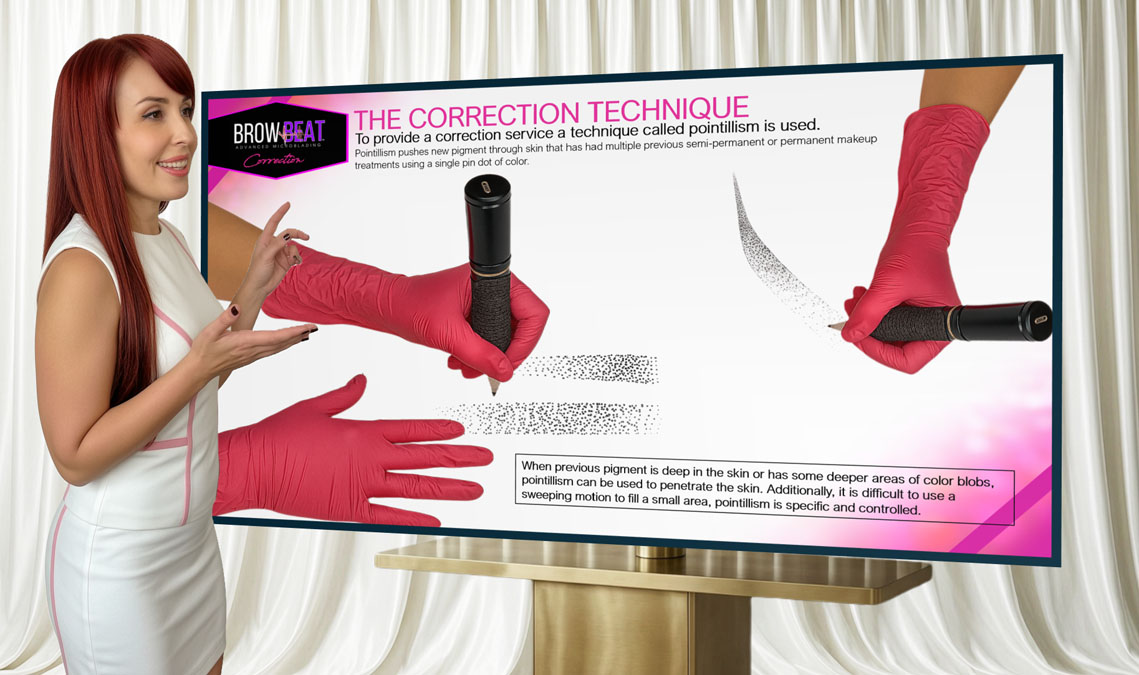
Why Realistic Expectations Matter
Realistic expectations are one of the most important parts of eyebrow tattoo correction. A responsible correction page should never promise that every old eyebrow tattoo can be perfectly fixed, erased, covered, or transformed in one appointment.
Some brows can be improved beautifully. Some need a staged plan. Some are better suited for a refresh than a repair. Some require color correction before the final shape can look balanced. Some are limited by dense pigment, scar tissue, old placement, or previous work that sits too far outside a flattering brow design.
The goal is not to make unrealistic promises. The goal is to explain what can be evaluated, what may be improved, and what type of appointment may make sense.
In many cases, small refinements create a major visual difference. Adjusting symmetry, refreshing density, correcting unwanted color, softening the visual impact of old work, or rebuilding faded areas can make brows feel more wearable without overwhelming the skin.
To see how different correction cases can vary, visit the eyebrow tattoo correction gallery.
Before-and-after examples are helpful because they show that correction is not one single service with one single outcome. Every client begins with a different brow history.
Where to Start If You Are Unsure What Type of Correction You Need
Many clients know they are unhappy with their brows, but they do not know whether they need microblading correction, eyebrow color correction, tattoo repair, a redo, or a refresh. That is normal. You do not need to diagnose your own brows before booking.
If you are visiting from Dallas, Highland Park, University Park, Preston Hollow, Lakewood, Uptown, Irving, Plano, Frisco, McKinney, Richardson, Garland, Arlington, Fort Worth, Southlake, Grapevine, Colleyville, Keller, or another North Texas community, your appointment begins with a careful evaluation of the existing brow tattoo so the correction plan is based on your actual healed pigment, not assumptions.

Why Eyebrow Tattoos Change Over Time
One of the biggest misconceptions about cosmetic eyebrow tattooing is that the brows you leave with on appointment day will continue looking exactly the same for years. In reality, every cosmetic eyebrow tattoo changes over time. Some changes are expected. Others are less predictable. Understanding why those changes happen is one of the first steps toward understanding eyebrow tattoo correction.
When clients tell us, “My eyebrows looked beautiful when they were first done,” we believe them. Cosmetic eyebrow tattoos often heal well initially before gradually changing as the years pass. Those changes may involve color, density, shape, definition, or the overall appearance of the brows.
Eyebrow tattoo correction begins by evaluating how your brows have changed—not how they looked immediately after the original appointment.
If your primary concern is unwanted healed color, including gray, blue-gray, red, orange, salmon, pink, purple, or ashy eyebrows, our Eyebrow Color Correction Guide explains those color changes in much greater detail.
Every Eyebrow Tattoo Ages Differently
No two eyebrow tattoos age exactly the same. Two clients can receive their brows on the same day using similar pigments and techniques, yet several years later their healed results may look completely different.
This happens because eyebrow tattoos are influenced by far more than the pigment itself.
Factors that affect long-term healing include:
- Skin type
- Natural oil production
- Sun exposure
- Age
- Hormonal changes
- Skincare products
- Retinoids and exfoliating acids
- Immune response
- Lifestyle
- Previous tattoo history
- How many times the brows have been tattooed
- The original implantation technique
- Pigment saturation
- Implantation depth
- Healing after each appointment
Because every client heals differently, eyebrow tattoo correction should never rely on assumptions. The existing healed pigment always tells a more accurate story than the pigment that was originally selected years ago.
The Skin Changes Too
Most people think only the pigment changes over time. In reality, your skin changes as well.
Collagen naturally changes with age. Oil production may increase or decrease. Sun exposure gradually affects the skin’s appearance. Hormonal changes, medications, skincare routines, and environmental exposure all influence how cosmetic eyebrow tattoos continue to look years after the original appointment.
This is one reason why correction should always be approached conservatively. The brows you have today exist within skin that has changed alongside the tattoo itself. Successful eyebrow tattoo correction respects both the existing pigment and the current condition of the skin.
Why Healed Pigment Matters More Than Fresh Pigment
Professional correction artists spend very little time focusing on what fresh cosmetic tattooing looked like immediately after the original appointment. Instead, they study healed pigment.
Fresh cosmetic tattooing can appear darker, warmer, cooler, sharper, or more saturated than it will ultimately become after healing. Once the brows have fully healed and continued aging over months and years, the existing pigment becomes far more valuable when planning correction.
For that reason, we evaluate:
- The current healed color
- The amount of pigment remaining
- The overall saturation
- The healed shape
- The healed symmetry
- The visual softness of the brows
- The relationship between the tattoo and the natural eyebrow hair
The healed eyebrow—not the original procedure—determines the correction plan.
Different Types of Cosmetic Eyebrow Tattooing
Not every previous eyebrow tattoo was created using the same technique. Understanding what type of cosmetic tattooing you already have helps determine which correction strategy may be appropriate.
Previous Microblading
Microblading uses individual hairstrokes to create the appearance of natural eyebrow hair. As those strokes age, they may soften, widen, blur together, or gradually lose definition.
If your primary concern involves previous hairstrokes, blurred microblading, or faded stroke patterns, explore our Microblading Correction Hub.
Previous Powder Brows
Powder brows create a soft cosmetic shading effect rather than individual hairstrokes. Over time they may fade unevenly, lose density, or experience color changes while maintaining much of their original shape.
Previous Combination Brows
Combination brows blend hairstrokes with soft shading. During correction, both elements must be evaluated independently because the strokes and the shading may have aged differently.

Older Permanent Makeup
Some clients received cosmetic eyebrow tattooing many years ago using techniques that were common at the time but differ significantly from modern cosmetic tattoo procedures.
These older eyebrow tattoos often require a different correction strategy than newer cosmetic tattoo techniques because the pigment, saturation, placement, and healed appearance may be substantially different.
Why Two Gray Eyebrows May Need Completely Different Correction Plans
One of the most important lessons experienced correction artists learn is that two eyebrows with similar colors do not necessarily require the same treatment.
For example, two clients may both have gray eyebrow tattoos. However:
- One client’s pigment may be very soft.
- The other client’s pigment may still be heavily saturated.
- One brow may sit inside a flattering shape.
- The other may extend well beyond the natural eyebrow.
- One client may have significant natural eyebrow hair.
- The other may have very little natural hair remaining.
Although both brows appear gray, their correction plans may be entirely different.
This illustrates why eyebrow tattoo correction is much more than correcting a color. It involves evaluating the complete eyebrow as a design rather than focusing on one isolated concern.
Why More Pigment Is Not Always the Answer
Clients are often surprised to learn that successful eyebrow tattoo correction does not always involve adding large amounts of new pigment.
Sometimes improving balance creates a greater visual change than increasing density. Sometimes refining the shape makes the brows appear softer without making them larger. Sometimes correcting healed color produces a dramatic improvement without changing the overall design.
Adding unnecessary pigment simply because pigment already exists can create additional challenges later.
Our goal is always to recommend the approach that creates the most attractive long-term healed result—not simply the quickest cosmetic change.
What We Evaluate Before Every Eyebrow Tattoo Correction Appointment
Before recommending any correction plan, we carefully evaluate multiple aspects of the existing eyebrows rather than focusing on only one concern.
This evaluation includes:
- Current healed color
- Pigment saturation
- Overall eyebrow symmetry
- Shape and proportions
- Previous brow mapping
- Natural eyebrow hair
- Skin quality
- Scar tissue
- Existing tattoo placement
- Previous cosmetic tattoo techniques
- Facial proportions
- Your long-term goals
Some clients ultimately benefit fromcorrecting previous microblading.
Others need eyebrow color correction. More structurally complex cases may benefit from eyebrow tattoo repair, while aging cosmetic tattooing may simply require a refresh or redo appointment.
Every recommendation begins with understanding your existing brows—not applying the same solution to every client.
Common Eyebrow Tattoo Correction Scenarios
Although no two correction appointments are identical, many clients arrive with similar concerns. Understanding these common scenarios can help you identify which type of eyebrow tattoo correction may best describe your own brows.
Some clients have one concern. Others have several. It is common for previous cosmetic eyebrow tattooing to involve a combination of color changes, shape concerns, aging pigment, and technique-related issues.
Scenario One: Your Eyebrows Look Too Gray
Gray eyebrows are one of the most common reasons clients search for eyebrow tattoo correction. The brows may appear charcoal, blue-gray, smoky, cool-toned, or simply lifeless compared to when they were first completed.
Gray pigment does not always mean the original procedure was performed incorrectly. Cosmetic eyebrow tattoos naturally continue evolving over time, and several factors influence the final healed appearance.
Rather than assuming every gray eyebrow requires the same treatment, we first determine:
- How much pigment remains.
- Whether the gray is light or heavily saturated.
- Whether the brow shape is still flattering.
- How previous tattooing has healed.
- Whether the existing pigment can support correction.
Clients whose primary concern is healed color should continue reading our
Eyebrow Color Correction Guide, which explores gray, red, orange, pink, purple, olive, blue-gray, and other healed pigment changes in greater detail.
Scenario Two: The Shape Never Felt Right
Sometimes the pigment color is acceptable, but the eyebrow shape simply does not complement the client’s face. The arch may sit too high. The fronts may begin too close together. The tails may extend farther than desired. The brows may feel overly thick, too narrow, or visually unbalanced.
Shape correction requires careful planning because the previous tattoo continues influencing what is realistically possible. Rather than treating the brows as blank skin, we evaluate how the existing tattoo can be incorporated into a more flattering design.
When previous tattoo placement creates larger structural concerns, additional planning may be required. Learn more on our Eyebrow Tattoo Repair page.
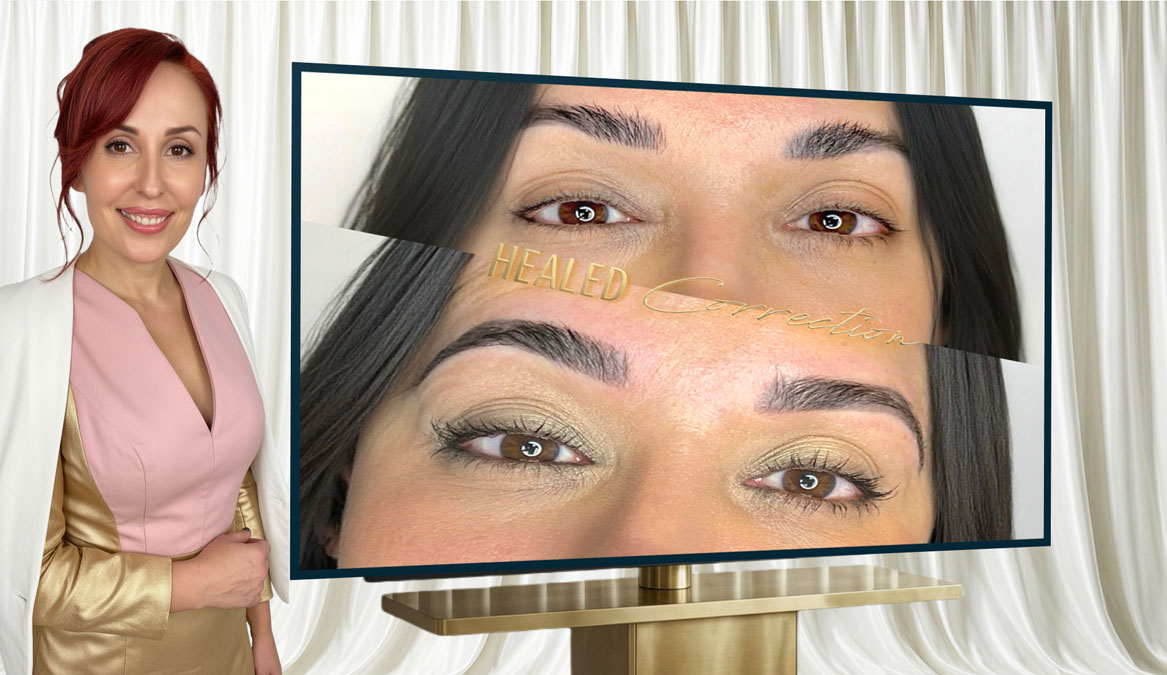
Scenario Three: Your Microblading No Longer Looks Like Hair
One of the biggest reasons clients seek correction is that previous microblading no longer resembles individual hair strokes.
Over time, hairstrokes may soften, spread, blur together, lose definition, or heal into a soft background shadow. This does not necessarily mean the brows cannot be improved—it simply means the correction strategy should be based on how the strokes look today rather than how they looked immediately after the original appointment.
During evaluation we consider:
- Stroke clarity
- Stroke spacing
- Overall density
- Pigment saturation
- Natural eyebrow hair
- Skin quality
- Previous healing patterns
Depending on these findings, your correction plan may involve rebuilding selected areas, softening the overall appearance, incorporating powder shading, or choosing another approach that complements the existing brows.
You can learn more by visiting our Microblading Correction Hub.
Scenario Four: Your Brows Feel Too Dark or Too Heavy
Some clients describe their eyebrows as looking stamped on, blocky, harsh, or much darker than they would like.
The appearance of heavy brows may be caused by several different factors. Existing pigment may still be highly saturated. The original design may be larger than the natural brow. Previous touch-up appointments may have gradually increased density over several years.
Instead of automatically adding additional pigment, correction begins by understanding why the brows appear heavy in the first place.
Sometimes improving shape creates a softer appearance. Sometimes adjusting the visible color changes how dense the brows appear. Sometimes a refresh is all that is needed. Other situations require a more comprehensive repair strategy.
Scenario Five: Your Brows Look Patchy
Patchy healing is another common concern among correction clients. One section of the eyebrow may appear lighter than another, the tails may have faded significantly, or the fronts may have lost more pigment than the body of the brow.
Patchy brows do not automatically require a complete overhaul. The existing tattoo is carefully evaluated to determine whether selective rebuilding, improved density, color refinement, or a refresh appointment will create the most balanced healed appearance.
Clients whose brows have simply aged over time often benefit from reading our Corrections, Redos & Refreshes Guide.
Common Reasons Clients Choose Eyebrow Tattoo Correction
Although every client’s story is unique, many tell us they delayed seeking correction because they were unsure whether improvement was possible.
Some spent years filling in their brows with makeup every morning. Others changed hairstyles to draw attention away from their eyebrows. Many assumed they simply had to live with previous cosmetic tattooing forever.
In reality, many correction cases can be thoughtfully improved after carefully evaluating the existing pigment and creating an individualized treatment plan.
Correction Is More Than Color
People often associate eyebrow tattoo correction with correcting unwanted pigment color. While color correction is certainly one important part of the process, successful correction considers every part of the eyebrow together.
A beautiful correction may involve:
- Better proportions
- Improved balance
- More natural transitions
- Softer fronts
- Refined arches
- Improved tails
- Balanced density
- More harmonious healed color
- A design that complements the client’s facial features
Every recommendation is based on improving the eyebrow as a complete design rather than solving only one isolated problem.
Real Education Creates Better Decisions
We believe clients make better long-term decisions when they understand why their eyebrows changed, what their options are, and what realistic improvement looks like.
That is why this website was built entirely around eyebrow tattoo correction education rather than simply describing services.
Whether you are researching blurred microblading, unwanted healed pigment, aging permanent makeup, cosmetic eyebrow tattoo repair, or simply wondering whether your brows would benefit from a refresh, our goal is to provide clear, honest education before you ever book an appointment.

Continue exploring our correction resources, browse our before-and-after gallery, read additional educational articles on our Correction Blog,
or book an appointment when you’re ready for your brows to be evaluated.
Choosing the Right Eyebrow Tattoo Correction Path
One of the biggest misconceptions about eyebrow tattoo correction is that every client needs the same treatment. In reality, no two brows are identical, and no two correction plans should be identical either.
Some clients require only a subtle refresh. Others benefit from correcting healed color. Some need previous microblading refined, while others require structural eyebrow tattoo repair because the existing design no longer works with their facial features.
The goal is never to force every client into the same treatment. Instead, the goal is to determine which correction path is most appropriate for the eyebrows you have today.
How We Evaluate Existing Brow Tattoos
Before recommending any eyebrow tattoo correction, we carefully assess the existing cosmetic tattoo rather than focusing on just one concern. While clients often notice the color first, experienced correction artists evaluate the entire eyebrow as a complete design.
Our evaluation considers:
- The healed pigment color.
- How much pigment remains in the skin.
- The overall eyebrow shape.
- Symmetry between both brows.
- The placement of the fronts, arches, and tails.
- The amount of natural eyebrow hair.
- Skin texture and quality.
- Previous microblading or machine work.
- Scar tissue from previous procedures.
- How the brows have changed over time.
Looking at the eyebrow as a whole allows us to develop a correction strategy that focuses on long-term improvement rather than simply addressing one isolated concern.
When Microblading Correction May Be the Best Option
Clients with previous hairstrokes often assume the solution is to simply add more hairstrokes. Sometimes that is appropriate—but often it is not.
Old microblading may have softened naturally over time. The strokes may have widened, blurred together, or faded unevenly. In these situations, placing additional hairstrokes without evaluating the existing tattoo may not create the most attractive healed result.
Our Microblading Correction resource explains how previous hairstroke work is evaluated and why correction plans differ from one client to another.
Whether your concern involves faded strokes, blurred hairstrokes, patchy microblading, or previous brow work that no longer appears natural, understanding the existing tattoo is the first step toward developing the right treatment strategy.
When Eyebrow Color Correction May Be More Appropriate
Sometimes the overall brow shape is still attractive, but the healed pigment no longer complements the client’s complexion.
Gray eyebrows, blue-gray pigment, red tones, orange hues, pink healing, salmon tones, and other color shifts are among the most common concerns we see.
However, color correction is rarely as simple as identifying one color and choosing another. Existing pigment depth, saturation, skin undertones, previous tattoo history, and healed appearance all influence the most appropriate correction plan.
If your primary concern involves unwanted healed pigment rather than brow shape, we recommend reading our complete guide to Eyebrow Color Correction.
When Eyebrow Tattoo Repair Becomes Necessary
Some eyebrows require more than refinement. Previous tattoo placement, heavy saturation, oversized brows, uneven arches, structural asymmetry, or significant design concerns may require a more comprehensive repair strategy.
Repair cases are often the most individualized because every previous eyebrow tattoo presents different challenges.
Rather than trying to force every repair into the same approach, we evaluate the existing design carefully before determining how the brows may be improved.
Clients facing these more complex situations may find our Eyebrow Tattoo Repair Guide helpful for understanding the different types of repair work.
When a Refresh May Be All You Need
Not every client requires extensive correction. Many simply have cosmetic eyebrow tattoos that have naturally softened over several years.
The overall shape may still be flattering. The brows may simply appear lighter, less defined, or less balanced than they once did.
These clients often benefit from a conservative refresh that rebuilds the healed appearance without dramatically changing the original design.
If your eyebrows have simply aged over time, our Corrections, Redos & Refreshes page explains how these appointments differ from more advanced repair work.
Why Conservative Correction Often Produces the Best Long-Term Results
A common mistake in cosmetic eyebrow tattooing is believing every concern requires more pigment. In reality, thoughtful correction often involves making fewer, more strategic decisions.
Adding unnecessary pigment can make future correction more difficult. Enlarging the brows unnecessarily may reduce future design flexibility. Increasing saturation simply because pigment already exists rarely produces the most elegant healed result.
Instead, conservative correction focuses on creating balanced improvements that continue looking attractive as the brows age naturally over time.
Sometimes improving symmetry creates a more dramatic visual improvement than adding density. Sometimes refining healed color changes the appearance of the entire eyebrow without significantly altering the tattoo itself.
Clients Travel Throughout North Texas for Eyebrow Tattoo Correction
Our eyebrow tattoo correction studio welcomes clients from throughout the Dallas–Fort Worth Metroplex and surrounding North Texas communities.
Many of our appointments come from clients living in Highland Park, University Park, Preston Hollow, Lakewood, Uptown Dallas, Irving, Plano, Frisco, McKinney, Richardson, Garland, Arlington, Fort Worth, Grapevine, Southlake, Keller, Colleyville, Flower Mound, Coppell, and nearby cities.
Many clients choose to travel because eyebrow tattoo correction is a specialized service. Previous cosmetic tattooing often requires a different level of planning than first-time eyebrow procedures, and many clients prefer working with an artist who focuses specifically on correcting existing brow tattoos.
Explore More Eyebrow Tattoo Correction Resources
This master guide is designed to help you understand the broader subject of eyebrow tattoo correction. As you continue learning, we encourage you to explore the educational resources that best match your individual concerns.
- Microblading Correction — previous hairstrokes, blurred strokes, faded microblading, and old hairstroke work.
- Eyebrow Color Correction — correcting gray, red, orange, pink, blue-gray, olive, and other healed pigment changes.
- Eyebrow Tattoo Repair — structural concerns, misplaced pigment, heavily saturated brows, and more advanced repair cases.
- Corrections, Redos & Refreshes — updating older cosmetic eyebrow tattoos and refreshing naturally faded brows.
You can also browse our Before & After Gallery, continue learning through our
Eyebrow Tattoo Correction Blog, or book an appointment when you’re ready to take the next step.

Common Myths About Eyebrow Tattoo Correction
There is a great deal of misinformation surrounding eyebrow tattoo correction. Many clients spend months searching online before booking an appointment, often finding conflicting advice that makes the process seem far more confusing than it actually is.
While every correction case is unique, understanding a few common misconceptions can help you make more informed decisions about your existing eyebrow tattoo.
Myth: Every Old Eyebrow Tattoo Can Be Treated the Same Way
No two cosmetic eyebrow tattoos age identically. Two clients may have brows that appear similar at first glance, yet require completely different correction plans because the pigment, saturation, skin quality, healing history, and original technique are different.
Professional eyebrow tattoo correction begins with evaluating the individual brows rather than applying the same treatment to everyone.
Myth: Dark Brows Always Need More Pigment
Brows that appear dark do not always require additional cosmetic tattooing. In some situations, improving shape, refining proportions, or addressing healed color creates a much greater improvement than simply increasing density.
Thoughtful correction focuses on creating a balanced eyebrow rather than simply adding more pigment.
Myth: Correction Means Starting Over
Correction does not begin with blank skin. Previous pigment remains part of the canvas and influences every treatment decision moving forward.
Rather than pretending the previous tattoo no longer exists, successful correction works with the existing eyebrow to create the most attractive long-term improvement possible.
Common Problems We See in Previous Brow Tattooing
Every correction artist eventually begins noticing recurring patterns in previous cosmetic eyebrow tattoo work. While every client is different, many concerns fall into similar categories.
- Pigment implanted outside the natural eyebrow shape.
- Overly dense or heavily saturated eyebrows.
- Microblading strokes placed too closely together.
- Brow fronts that appear harsh or overly square.
- Uneven arch placement.
- Excessively long tails.
- Pigment that no longer complements the client’s complexion.
- Repeated touch-up appointments without reassessing the overall design.
- Aging cosmetic tattooing that has never been updated.
Identifying these patterns helps determine whether the brows would benefit most from microblading correction, eyebrow color correction, eyebrow tattoo repair, or a conservative redo or refresh appointment.
Why Before and After Photos Matter
Before-and-after photographs are one of the most valuable educational tools for anyone considering eyebrow tattoo correction. They demonstrate how different correction strategies are applied to different types of previous brow work.
Rather than showing one style of correction, a comprehensive gallery allows clients to see a variety of healed eyebrows involving different colors, skin types, techniques, and correction categories.
As you browse examples, remember that every eyebrow begins from a different starting point. Comparing your brows directly to someone else’s rarely provides an accurate expectation because every correction plan is customized to the existing tattoo.
We invite you to explore our Eyebrow Tattoo Correction Gallery
to see real examples of previous cosmetic eyebrow tattooing that has been refined, repaired, refreshed, or improved through correction.
Why Education Comes Before Treatment
We believe informed clients make better long-term decisions. That is why this website exists as an educational resource—not simply a collection of service pages.
Whether you are researching blurred microblading, unwanted healed color, previous powder brows, aging cosmetic tattooing, eyebrow tattoo repair, or wondering if your brows simply need a refresh, our goal is to help you understand your options before booking an appointment.
If you are just beginning your research, we recommend starting with
What Is a Correction?
From there, you can continue learning through each of our dedicated correction hubs, browse educational articles on our Correction Blog,
or view examples inside our Before & After Gallery.
Book Your Eyebrow Tattoo Correction Appointment
If your eyebrows no longer reflect how you want to look, the next step is not guessing—it is having your existing cosmetic eyebrow tattoo professionally evaluated.
Whether your concern involves previous microblading, healed pigment that has changed color, structural brow concerns, aging permanent makeup, or eyebrows that simply need to be refreshed, every appointment begins by understanding what already exists in your skin.
Clients travel to us from throughout Dallas, Highland Park, University Park, Preston Hollow, Lakewood, Uptown Dallas, Irving, Plano, Frisco, McKinney, Richardson, Garland, Arlington, Fort Worth, Southlake, Grapevine, Colleyville, Keller, Coppell, Flower Mound, and surrounding North Texas communities because correction often requires a different level of planning than first-time cosmetic eyebrow tattooing.
If you’re ready to move forward, you can book an appointment.
If you have questions first, please contact us.
Continue Learning About Eyebrow Tattoo Correction
Every correction journey is different, which is why we’ve created dedicated educational resources for each major correction category.
- Microblading Correction — Learn about correcting old hairstrokes, blurred microblading, faded strokes, and previous hairstroke work.
- Eyebrow Color Correction — Understand why eyebrows heal gray, red, orange, pink, blue-gray, olive, or ashy and how those color changes are evaluated.
- Eyebrow Tattoo Repair — Explore structural correction, brow redesign, misplaced pigment, and more advanced repair cases.
- Corrections, Redos & Refreshes — Learn when refreshing, updating, or modernizing previous cosmetic eyebrow tattoos may be the most appropriate option.
We also encourage you to continue exploring our educational correction articles, browse our before-and-after gallery, or return to our home page
to explore additional correction resources designed specifically for previous cosmetic eyebrow tattooing.
Frequently Asked Questions About Eyebrow Tattoo Correction
Choosing eyebrow tattoo correction is an important decision, and many clients have similar questions before booking an appointment. Below are some of the most common questions we receive from clients throughout Dallas, Highland Park, University Park, Preston Hollow, Lakewood, Irving, Plano, Frisco, McKinney, Richardson, Arlington, Fort Worth, and the surrounding DFW Metroplex.
Eyebrow tattoo correction is the process of improving previous cosmetic eyebrow tattooing that no longer looks the way you would like. Depending on your existing brows, correction may involve improving shape, refining healed color, balancing symmetry, refreshing faded pigment, repairing previous work, or modernizing an older eyebrow design.
Many cases of previous microblading can be improved, but every brow must be evaluated individually. Some clients benefit from rebuilding selected areas, while others may require a different correction approach depending on how the original hairstrokes have healed.
Gray cosmetic eyebrow tattoos are one of the most common reasons clients seek correction. The existing pigment, depth, saturation, and overall brow design all influence the correction strategy.
Many uneven eyebrows can be improved depending on the current shape, existing tattoo placement, healed pigment, and overall facial proportions. Every correction plan is customized to the brows you currently have.
A touch-up typically follows a recent procedure performed by the same artist. Eyebrow tattoo correction addresses previous cosmetic eyebrow tattooing that has already healed and often involves unknown pigments, techniques, and healing histories.
Many clients are unsure whether they need microblading correction, eyebrow color correction, eyebrow tattoo repair, or a refresh. Your appointment begins by evaluating your existing brows and determining which treatment path is most appropriate.