

There is a conversation that rarely happens openly in this industry, yet it is one of the most important. Not every brow should be corrected. And more importantly, not every brow should be corrected immediately. In a space where solutions are often positioned as quick, accessible, and widely available, the ability to pause and say “not yet” becomes one of the most valuable forms of expertise. Because correction is not defined by action. It is defined by judgment. Understanding what eyebrow correction actually involves is the first step in recognizing why timing, structure, and decision-making matter just as much as technique.
Why This Conversation Matters
By the time a client reaches out for correction, there is usually more involved than just the brows themselves. There is frustration. There is disappointment. Often, there is a sense of urgency to resolve something that feels visibly wrong. That urgency is understandable. It is also where many poor decisions begin. Because when the priority becomes immediate change, the question shifts from “what is right” to “what is possible right now.” And those two things are not always aligned. Correction requires the ability to step back from urgency and evaluate what will actually lead to a stable, natural result—not just a temporary improvement.
The Difference Between Relief and a Real Plan
Most clients are not just looking for a service. They are looking for reassurance. They want to hear that their brows can be fixed quickly and without complication. They want certainty. But certainty, when it is not grounded in proper assessment, can be misleading. Relief is not the same as a plan. A plan considers:
- existing pigment
- depth and saturation
- available space
- long-term behavior of the brow
Without that level of evaluation, what appears to be a solution often becomes another layer added to an already complex situation.
Not Every “Yes” Is a Good Decision
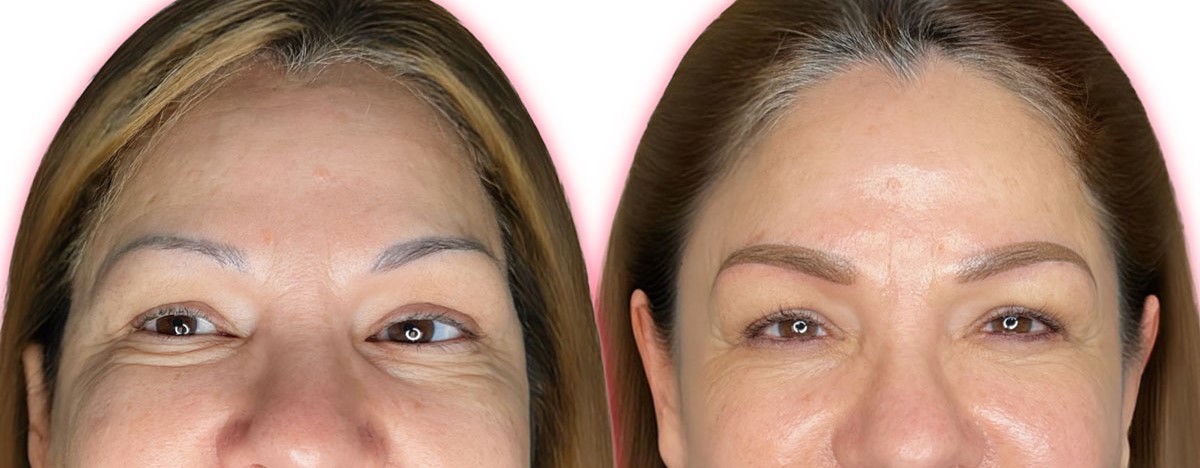
One of the defining differences in correction work is the ability to filter. It is not about how many cases can be accepted. It is about which cases should be accepted. There is a fundamental shift in thinking that happens here. The question is not: Can this be done? The question is: Should this be done? Those two questions lead to very different outcomes. Agreeing quickly may feel helpful in the moment, but if the underlying structure of the brow does not support a strong result, that agreement does not serve the client in the long term. Before deciding on the next step, reviewing the basics of eyebrow tattoo correction can provide valuable insight into the options available.
The Role of Assessment Before Action
Correction begins long before any pigment is placed. It begins with assessment. This includes:
- reviewing previous work
- understanding how many times the brows have been treated
- evaluating how the pigment has settled
- identifying limitations within the existing structure
This stage is often underestimated, yet it is where the most important decisions are made. Without it, correction becomes reactive instead of intentional.
The Three Limiting Factors
There is a consistent pattern that significantly affects whether correction is the right choice. When brows present with all three of the following characteristics, the approach must be reconsidered carefully:
- high saturation (very dark pigment)
- increased size or thickness
- placement too close to the center of the face
Each of these factors individually creates limitations. Combined, they reduce flexibility further. Dark pigment dominates the visual field. Thick structure limits reshaping. Close placement reduces the ability to create a soft, natural front. In these cases, the goal is no longer transformation. It becomes controlled improvement within boundaries. This concept aligns closely with what is explored in working over existing tattooed brows, where space and density determine what is realistically achievable. Every appointment begins by evaluating scarred and overworked brows to determine how the tissue will respond during correction.

Why “Adding More” Is Often the Wrong Move
One of the most common mistakes in this space is assuming that additional pigment will improve an existing result. In reality, repeated layering without adjustment tends to create:
- increased density
- less defined structure
- mixed or uneven tones
This is not correction. It is accumulation. Over time, accumulation reduces control. It makes future correction more difficult and can lead to outcomes that require more invasive intervention than would have been necessary earlier. This is why understanding when correction is possible without removal is so critical. The wrong step at the wrong time can shift a manageable case into a more complex one.
When “Not Yet” Is the Best Answer
There are situations where the most responsible decision is to wait. This may be due to:
- recent treatments that have not fully healed
- skin that requires recovery
- pigment that needs to settle before it can be accurately assessed
Waiting is often misunderstood as inaction. In reality, it is a strategic pause that allows for better decision-making. Acting too soon can compromise the skin, distort the outcome, and limit future options. Timing is not a secondary consideration in correction. It is central to the result.
The Influence of Industry Gaps
It is important to acknowledge that not all artists are trained in correction-specific thinking. Many are highly skilled in creating brows on untouched skin. That is a different process. Correction requires:
- analysis of layered pigment
- understanding of long-term pigment behavior
- ability to adjust technique based on existing conditions
Without that foundation, the approach often defaults to repetition rather than adjustment.
Why Complexity Builds Over Time
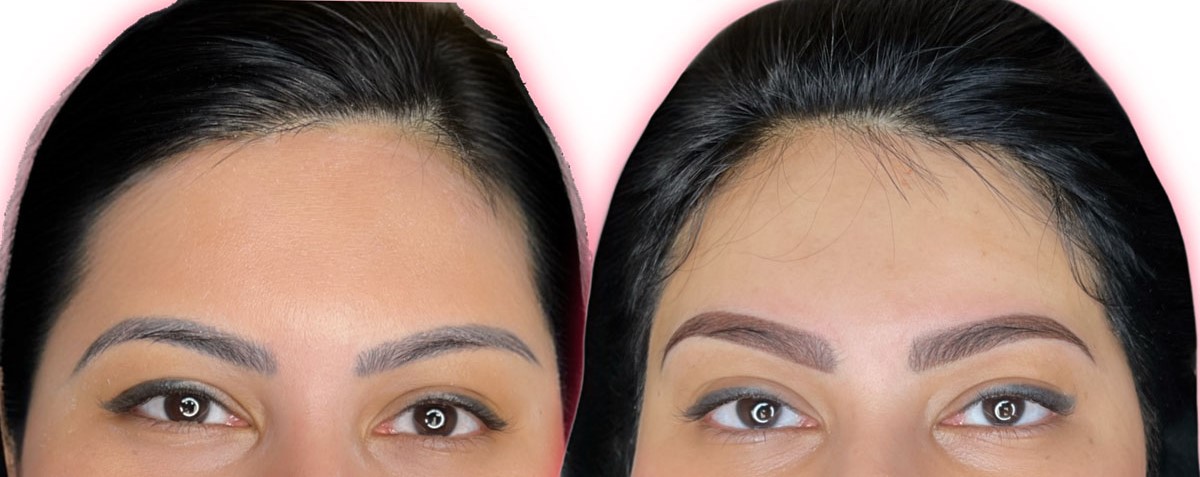
Most complex cases are not created in a single appointment. They develop through repeated treatments that do not adapt to the changing condition of the brow. Each additional layer introduces more variables:
- variation in pigment depth
- variation in tone
- increased density
Over time, these variables interact in ways that reduce clarity and make correction more nuanced. This is why restraint is so important. Not every opportunity to add should be taken. Even with multiple treatments, many people are relieved to discover that multiple layers of microblading can often be improved with the right correction plan.
Setting Realistic Expectations
One of the most important parts of correction is setting expectations that align with what is achievable. Improvement is often possible. Perfection in a single session is not. When expectations are grounded, results are evaluated accurately. When expectations are unrealistic, even strong improvements can feel insufficient. Clarity at the beginning protects satisfaction at the end.
Correction as Long-Term Thinking
Every decision made during correction affects future outcomes. This includes:
- how the pigment will heal
- how it will fade
- how it will respond to future maintenance
Correction is not isolated to a single appointment. It is part of an ongoing process. Approaching it with long-term thinking ensures that each step contributes to a stable, natural result rather than creating additional complexity.
When Correction Is Not the Right Choice
Correction is not the right choice when:
- the brow structure does not allow for meaningful improvement without additional preparation
- the pigment is too dense to adjust effectively through neutralization color science alone
- the approach being offered does not include a clear correction strategy
- the expectation is immediate transformation rather than progressive improvement
In these situations, an alternative path may be required to achieve the desired result. Multiple treatments affect the way pigment behaves beneath the skin, making careful planning an essential part of every eyebrow tattoo repair and redo procedure.
Final Thought
Choosing the right moment to act is just as important as knowing how to act. Correction is not about doing something quickly. It is about doing the right thing at the right time, with a clear understanding of what will create the most stable and natural result. In some cases, that means moving forward. In others, it means waiting. Both are valid decisions when they are made with the outcome in mind. Because ultimately, the goal is not simply to change the brow. It is to improve it in a way that holds over time. Booking is easy! click here to secure your correction appointment.