
There is a moment that happens quietly for most clients.
It does not happen in the chair.
It does not happen during the appointment.
It happens later.
Usually in front of a mirror, under lighting that is far less forgiving than a treatment room.
And the thought is simple, but it carries weight:
Something about these isn’t right anymore.
Not necessarily wrong.
Not necessarily bad.
Just… no longer aligned.
A little heavier than they used to feel.
A little softer in places that once felt defined.
A color that reads differently than it did before.
And this is where the conversation begins, whether it is spoken out loud or not.
Because what comes next is not standard brow work.
What comes next is correction.
And this is the part of the industry that is rarely explained with the level of clarity it deserves.
Correction Is Not a Continuation — It Is a Shift
Most people assume correction is simply a continuation of what they have already experienced.
A refresh.
A maintenance appointment.
A simple adjustment.
But correction is not a continuation.
It is a shift.
A different type of work, built on a completely different foundation.
On clean skin, an artist creates.
They are working with space.
With openness.
With full control from the beginning.
But correction is not built on openness.
It is built on history.
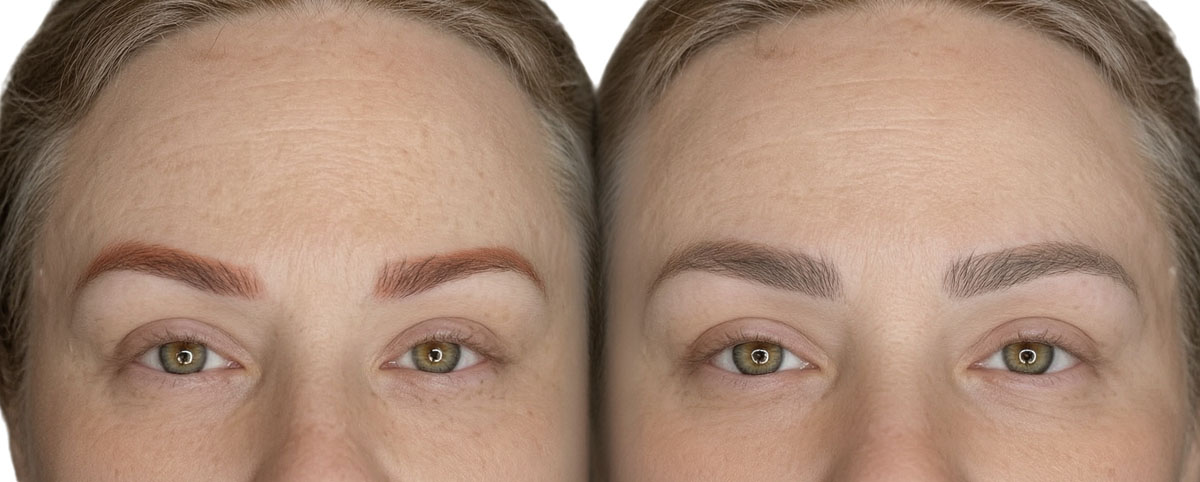
There is already pigment in the skin.
There is already structure.
There are already decisions, made at different times, under different approaches, that are still influencing the brow.
So instead of creating freely, the artist is responding.
Balancing what already exists.
Adjusting what has shifted.
Working within a canvas that is no longer neutral.
This is why correction feels different.
And why it requires a different level of understanding.
If you have ever wondered what that actually looks like in practice, the process itself is broken down more clearly here:
what actually happens during eyebrow correction step by step.
Because once you see it properly, you realize this is not surface work.
Not Every Artist Is Meant to Do This Work
This is one of the quiet truths of the industry.
Most artists are trained to create.
They learn mapping, placement, technique, structure.
They learn how to build a brow from the beginning.
And many of them do that beautifully.
But correction requires something else entirely.
It requires the ability to look at a brow and understand not just what is visible, but what is influencing it underneath.
Why a tone has shifted.
Why a shape no longer feels balanced.
Why certain areas hold more density than others.
That level of assessment is not immediate.
It is developed.
Over time.
Through repetition.
Through seeing how pigment behaves, not just on day one, but months and years later.
Which is why many artists choose not to step into correction at all.
And if they say no, it is often not rejection.
It is awareness.
Avoidance Is Not the Problem — Misunderstanding Is
When a client hears:
“I don’t work over old work.”
It can feel personal.
Like something is too far gone.
Too complicated.
Too difficult.
But in reality, it usually means something much more practical.
It means the artist understands the limits of their current skill set.
And that matters.
Because correction is not something that should be approached casually.
It requires a level of decision-making that cannot be improvised.
It requires the ability to see patterns.
To recognize behavior.
To understand why pigment does not simply disappear, but evolves.
If you have experienced this moment yourself, you are not alone. Many clients reach this stage while
looking for a new artist after microblading, trying to understand what went wrong and what actually comes next.
Color Does Not Reset — It Interacts
This is one of the most important things most artists do not explain clearly enough.
Color does not reset.
It interacts.
Whatever is already in the skin is still present.
Still influencing.
Still affecting the final result.
Which means placing new pigment is not a clean slate. It is a conversation between tones.
And that conversation needs to be controlled.
Not guessed.
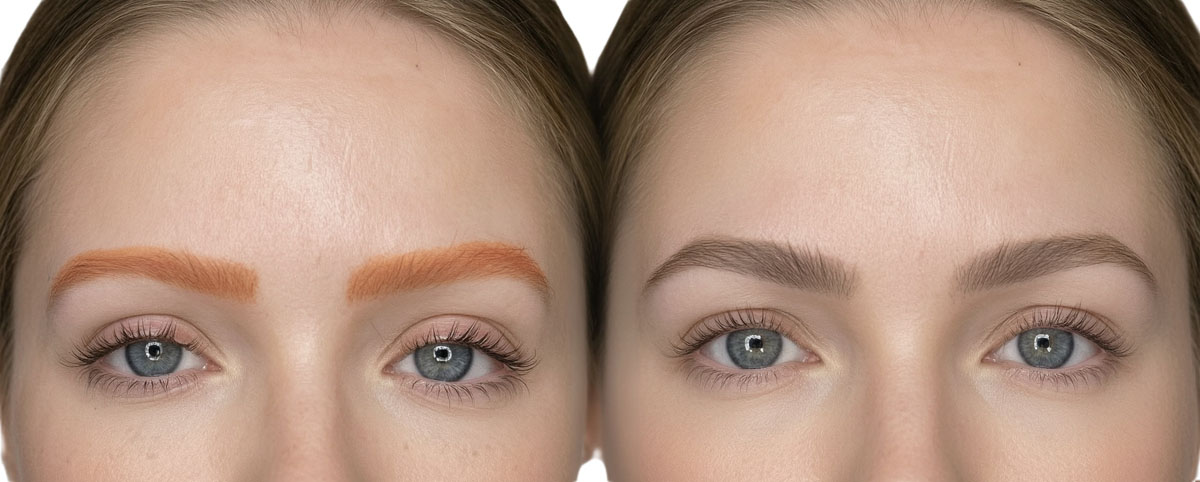
Because placing brown over a cool base does not automatically create a neutral result.
It creates a mixture.
A blend.
And if that blend is not understood properly, the result can feel heavier, muddier, or less refined over time.
This is why the concept matters so much:
why color doesn’t cover color in brow correction.
Because once you understand that, you stop expecting instant transformation and start understanding layered correction.
Experience Changes the Entire Approach
There is a difference between knowing what to do and knowing what will happen.
That difference is experience.
An experienced correction artist does not just see a brow.
They recognize it.
They have seen similar patterns before.
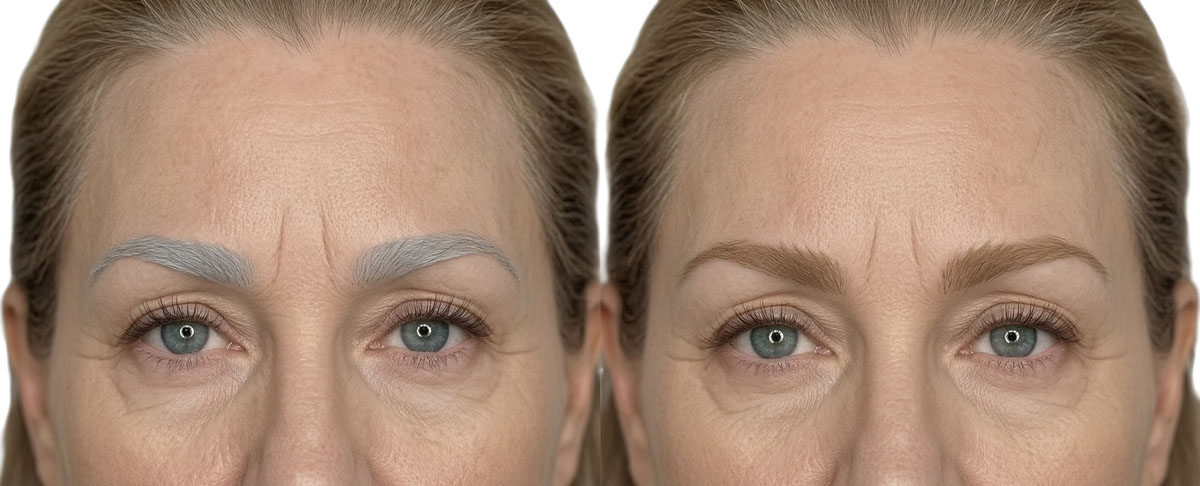
Similar color shifts.
Similar density changes.
Similar structural challenges.
So when they assess your brows, they are not guessing.
They are connecting.
Linking what they see in front of them to everything they have seen before.
And that recognition allows for something very specific:
Better decisions.
Not faster ones.
Better ones.
Time Is Part of the Design
Correction cannot be rushed.
Not because it is inefficient, but because it is layered.
Each step builds on the last.
Each session reveals more information.
Each healing phase shows how the skin has responded.
And that response determines what happens next.
This is why some cases take longer than others.
Not because something is wrong.
But because the structure requires it.
Because the pigment requires it.
Because the history requires it.
If you have ever wondered why timelines vary so much, it is explained more clearly here:
why some brows take longer to fix than others.
Because correction is not standardized.
It is individualized.
Restraint Is Where Skill Becomes Visible
Less experienced work often looks like effort.
More pigment.
More layering.
More attempts to fix quickly.
But experienced correction looks different.
It looks controlled.
There is space where there needs to be space.
There is softness where softness is intentional.
There is restraint where restraint protects the outcome.
Because in correction, doing more too quickly often creates more to correct later.
And that is not the goal.
The goal is clarity.
Honesty Is Part of the Process
Not every case should be accepted.
And not every result should be promised.
This is one of the most defining differences between a general artist and a true correction specialist.
Sometimes the right decision is not how to proceed, but whether to proceed yet.
Whether the skin needs more time.
Whether expectations need to be adjusted.
Whether a different approach is required.
And that requires honesty.
Not just in the work, but in the conversation.
Because the goal is not to say yes.
The goal is to do what is right for the long-term result.
What This Actually Feels Like for the Client
Correction is not just technical.
It is emotional.
There is a shift that happens during the process.
From uncertainty to understanding.
From reacting to being guided.
From hoping to knowing there is a plan.
If you have ever wondered what that experience feels like from the inside, this captures it more clearly:
what it feels like to go through eyebrow correction.
Because when it is done properly, the experience itself changes, not just the brow.
The Quiet Truth
Correction is not a quick fix.
It is a disciplined process.
Built on experience, structure, restraint, and intentional decision-making.
And when it is done properly, it does not just improve the brow.
It restores clarity.
Ready to Move Forward with a Structured Approach?
If you are at the point where your brows no longer feel aligned, and you are ready to understand what the right next step looks like, schedule your appointment.
Because the difference between guessing and knowing is everything in correction.
What Most Artists Won’t Tell You About Brow Correction
Once you understand that correction is not a quick adjustment—but a structured process—another layer becomes clear.
It’s not just about what the artist is doing.
It’s about how the entire experience is guided.
Because this is where most expectations begin to separate from reality.
And where clarity becomes everything.
Expectations Are Where Most Problems Begin
Most clients walk into correction with one quiet hope:
“I just want this fixed.”
And that’s completely understandable.
But the word “fixed” is where things become complicated.
Because correction is not about instantly reversing what has been done.
It is about improving what is there—intentionally, over time.
This is why expectations must be managed from the beginning.
Not lowered.
Not discouraged.
Aligned.
Aligned with how pigment behaves.
Aligned with how skin heals.
Aligned with what is realistically possible.
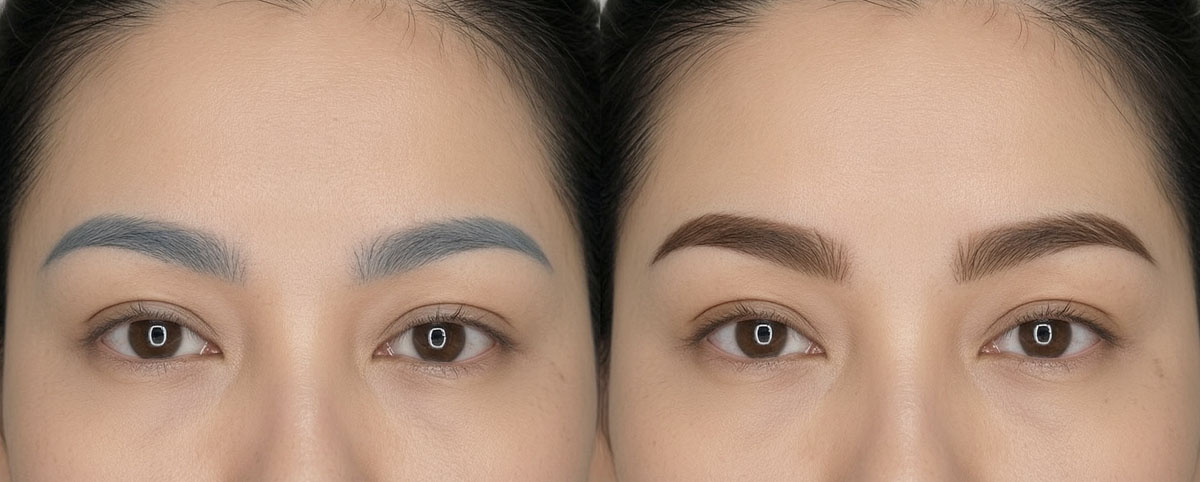
Results Take Time — Even When It’s Done Correctly
This is one of the most important things to understand.
Time is not a delay in correction.
It is part of the design.
Each session builds.
Each healing phase reveals.
Each adjustment refines.
And that refinement is what creates a stable, long-term result.
If everything is rushed into one moment, the result may look immediate—but it will not hold correctly over time.
This is why the healing phase matters just as much as the treatment itself.
If you want to understand what your brows are actually doing during that time, this breaks it down clearly:
eyebrow color correction healing process
Because what happens after the appointment is where the real result develops.
Immediate Perfection Is Not the Goal
This is where many people feel unsure.
They leave the appointment and look closely.
Analyzing.
Comparing.
Trying to decide:
“Is this exactly right?”
But correction is not about immediate perfection.
It is about direction.
The first session sets the foundation.
The second refines it.
The healing process softens and integrates everything together.
And that evolution is what creates a believable, natural result.
Not a single moment.
The Client Must Understand the Process — Not Just the Result
When clients only focus on the end result, they miss what’s actually happening.
They judge too early.
They question too quickly.
They lose trust in the process.
But when the process is understood, everything changes.
Now instead of reacting, the client observes.
They recognize shifts as part of the plan.
They understand softness as integration.
They see progression instead of problems.
And that understanding creates calm.
Clear Guidance Is Not Optional — It’s Essential
A strong correction experience is not just about technical skill.
It is about communication.
The right artist does not just perform the work.
They guide the experience.
They explain what they see.
They explain what they are doing.
They explain what will happen next.
Not in a complicated way.
In a clear, grounded, intentional way.
Because clarity builds trust.
And trust allows the process to unfold properly.
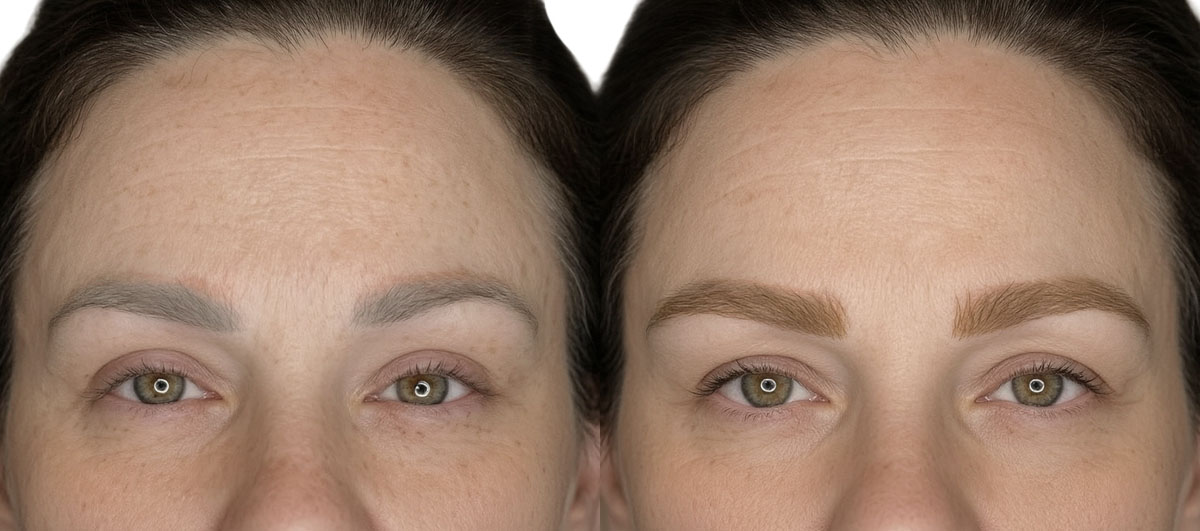
Every Case Is Unique — And Must Be Treated That Way
There is no template for correction.
No standard formula.
No one-size approach.
Each case carries its own history:
- Different pigment types
- Different depths
- Different healing responses
- Different structural changes over time
And those differences matter.
This is why repeating the same approach over and over can create inconsistent results.
If you’ve ever noticed brows changing unexpectedly over time, this explains why:
why repeating the same technique changes results
Because correction requires adaptation—not repetition.
There Are No Shortcuts in Correction
This is where discipline becomes visible.
There is no faster version of doing this properly.
No simplified path.
No shortcut that produces the same result.
Every step matters.
Every decision matters.
And skipping steps often leads to more complexity later.
This is especially true when layering pigment over time.
If you’ve ever wondered why brows can begin to feel heavier or more solid, this explains it clearly:
why your brows look more solid over time
Because without structure, layering becomes buildup.
Discipline Creates Better Results Than Speed
Correction is not fast work.
It is disciplined work.
Measured.
Controlled.
Intentional.
And that discipline is what allows the result to feel refined instead of forced.
Because when work is rushed, it shows.
In density.
In tone.
In long-term behavior.
Structure Is What Holds Everything Together
Without structure, correction becomes reactive.
With structure, it becomes predictable.
This means:
- Understanding where the brow is now
- Knowing where it needs to go
- Building a path that gets there step by step
And that path is what separates guesswork from expertise.
If you want to understand how structure transforms old work into something balanced again, this explains it further:
from old brows to new structure
Because structure is what restores clarity.
Experience Doesn’t Just Improve Results — It Refines Them
Over time, something subtle happens.
The work becomes quieter.
More controlled.
More intentional.
Less forced.
This is what experience does.
It removes unnecessary movement.
It refines decision-making.
It creates consistency.
And consistency is what allows results to hold—not just look good for a moment.
If you want to understand why experience matters so much in this space, this expands on it:
why experience matters more in eyebrow correction
Proper Correction Is Not Reactive — It Is Intentional
This is the final shift.
Correction is not about reacting to what has gone wrong.
It is about intentionally guiding what happens next.
Every choice is made with the future in mind.
How this will heal.
How this will fade.
How this will look months from now—not just today.
This is why correction done properly feels different.
Not rushed.
Not uncertain.
Not improvised.
Structured. Clear. Intentional.
The Full Picture
When you combine everything:
- Understanding the process
- Managing expectations
- Allowing time
- Working with structure
- Guiding each decision carefully
You get something very specific.
Predictability.
Not perfection.
Predictability.
And that is what allows clients to feel confident again.
Not because everything is instant.
But because everything makes sense.
Ready to Move Forward with Clarity?
If you are ready to approach your brows with a structured, intentional plan—and move out of uncertainty and into clarity—schedule your appointment.
Because correction is not about guessing.
It is about understanding.
And once you understand it…
Everything changes.
If you are exploring correction, begin with a clear understanding of what a correction involves, and when you are ready, schedule your appointment to begin a process defined by expertise—not assumption.