OVERWORKED BROW CORRECTION • DALLAS • FORT WORTH • TX
REAL RESULTS, INDUSTRY LEADER
If your eyebrows feel thicker than they once did, your microblading strokes have disappeared, or every touch-up seems to make your brows darker instead of better, you may be wondering whether you have scar tissue from microblading.
This is one of the most common concerns we hear from clients seeking eyebrow tattoo correction. The good news is that tissue changes are actually very common after multiple cosmetic tattoo procedures. The better news is that scar tissue does not automatically mean your eyebrows cannot be corrected.
Many clients are surprised to learn that some degree of tissue change is expected after years of permanent makeup maintenance. Whether someone has had microblading, powder brows, combination brows, or older cosmetic tattooing, repeated procedures naturally affect the skin over time.
The goal isn’t finding skin that has never changed. The goal is understanding the condition of the tissue today and choosing the safest correction method moving forward.
Does Everyone Develop Scar Tissue From Microblading?
One of the biggest misconceptions in permanent makeup is that scar tissue only develops when something has gone wrong.
That simply isn’t true. Any procedure that repeatedly works within the same small area of skin can create some level of tissue change over time.The amount varies tremendously from one client to another, but some degree of change is actually quite common after multiple eyebrow tattoo procedures.That includes clients who have had:
- Multiple microblading appointments.
- Repeated annual touch-ups.
- Several different permanent makeup artists.
- Combination brows followed by corrections.
- Older cosmetic tattooing from the 1980s or 1990s.
- Repeated correction attempts.
Having scar tissue does not automatically mean your eyebrows have been damaged beyond repair. It simply means your future treatment should be planned differently than it would be on untouched skin. Clients who have experienced several previous correction attempts may also benefit from reading our Failed Previous Correction guide.
How Do I Know If My Brows Are Overworked?
Clients usually notice changes long before they know the correct terminology.Very few people search for “fibrotic tissue.” Instead they search for questions like:
- Why do my eyebrows feel thick?
- Why don’t my strokes stay crisp anymore?
- Why do my brows keep getting darker?
- Why does new pigment heal differently?
- Why do my eyebrows look blurry?
- Did my microblading spread?
- Can scar tissue from microblading be fixed?
These questions often point toward the same underlying issue: the skin has changed after repeated procedures. Common signs of overworked brows include:
- Raised or firm tissue.
- Shiny skin.
- Loss of crisp hairstrokes.
- Pigment healing unevenly.
- Brows becoming darker after every maintenance appointment.
- Difficulty holding new pigment consistently.
- Solid-looking brows where strokes once existed.
These signs do not automatically prevent future permanent makeup. They simply change how correction should be approached.
overworked
Correction
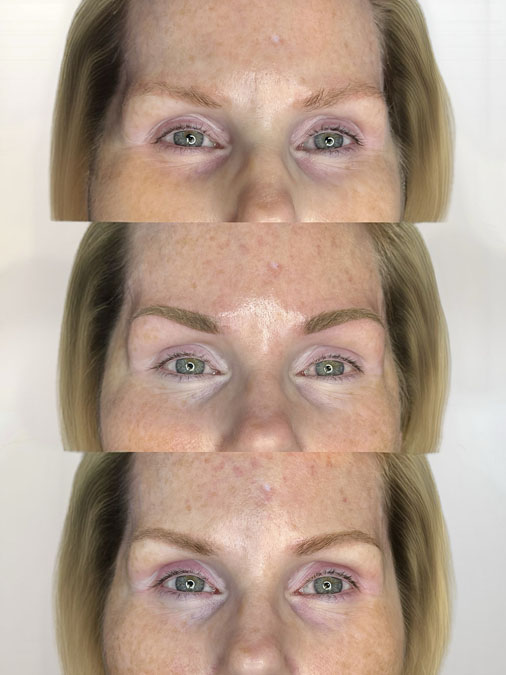
When repeated hairstroke procedures leave limited clear skin between implanted marks, another full microblading pattern may not provide the most natural result. This before-and-after shows a transition from scarred, blurred microblading into a softer powder brow correction created to work with the pigment already present.
microblading
Correction
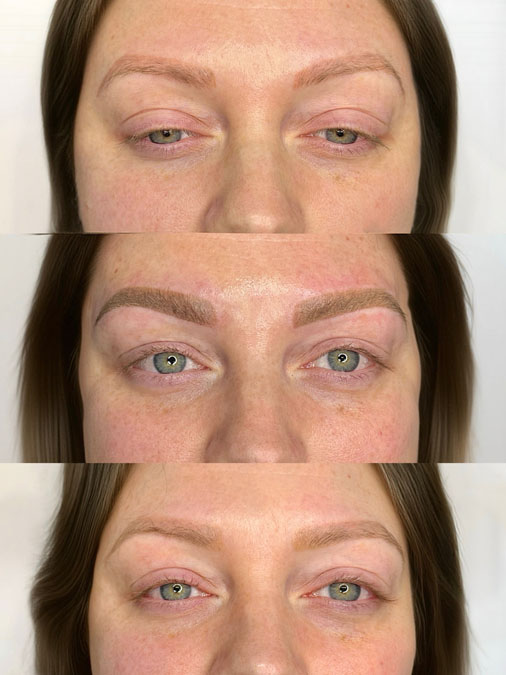
Scarred or overworked brows often contain more than one concern, including dense pigment, uneven color, and tissue changes. This before-and-after highlights a comprehensive correction that addressed unwanted healed color while improving the overall brow shape and creating a softer finish.
thickened
Correction
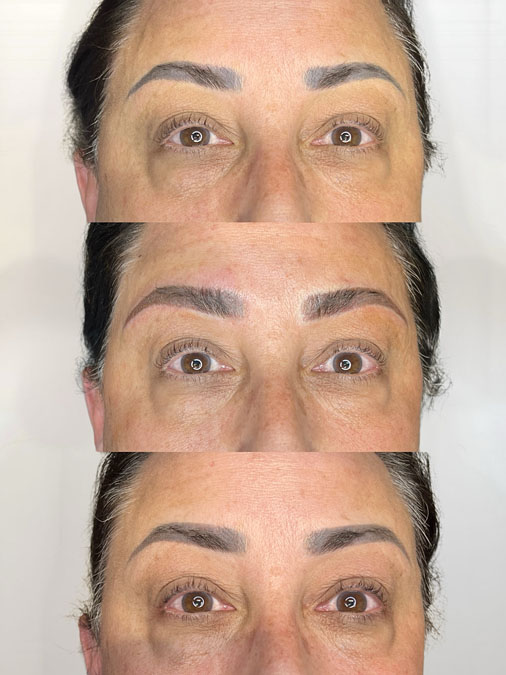
Repeated eyebrow tattoo treatments can gradually create dense pigment, reduced definition, and changes in skin texture. This transformation demonstrates how an individualized correction can improve the overall shape and appearance without simply placing another heavy layer over the existing work.
blow out
Correction
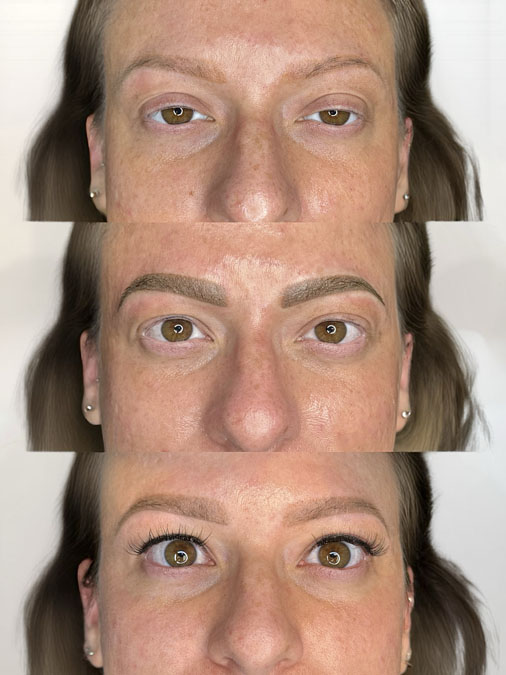
Older microblading can become widened, blurred, or visually solid after repeated treatments. This correction demonstrates how soft edges, uneven density, and unwanted color can be addressed together to create a more intentional and balanced brow appearance.
Our Philosophy: Healthy Skin Creates Beautiful Brows
Every correction begins with protecting the skin. That philosophy influences every decision we make. Instead of asking, “How much pigment can we add?” we ask, “How can we create the most beautiful healed result while respecting the tissue that already exists?” That difference is significant.
Many correction clients already have years of pigment sitting beneath the skin. Adding another complete layer without evaluating existing tissue often creates even greater saturation. Instead of looking softer, the brows become heavier. Instead of looking more natural, they become less defined. For clients whose previous work has also changed color over time, our Eyebrow Color Correction hub explains how color correction is incorporated into modern corrective planning.
Why We Use Pointillism for Every Correction
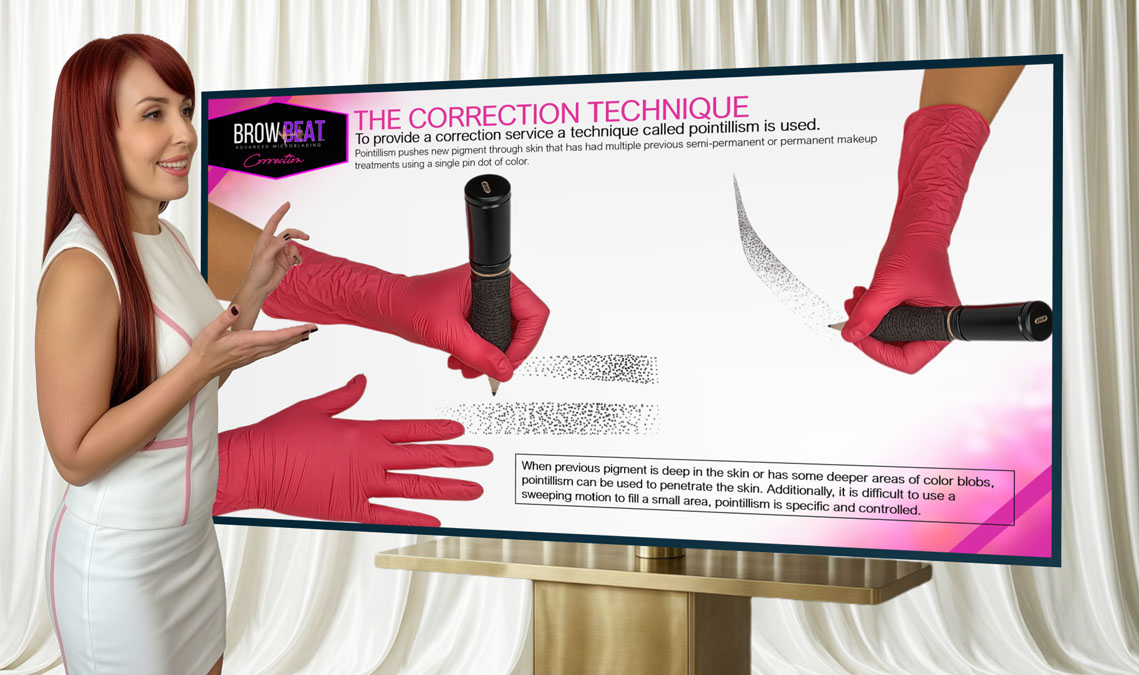
Correction is performed using a specialized pointillism technique. Rather than repeatedly dragging pigment through previously treated skin, pointillism places pigment using carefully controlled individual points.
Pointillism correction offers several important advantages for clients with previous permanent makeup.
It Minimizes Additional Trauma
Previously treated skin deserves a different approach than untouched skin. Pointillism allows extremely precise pigment placement while avoiding unnecessary additional stress to tissue that has already experienced several procedures. Protecting healthy skin is always the priority.
It Allows Us to Work Around Existing Pigment
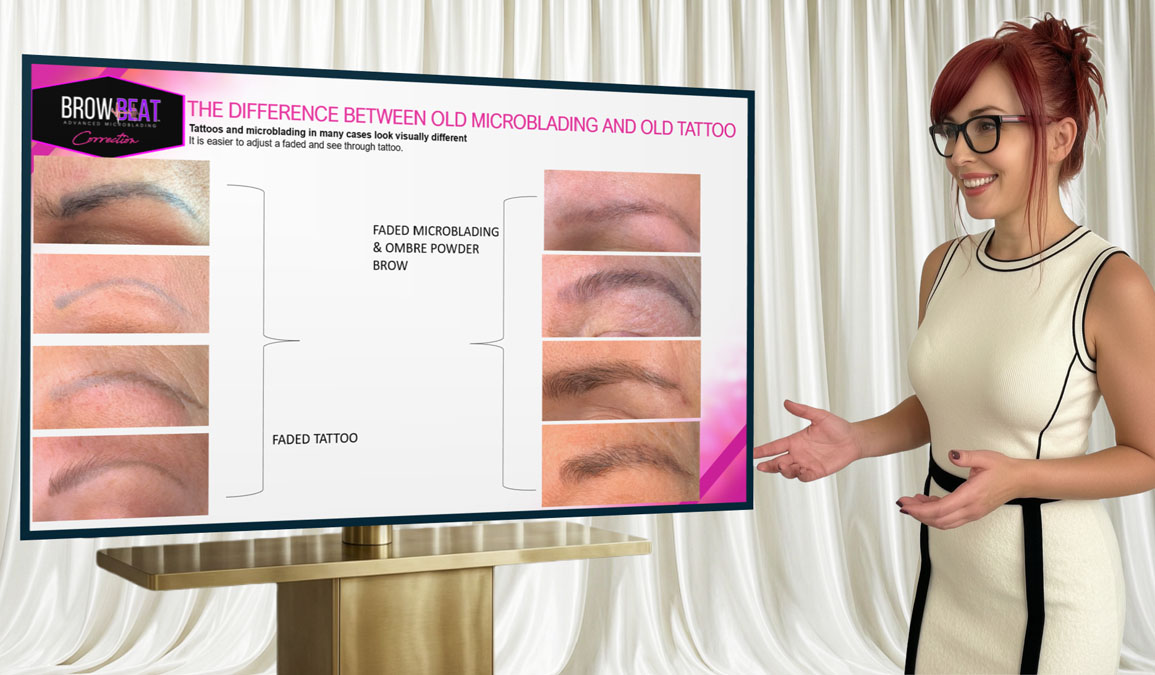
One of the biggest problems with traditional corrections is repeatedly tattooing directly over old saturated pigment.
Every additional layer has the potential to make those areas appear darker. Pointillism allows BrowBeat to strategically work around existing pigment when appropriate, gradually blending and balancing the overall brow instead of simply stacking new pigment on top of old pigment.
It Supports Beautiful Powder Brows
Many long-term correction clients eventually transition into powder brows. Not because hairstrokes failed—but because years of previous pigment naturally reduce the available space needed for crisp individual strokes. Pointillism creates exceptionally soft, controlled powder brows that age gracefully while working with the pigment already present beneath the skin.
Clients comparing treatment options may also enjoy our
Powder Brows, Ombré Brows or Correction? guide.
It Allows Color Correction at the Same Time
Many scarred or overworked brows also contain unwanted gray, blue, red, or orange pigment. Pointillism makes it possible to carefully incorporate corrective color while building a more balanced overall result. Instead of viewing color correction and tissue correction as separate procedures, BrowBeat approaches them together whenever appropriate.
It Supports Healthier Long-Term Maintenance
Every correction should make future maintenance easier—not more difficult. By respecting existing tissue and avoiding unnecessary pigment buildup, pointillism helps preserve future treatment options rather than limiting them.
Why More Microblading Is Not Always the Answer
Many clients believe their disappearing strokes simply need another set of hairstrokes. In reality, the opposite is often true.
Crisp microblading requires visible skin between individual strokes. After several procedures, that available space becomes smaller and smaller. Eventually the eye stops seeing separate hairs and begins seeing one continuous area of pigment. At that point another complete set of hairstrokes may create additional crowding instead of restoring realism.
For clients experiencing this, a soft powder brow created through pointillism often produces a more beautiful healed result while protecting the skin from unnecessary additional trauma. You can learn more about this progression on our Multiple Layers of Microblading page and our Blurry Microblading Correction guide.
Can Scar Tissue From Microblading Be Reversed?
This is one of the questions clients ask most often, and it deserves an honest answer. Scar tissue cannot simply be erased or returned to the way your skin looked before cosmetic tattooing. Once tissue has healed after repeated procedures, it becomes part of your brow’s history. That does not mean beautiful brows are no longer possible. The goal of corrective permanent makeup is not pretending scar tissue doesn’t exist.
The goal is understanding how the tissue behaves today and selecting a correction technique that works with the skin—not against it. This philosophy is why we perform every correction using pointillism.
The controlled point-by-point application allows our artists to carefully work throughout the brows instead of repeatedly creating unnecessary trauma over already saturated areas. Many clients also notice that over time the tissue begins feeling softer and appearing more even after correction.
Not All Scar Tissue Looks the Same
Scar tissue isn’t always obvious. Some clients arrive convinced they have extensive scarring when very little tissue change is actually present. Others believe their skin is perfectly normal until we begin evaluating how previous pigment healed beneath the surface. During the appointment we evaluate:
- Skin thickness.
- Skin texture.
- Elasticity.
- Current pigment density.
- Existing color.
- Previous procedures.
- Healing history.
- Overall brow design.
Rather than labeling brows as “good” or “bad,” we simply determine how the skin is likely to respond and build the correction around that information.
Why Pigment Begins Healing Differently
Clients often tell us, “My first microblading healed beautifully. Every appointment after that looked worse.” That experience is actually very common. Over time several things happen simultaneously.
The skin changes.
Pigment accumulates.
Color shifts.
Tiny amounts of tissue remodeling occur.
The available space between old strokes becomes smaller.
Eventually the brows simply stop behaving like untouched skin.
That is why correction requires a different strategy than creating brand-new brows.Instead of asking how to add another complete procedure, BrowBeat asks how to improve the brows while protecting the tissue that remains healthy.
Case Study: Annual Touch-Ups That Became Too Much
One Dallas client visited BrowBeat after faithfully maintaining her brows every year for nearly a decade.
She assumed regular maintenance was the best way to keep her eyebrows looking fresh.
Instead, she noticed the opposite happening.
The brows gradually became darker.
The hairstrokes disappeared.
The fronts looked heavier.
Each touch-up seemed to make the brows appear less natural. Rather than adding another complete layer of pigment, we evaluated the existing saturation and recommended transitioning toward a soft powder brow using pointillism. By respecting the pigment already present, the healed result appeared softer and significantly more refined.

Case Study: Correcting Brows After Multiple Artists
Another client had received treatments from several permanent makeup artists over more than fifteen years. Each procedure introduced different pigments, different techniques, and slightly different shapes.
The brows eventually became difficult to maintain because no single correction addressed the complete history already sitting within the skin.
Instead of simply adding another layer a comprehensive correction plan that addressed color balance, overall shape, tissue condition, and long-term maintenance was created. The pointillism technique allowed pigment to be strategically placed around saturated areas while building a much softer powder brow.
Case Study: Alopecia Requires Long-Term Planning
Clients living with alopecia often rely on cosmetic tattooing for many years. That does not mean repeated aggressive procedures are necessary. Instead, long-term planning becomes even more important.
Each maintenance appointment should preserve healthy tissue while making future maintenance easier—not more difficult.
Long-Term Brow Health Is Part of Every Correction
Today’s correction should still make sense five years from now. Every decision affects the future. Every layer of pigment becomes part of the next appointment. Every correction influences future options.
That is why we focus on preserving healthy tissue, minimizing unnecessary trauma, correcting unwanted color, refining shape, and creating powder brows that continue aging naturally.
Clients wondering what their brows need should also visit our
Eyebrow Tattoo Repair Hub,
explore our
Old Eyebrow Tattoo Correction
guide, or learn
Can Bad Eyebrow Tattoos Be Fixed?
Our Goal Isn’t Perfect Skin—It’s Beautiful, Healthy Brows
Correction isn’t about pretending previous procedures never happened.It’s about making intelligent decisions based on the skin you have today.
Scar tissue is common.
Multiple procedures are common.
Years of maintenance are common.
The difference lies in how those brows are treated moving forward. With thoughtful planning, modern color correction, refined powder brow techniques, and the correction pointillism approach, many clients discover they have far more options than they were originally led to believe.
Understanding the condition of your skin today is the first step toward creating healthier, more beautiful brows tomorrow. If you’re new to corrective permanent makeup, we also recommend reading our Eyebrow Tattoo Correction Treatment Process so you’ll know exactly what to expect.
Can Old Scar Tissue Still Accept New Pigment?
Yes, in many cases it can.
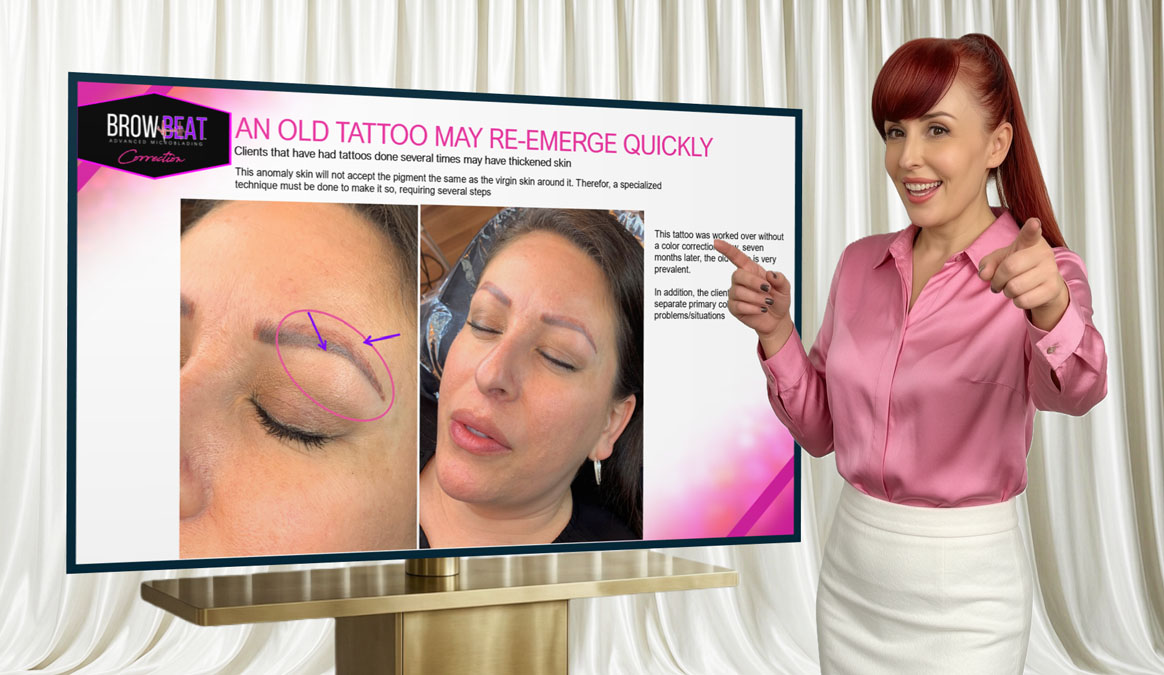
One of the biggest misconceptions about scar tissue from microblading is that once it develops, permanent makeup is no longer possible. In reality, many clients with years of cosmetic tattooing continue wearing beautiful eyebrows for decades. The important question is not whether pigment can be implanted. The important question is how that pigment should be implanted.
Healthy correction begins with understanding the tissue instead of treating every brow exactly the same. We evaluates pigment saturation, skin texture, previous procedures, and overall brow design before determining whether correction, color balancing, powder brows, or staged treatment is the safest recommendation.
Clients whose brows have become difficult to manage after several procedures often discover that they don’t need more microblading—they need a completely different corrective strategy. If previous procedures have also changed the overall design of your eyebrows, our Wrong Shape Eyebrow Tattoo Correction guide explains how shape correction is incorporated into long-term repair planning.
Scar Tissue Rarely Exists By Itself
Overworked brows usually involve more than one concern.
A client may have tissue changes, but they may also have unwanted color, asymmetry, multiple layers of pigment, blurry strokes, or brows that simply no longer suit their face. That is why we treat the eyebrows as a complete correction rather than trying to solve one isolated problem.
For example, a client may also need:
- A Botched Eyebrow Tattoo Fix if previous work healed poorly.
- Uneven Eyebrow Tattoo Correction if one brow is different than the other.
- Tattoo Covered by Microblading when generations of pigment overlap.
- Eyebrow Color Correction if pigment has turned gray, blue, red, or orange.
Addressing all of these concerns together often creates a more natural result than treating each one separately over several appointments.
Frequently Asked Questions About Scarred & Overworked Brows
Many clients notice that their skin feels thicker, smoother, shinier, or firmer than it once did. Others notice that pigment no longer heals consistently or that hairstrokes gradually disappear after repeated procedures. A professional evaluation is the best way to determine how much tissue change is actually present.
Some degree of tissue change is very common after multiple cosmetic tattoo procedures. The amount varies from person to person, but having some tissue remodeling does not automatically mean your brows cannot be corrected.
Yes, in many cases. We approach correction by respecting the existing tissue, carefully evaluating pigment history, and selecting techniques that protect the skin rather than creating unnecessary additional trauma.
Old pigment rarely disappears completely. Each maintenance appointment may leave additional pigment behind. Over time those layers accumulate, making the brows appear denser even when the goal was simply refreshing the existing work.
After several procedures there is often less untreated skin remaining between the strokes. Instead of seeing individual hairs, the eye begins seeing one continuous area of pigment. This is why many long-term microblading clients eventually transition into powder brows.
Pointillism is the correction method using controlled individual points of pigment rather than repeatedly working directly over existing saturated areas. It allows precise placement, supports color correction, minimizes unnecessary trauma, and creates exceptionally soft healed powder brows.
Many clients choose pointillism because it is gentle on previously treated tissue. Its controlled application allows correction to be performed while respecting the existing skin. Many clients also report that previously firm areas gradually feel softer over time.
Absolutely. Many clients with alopecia maintain cosmetic tattooing successfully for years. The difference is that maintenance is planned carefully to preserve healthy tissue rather than repeatedly rebuilding the same brows.
Many long-term microblading clients eventually transition into powder brows because repeated hairstrokes naturally reduce the available space needed for crisp stroke work. Powder brows often age more predictably for clients with previous permanent makeup.
Many clients are surprised by how much improvement is possible through thoughtful correction. The goal is not perfection but creating balanced, healthy-looking brows that complement your face while protecting future treatment options.
Not necessarily. Blurry brows often indicate accumulated pigment rather than insufficient pigment. A professional correction evaluation can determine whether another touch-up, color correction, powder conversion, or simply additional fading time is the better choice.
Corrective permanent makeup is a specialty. Every artist has different experience and different techniques. BrowBeat evaluates every case individually because many brows that appear difficult still have excellent correction possibilities.
Many clients with long-standing cosmetic tattooing continue to retain pigment successfully. The key is selecting an appropriate correction technique that respects the existing tissue instead of repeatedly creating additional trauma.