BLURRY MICROBLADING CORRECTION DFW
REAL RESULTS, INDUSTRY LEADER
Your microblading may have looked crisp and beautifully detailed when it was new, but now the individual hair strokes are difficult to see. The pigment may appear soft, fuzzy, blended together, or almost solid. Instead of seeing fine strokes, you may see a shaded shape with blurred edges. This does not automatically mean your brows were badly done. In many cases, it means the pigment has aged, the skin has changed, or multiple treatments have gradually reduced the space between the original strokes.
Blurry microblading correction is not simply another microblading session placed over the existing work. It requires an experienced artist to evaluate the amount of pigment already present, the condition of the skin, the brow shape, the current color, and whether adding more hairstrokes would improve
the brows or make them look even denser.
We approach blurry healed microblading as a long-term brow-planning issue. The goal is not to repeat the same service indefinitely. The goal is to determine what the brows need now, based on how the previous pigment has aged and how much room remains for a safe, attractive correction.
Why Does Microblading Become Blurry?
Microblading is often described as a collection of fine, implanted hairstrokes. That description is accurate when there is enough visible skin between the strokes to preserve contrast. The light space surrounding each stroke is part of what makes the pattern look crisp. Once that negative space becomes filled with pigment, the strokes can begin to merge visually.
This change may happen slowly. A client may love the first treatment, return for a touch-up, and then continue scheduling maintenance because the color appears lighter. Each appointment may seem reasonable on its own.
However, after two or three completed treatments, there may already be a significant amount of pigment in the skin. Adding another full set of strokes can create microblading stacking, where new marks are placed beside, between, or over older marks that have not completely disappeared.
Over time, the pattern can become crowded. The fronts may look shaded instead of airy. The bodies of the brows may look dense, and the lower or upper borders may lose their clean definition. A client may describe the
result as:
- My microblading is no longer crisp.
- The hairstrokes have disappeared.
- My microblading looks smudged.
- The pigment has spread under the skin.
- The edges of my microblading look blurred.
- My brows look solid instead of natural.
- My healed microblading looks fuzzy.
These descriptions often refer to the same underlying concern: the original stroke pattern is no longer visually distinct. The correct solution depends on why that happened and how much pigment is currently in the brows.
Blurry Microblading Does Not Always Mean Something Went Wrong
It is important to talk about this honestly and without unnecessary blame. Cosmetic tattoo pigment lives in skin, and skin is not a static surface. It changes with age, sun exposure, skincare, hormones, circulation, healing patterns, and natural cell turnover. Pigment also changes. It may fade, cool, warm, soften, or become less distinct as the years pass.
A beautiful result is not frozen in time. Like other aesthetic services, it must be reassessed as the client and the treatment age. Botox, fillers, hair color, skin treatments, and cosmetic tattooing all have different maintenance timelines, but none of them remain completely unchanged forever. Microblading usually requires far less frequent maintenance than many other beauty services, yet maintenance is still part of the process.
The key difference is that responsible cosmetic tattoo maintenance should not mean automatically repeating the original procedure in exactly the same way. A skilled artist looks at what remains before deciding what
should be added. Sometimes a small color adjustment is appropriate. Sometimes the shape needs refinement. Sometimes the brows need more time to fade. Sometimes the next stage should involve a softer powder technique rather than another layer of individual incisions. If your brows have become dense after several sessions, our overworked microblading correction page explains how repeated implantation can affect both the appearance of the pigment and the available skin space for future work.
blurry
Correction
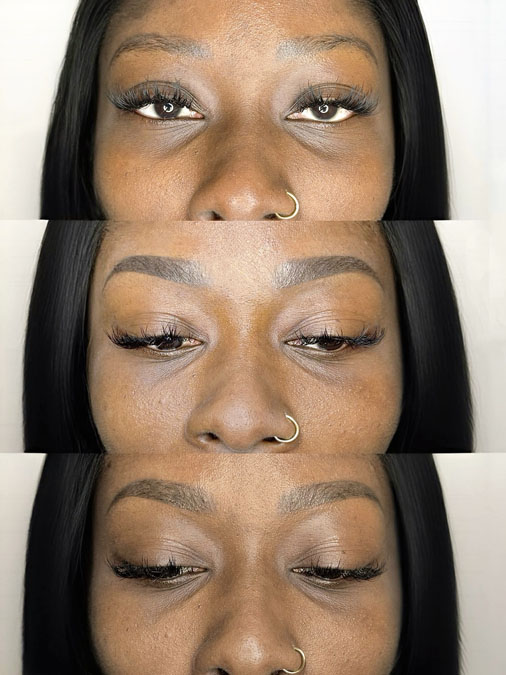
This before-and-after shows how microblading that had softened and blended together could be refined into a cleaner, more balanced brow. The correction was planned around the existing pigment rather than simply adding another full layer of hairstrokes.
microblading
Powder
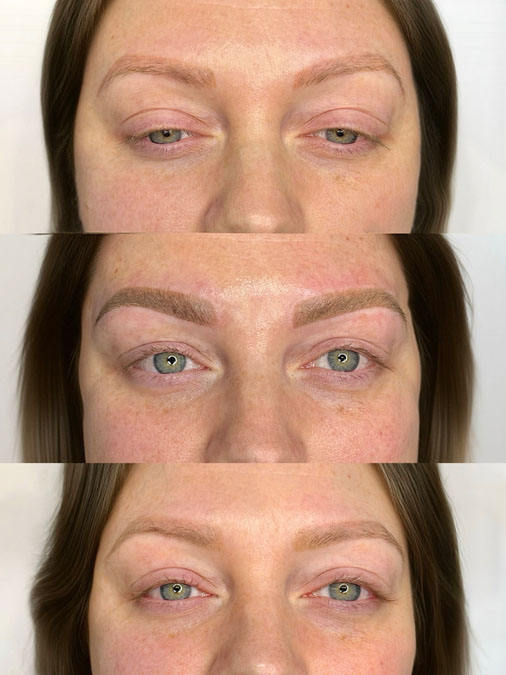
When older hairstrokes have blended into a shaded background, repeatedly adding new strokes may not restore definition. This result shows how blurry microblading can transition into a soft powder-style correction that works naturally with the existing pigment.
overworked
Correction
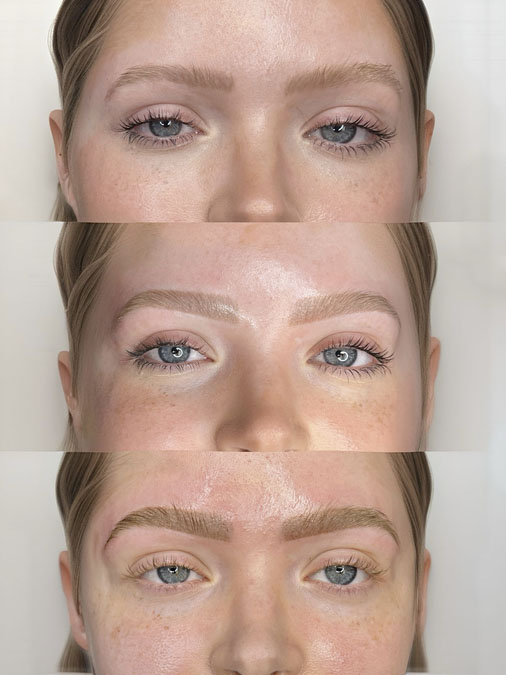
Repeated treatments can reduce the visible skin between hairstrokes until the brows begin to look solid. This before-and-after shows how a customized correction can create softer fronts, greater balance, and a more intentional finish.
old
Correction
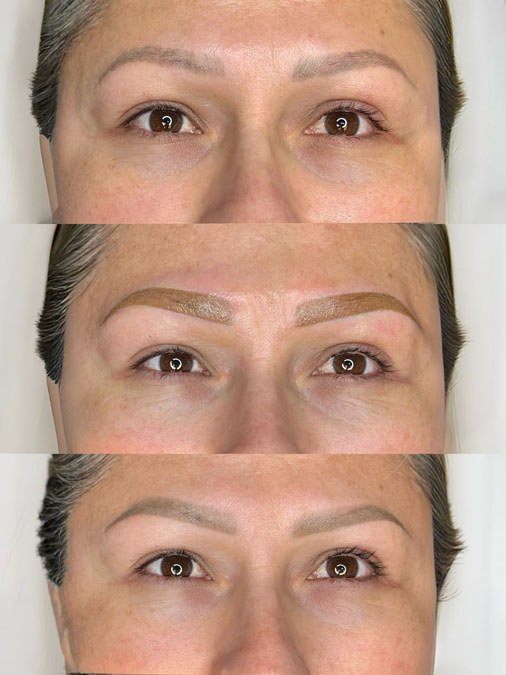
Blurriness and unwanted color often appear together as microblading ages. This transformation shows how soft gray pigment can be addressed through a correction plan that considers color, shape, saturation, and the healed result.
The Microblading Industry Has Learned From Long-Term Results
The modern microblading industry is still relatively young. When the technique first became widely popular, much of the attention was placed on the immediate healed result: delicate strokes, natural-looking texture, and a less made-up appearance than traditional cosmetic tattooing.
What artists could not fully observe in the earliest years was how thousands of clients would look after repeated treatments over long periods of time. The industry needed time to see what happened after the second, third, fourth, and fifth appointment. We now understand much more about pigment buildup, stroke migration, scarring, saturation, color shifts, and the loss of negative space between hairstrokes.
One of the most important lessons is that microblading cannot always be repeated forever. Even beautifully performed hairstrokes leave pigment behind. If enough pigment remains, the skin eventually stops providing
a clean blank background for another crisp pattern.
This does not mean everyone with older microblading has damaged brows, and it does not mean powder brows are a punishment or a lesser option. It means the technique may need to evolve as the brows evolve. Many long-term microblading clients will eventually transition into a soft powder, shaded, or combination-brow approach because those techniques can work more naturally with the pigment that is already present.
Good corrective work is not about forcing the brows to remain in the same treatment category forever. It is about choosing the technique that makes the most sense for the current condition of the skin and pigment. Clients who are wondering whether they need another full procedure can also review our guide to microblading refresh versus correction. It explains why a routine refresh, a corrective appointment, and a complete redo are not interchangeable.
What Is Microblading Stacking?
Microblading stacking happens when fresh hairstrokes are repeatedly added to an area that still contains visible pigment from previous sessions. Because an artist cannot always follow every old stroke precisely, the new pattern may cross, overlap, or sit extremely close to the existing marks.
At first, the brows may simply look fuller. With additional treatments, however, the spaces between the marks become smaller. The eye can no longer separate one stroke from the next, so the pattern begins to read as a
single block of pigment. The result may be most noticeable:
- At the fronts, where soft spacing is essential to a natural appearance.
- Along the bottom border, where overlapping strokes can create a dark line.
- Through the arch, where repeated passes may create a dense patch.
- At the tails, where pigment is often concentrated into a small area.
- In oily, textured, mature, or scarred skin, where implanted lines may heal less distinctly.
Stacking is one reason we cannot determine the correct service by looking only at how light the color appears. A brow may look faded on the surface while still holding a considerable amount of pigment underneath. Adding
more color because the brows look light can increase density without restoring definition. When there are several layers of old work, a microblading redo may require more planning than a standard annual appointment. Depending on the condition of the brows, the plan may involve correction, reshaping, a technique change, gradual lightening, or a combination of steps.
Can Blurry Microblading Be Corrected?
Many blurry microblading cases can be improved, but the correction must be designed for the individual brows. There is no single method that works for every client. Before recommending a treatment, we evaluate several
factors.
1. How Much Pigment Is Still Present?
We look at the overall density of the brows, not just the surface color. Light-looking pigment may still be too saturated to accept a new hairstroke pattern. If the existing work is extremely dense, adding more pigment could make the brows heavier rather than clearer.
2. Are the Existing Borders Soft or Distorted?
Some clients have a generally attractive shape but lack internal definition. Others have pigment that has expanded beyond the desired outline. A correction plan must account for both the interior texture and the outside edges of the brow.
3. What Condition Is the Skin In?
Healthy, flexible skin responds differently from skin that has been repeatedly cut, tattooed, or scarred. We examine texture, shine, thickness, visible scar tissue, and how the skin has healed from previous procedures. The condition of the skin helps determine whether more hairstrokes are appropriate.
4. Has the Color Changed?
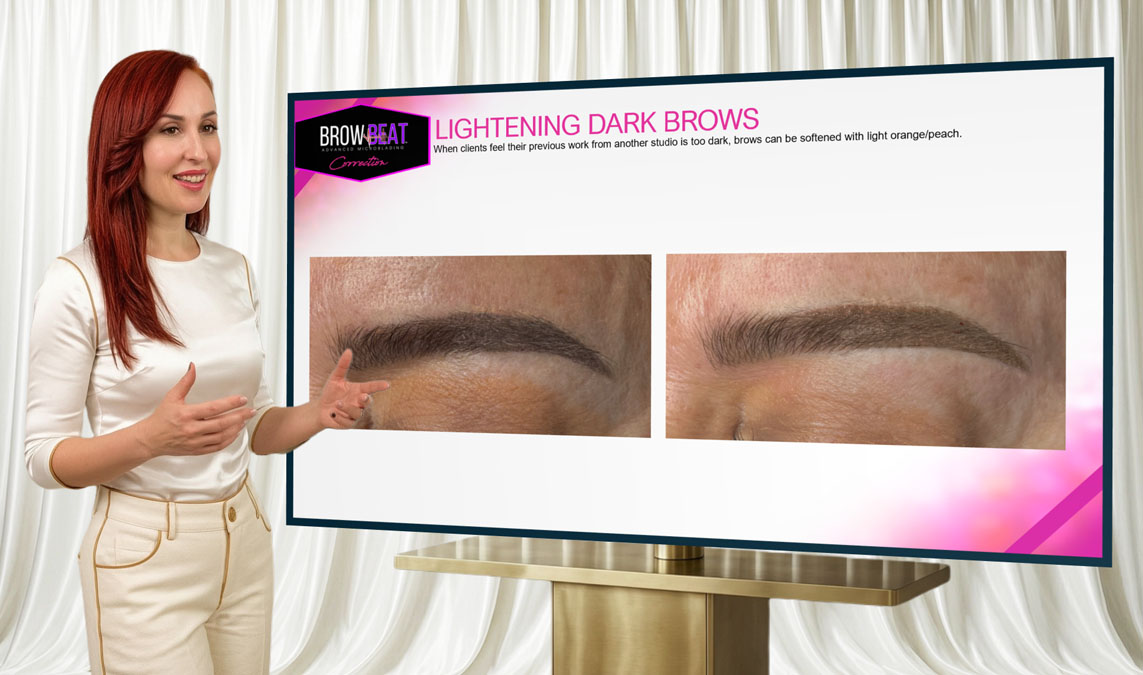
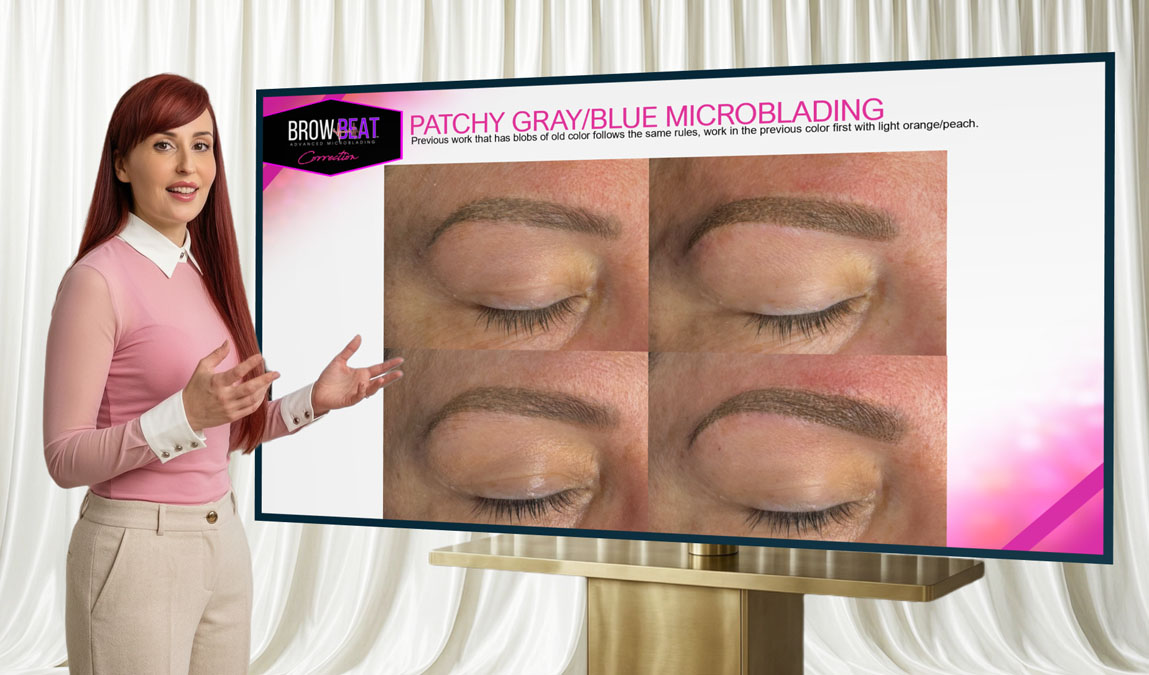
Blurriness and color change can occur at the same time. A brow may be soft and grey, fuzzy and red, or dense with several overlapping colors. In those cases, the treatment may need to address both the lack of definition and the unwanted tone. Our microblading color correction resource explains how aged red, grey, blue, or orange pigment may affect the next treatment choice.
5. Is the Existing Shape Still Flattering?
There is little value in making an outdated or unbalanced shape darker. Before we refresh any pigment, we consider whether the brows still suit the client’s facial structure, natural hair growth, expression, and current preferences.
Correction Does Not Always Mean Adding New Hairstrokes
When clients search for someone to fix blurry microblading, they often assume the answer is to draw sharper strokes over the old ones. Occasionally, limited new texture can be added where the skin and pigment allow it. In many established cases, however, the more attractive option is to stop trying to recreate an entirely hairstroke-based result over a saturated background.
A soft powder or combination approach may provide a cleaner, more intentional finish. Instead of pretending the existing pigment is not there, the artist incorporates it into a design that looks polished and appropriate
for the brows’ current stage. This transition can be especially helpful when:
- The brows already appear shaded from previous stroke buildup.
- There is not enough clear skin between old marks.
- The client has had two or three complete microblading treatments.
- The existing strokes have expanded or healed softly.
- The fronts need a controlled gradient rather than additional cutting.
- The tails or arches need greater structure.
- A color correction must be incorporated into the new design.
The goal is not to make every client leave with the same style of brow. The goal is to create the most refined result possible within the reality of the existing pigment.
Why Corrective Steps Must Be Built Into the Appointment
A correction appointment should not be treated as a standard touch-up with a different name. The artist may need to adjust the color formula, modify the shape, soften a border, rebalance the fronts, change the application method, or avoid areas that are already too saturated.
These decisions are part of the treatment itself. They are not optional extras. Corrective work requires the artist to respond to what is already in the skin rather than following a preset pattern. For example, one section of a brow may accept a small amount of new texture while another section is already too dense. One brow may be slightly warmer than the other. The tails may need more structure while the fronts need less pigment, not more. Treating every section identically can repeat the problem that caused the brows to look solid in the first place. Our broader microblading correction services are designed around this type of detailed evaluation. We assess the shape, color, saturation, skin condition, and treatment history before deciding how to move forward.
How Often Should Microblading Be Refreshed?
For many established clients, we recommend having the brows professionally evaluated approximately every 12 to 18 months. That does not mean every client automatically receives a full new treatment at that interval. It means the brows should be checked so the artist can decide whether they need a small adjustment, a color refresh, a corrective step, a technique change, or simply more time.
Waiting until the brows have changed dramatically can make the correction more involved. Returning too frequently can create unnecessary pigment buildup. The best maintenance schedule exists between those two extremes.
A long-term relationship with an artist who understands aged pigment can be valuable because that artist is not looking only at the next appointment. They are considering how today’s decision may affect the brows several years from now.
To see examples of the way existing eyebrow work can be assessed and redesigned, visit our eyebrow correction before-and-after gallery. When you are ready for a personalized evaluation, you may book an appointment.
Blurry Microblading Correction in Dallas
Clients searching for blurry microblading correction in Dallas are often not sure what service to request. They know the brows no longer look the way they once did, but they may not know whether the problem is fading, spreading, stacking, color change, saturation, or a combination of several issues.
You do not need to diagnose the brows before contacting us. That is part of our work. We evaluate what remains, explain what can realistically be improved, and recommend a plan based on the current condition of your brows. You can also read our eyebrow tattoo correction articles for more education about healed pigment, maintenance, and corrective brow planning.

What Blurry Microblading Correction Can Realistically Improve
The purpose of correction is not to erase the treatment history or pretend the brows have never been tattooed. The purpose is to make the existing work look more intentional, balanced, flattering, and appropriate for its current stage.
Depending on the amount of pigment, the condition of the skin, and the original shape, blurry microblading correction may help:
- Create a cleaner and more balanced overall brow shape.
- Reduce the visual emphasis of soft or irregular borders.
- Correct an aged color that has become too cool, warm, grey, red, or ashy.
- Improve symmetry between the two brows.
- Transition an old hairstroke pattern into a polished powder finish.
- Restore definition where enough healthy skin and negative space remain.
- Make the fronts appear softer and more intentional.
- Refine an arch or tail that has lost its original structure.
- Create a maintenance plan that avoids unnecessary pigment stacking.
What can be achieved depends on what is already present. A lightly blurred brow with a flattering shape may need only a thoughtful refresh. A heavily saturated brow with several overlapping patterns may require a more
involved correction plan. Some brows may benefit from lightening before new pigment is added.
The most responsible recommendation is not always the fastest recommendation. Corrective work should protect the skin and preserve future options rather than trying to force an immediate result that creates another
layer of difficulty later.
When a Refresh May Be Enough
Not every soft-looking brow needs a major correction. Microblading naturally loses some sharpness as it heals and ages. If the shape remains flattering, the color is still appropriate, the skin is healthy, and the pigment is not overly dense, a carefully planned refresh may be enough.
A refresh is most appropriate when the existing foundation is still useful. The artist is preserving what works and making selective improvements rather than rebuilding the brows from the beginning. A client may be a candidate for a refresh when:
- The brows are evenly faded rather than heavily saturated.
- The original outline still suits the face.
- The color has softened but has not shifted dramatically.
- The skin between the strokes is still visible.
- Only a few areas have lost definition.
- The client wants a subtle update rather than a complete redesign.
By contrast, repeatedly calling every appointment a touch-up can hide the fact that the brows now require corrective decisions. Our eyebrow tattoo refresh guide explains how an experienced artist evaluates faded or softened work before deciding how much new pigment
should be introduced.
When the Brows Need More Than a Refresh
A standard refresh may not be enough when the strokes have merged into a dense background, the color has changed significantly, the shape is no longer flattering, or the skin shows evidence of repeated treatment.
In these cases, simply making the existing pigment darker may temporarily strengthen the brows without solving the underlying issue.
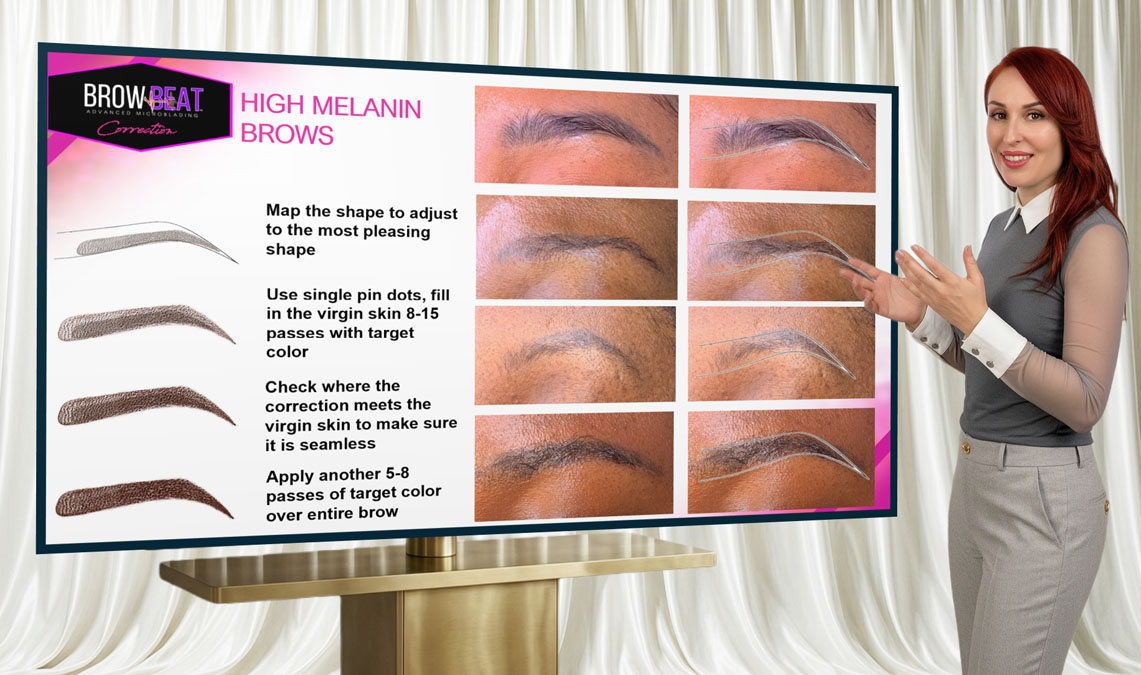
Signs that a more corrective approach may be needed include:
- There is no visible spacing between most of the old hairstrokes.
- The brows have a solid, block-like appearance.
- The lower border has become dark or visibly outlined.
- The pigment extends outside the desired brow shape.
- The fronts look square, heavy, or overly uniform.
- Different areas of the brows have healed into different colors.
- One brow has become denser or blurrier than the other.
- The skin appears shiny, raised, thickened, or scarred.
- Several artists have added different stroke patterns over time.
- The client has already had repeated corrections or frequent touch-ups.
A blurry result can sometimes be corrected with a technique change. In other cases, the existing pigment needs time to fade or may need to be lightened before an attractive redesign is possible. The consultation is
where those distinctions are made.
Why We May Recommend Powder Brows After Years of Microblading
Clients sometimes feel disappointed when they are told that another full set of hairstrokes may not be the best long-term choice. They may believe that transitioning to powder brows means giving up the natural look they originally wanted. That is not necessarily true.
Modern powder brows can be soft, dimensional, and carefully graduated. They do not have to look harsh, stamped, or heavily made up. When performed correctly, a powder technique can create a gentle veil of color that works with the pigment already in the skin instead of placing additional cuts through an increasingly crowded stroke pattern.
After repeated microblading, the brows may already read as shaded from a normal viewing distance. Attempting to add more strokes does not always restore a true hairstroke appearance because the old background remains.
A controlled powder or combination technique can make that background look purposeful. This transition may allow the artist to:
- Create a smoother gradient through the fronts.
- Balance areas with uneven pigment retention.
- Correct the appearance of gaps between old and newer work.
- Refine the shape without drawing obvious new borders.
- Adjust the color more consistently across the entire brow.
- Avoid stacking another complete pattern of hairstrokes.
The recommendation should always be based on the individual client. Some people can continue wearing limited hairstroke work for many years. Others transition sooner because of their skin type, pigment retention, treatment history, or personal style.
Why Adding Darker Pigment Does Not Restore Crispness
One of the most common misunderstandings is that blurry microblading only needs to be made darker. Darkness and definition are not the same thing.
A crisp hairstroke is visible because it has a clear edge and enough contrast from the skin around it. When several strokes have softened together, darkening the area may increase contrast between the brow and the
face, but it does not necessarily recreate separation between the individual marks.
In fact, applying a darker formula over merged pigment may cause the brows to look more solid. This is why color choice must be considered together with saturation, shape, technique, and skin condition.
Corrective color also needs to be chosen with the healed result in mind. The formula that looks suitable in the pigment cup is not necessarily the color that will appear once it interacts with the old tattoo and heals in the client’s skin.
Blurriness, Pigment Migration, and Stroke Expansion Are Not Always the Same
Clients often use the words blurry, spread, migrated, fuzzy, and smudged interchangeably. Those words can describe similar appearances, but they do not always indicate the same condition.
Softened or Aged Strokes
The original marks remain generally within the correct area but no longer have the sharpness they had when they were new. This can be a normal part of aging and may be improved through selective maintenance.
Stacked or Merged Strokes
Several treatment patterns occupy the same limited area. The marks visually overlap, leaving too little open skin for the eye to distinguish separate hairs.
Expanded Strokes
Individual implanted lines have healed wider than intended. This may be influenced by the application, placement depth, skin characteristics, aftercare, or repeated work in the same area.
Pigment Migration
Pigment appears to have moved or diffused beyond the original intended placement. This requires careful assessment because adding more pigment over the area may not improve the appearance.
Border Blurring
The outside shape no longer has a clean transition into the surrounding skin. This may occur even when some interior strokes remain visible.
Identifying the type of blurriness matters because each condition calls for a different response. A lightly softened pattern may be refreshed, while migration or heavy saturation may require lightening or a more conservative plan.
What Happens During a Blurry Microblading Assessment?
The assessment begins with the brows as they currently exist. We are not evaluating whether they match a photograph from several years ago. We are evaluating the pigment, skin, shape, and facial balance that are present today.
We consider:
- How many previous treatments the client remembers having.
- How long it has been since the most recent appointment.
- Whether the brows were treated by one artist or several artists.
- Whether removal or correction has already been attempted.
- The visible color and underlying color of the pigment.
- The density and placement of the old hairstrokes.
- The amount of clear skin that remains between implanted marks.
- The condition and texture of the treatment area.
- The symmetry and suitability of the existing shape.
- The client’s current goals and makeup preferences.
Photographs of the brows when they were new may be helpful, but they do not replace an evaluation of the healed skin. The most useful treatment plan is based on what can safely and attractively be done now.
Clients who are unfamiliar with the difference between maintenance and corrective services may also review what an eyebrow tattoo correction involves before scheduling.
Our Approach to Correcting Soft or Smudged Microblading
Every correction plan is customized, but the decision-making process generally follows the same principles. We preserve what is useful, avoid adding unnecessary density, and choose a technique that works with the existing pigment rather than ignoring it.
Step 1: Evaluate the Existing Pigment
We examine the color, density, placement, and age of the old work. We also identify whether the brows are simply soft or whether they contain stacked, expanded, migrated, or oversaturated pigment.
Step 2: Reassess the Shape
The brow outline is checked against the client’s natural hair, facial proportions, muscle movement, and present preferences. Old pigment does not automatically determine where the corrected shape must remain.
Step 3: Select the Appropriate Technique
Depending on the case, the plan may include limited hairstrokes, soft shading, powder brows, a combination technique, color correction, or preparation for a later redo.
Step 4: Control the Amount of New Pigment
More is not always better. The correction should add only what the brows can use. Areas that are already dense may need less work than areas that have faded unevenly.
Step 5: Plan for the Healed Result
Fresh cosmetic tattooing naturally appears stronger before it heals. Corrective pigment also interacts with the color beneath it. The work must be planned for how it is expected to settle, not only how it looks immediately after the appointment.
Step 6: Establish a Long-Term Maintenance Strategy
We discuss when the brows should be evaluated again and what signs indicate that they are ready for maintenance. The objective is to keep the brows fresh without returning to a cycle of unnecessary stacking.
Common Blurry Microblading Correction Scenarios
The following examples describe common treatment situations. They are educational scenarios rather than guarantees of a particular outcome.
Scenario One: The Strokes Looked Beautiful but Gradually Became a Soft Shadow
A client had two completed microblading treatments over several years. The overall shape still suited her, but the internal strokes were no longer distinct. Enough open skin remained to make selective improvements, although repeating a full new pattern would have created unnecessary density.
In a situation like this, the artist may preserve the shape, make a controlled color adjustment, add limited texture where appropriate, and use soft shading to create a more even finish.
Scenario Two: Frequent Touch-Ups Created Solid-Looking Brows
A client returned often because the surface color appeared faded. Over time, several sets of strokes were placed through the same areas. The fronts became heavy, and the lower borders looked darker than the centers.
The safest plan may be to stop adding hairstrokes, allow further fading, and determine whether lightening is needed before redesign. If correction is appropriate, a soft powder approach may work more effectively with
the existing density.
Scenario Three: The Brows Are Blurry and Have Turned Grey
A client has an attractive general shape, but the healed work is both soft and cool in color. Treating only the blurriness would leave the unwanted tone unaddressed, while treating only the color could make the soft pattern denser.
A combined plan may be required so the color formula, shape refinement, and application technique support one another.
Scenario Four: One Brow Is More Blurred Than the Other
Differences in skin texture, sleeping habits, natural oil production, previous application, and healing can cause one brow to retain pigment differently. The solution is not necessarily to darken both brows equally. Each side may need a slightly different amount or placement of pigment to create a balanced healed result.
What Not to Do When Your Microblading Looks Blurry
When clients notice that the hairstrokes have disappeared, the natural impulse is often to schedule the quickest available touch-up. Before adding more pigment, it is worth slowing down and having the brows properly evaluated.
Avoid:
- Assuming that darker pigment will make the old strokes look sharper.
- Requesting a complete new pattern without assessing current pigment
- Scheduling frequent touch-ups simply because the surface looks lighter.
- Allowing the old shape to be expanded repeatedly to hide blurred borders.
- Choosing a new artist based only on immediate photographs of fresh work.
- Ignoring changes in skin texture or visible scar tissue.
Look for an artist who can discuss aged work, healed results, color behavior, skin condition, and long-term planning. Fresh hairstrokes are only one part of cosmetic tattooing. Corrective expertise is demonstrated by knowing when new strokes are helpful and when they are not.

Related Microblading Correction Options
Blurry healed strokes are often connected to other concerns, especially when the brows have been treated several times. The following resources explain the closest related treatment situations:
- Learn how repeated pigment implantation is assessed on our
overworked microblading correction page. - Explore when an established brow may need a broader redesign through
microblading redo. - Compare maintenance and corrective treatment on our
microblading refresh versus correction page. - Read about softened and aging cosmetic tattoo work in our
eyebrow tattoo refresh guide. - Return to the
microblading correction hub
to explore correction options for shape, color, fading, layering, and other healed microblading concerns.
Schedule a Blurry Microblading Correction Assessment in Dallas
Your brows may have looked beautiful when they were first completed and still need a different approach now. That is not a contradiction. Pigment ages, skin changes, and the right treatment strategy can change with them.
We assess the brows as they exist today. We look at the remaining pigment, the visibility of the old strokes, the skin condition, the color, the shape, and the treatment history. From there, we explain whether the brows are better suited for selective correction, a soft powder transition, a refresh, a staged redo, or more fading time.
The goal is not to stack another procedure over the problem. The goal is to make a thoughtful decision that keeps the brows attractive now while protecting their long-term appearance.
Not necessarily. Darker pigment increases the contrast between the brow and the surrounding skin, but it
does not recreate space between merged strokes. In heavily blurred brows, darker pigment may make the
shape look denser.
Not always. Pigment changes, skin changes, and the industry has learned more about the long-term effects
of repeated microblading. A result can have been attractive when new and still require a different
maintenance strategy years later.
Powder brows may be recommended when the old strokes have already created a shaded background. A soft
powder technique can work with that existing pigment and create a smoother, more intentional finish
without stacking another full set of cuts.
No. Modern powder brows can be soft and gradually shaded. The result depends on the artist’s design,
application, color choice, and understanding of the existing pigment. The goal is not to create a harsh
makeup look unless that is what the client specifically wants.
Yes. Old microblading may become blurry while also healing grey, blue, red, orange, or uneven in tone.
The treatment plan must consider both the loss of definition and the color beneath the proposed new work.
The two sides of the face can retain pigment differently because of skin texture, oil production, healing,
previous application, or lifestyle habits. Each brow may require a different amount of corrective work
to create a balanced result.
The number of sessions depends on the pigment density, skin condition, color, shape, and whether lightening
is needed first. Some cases can be improved with a carefully planned correction, while layered or saturated
brows may require a staged approach.
We commonly recommend an evaluation every 12 to 18 months, but that does not mean a full procedure is
automatically performed each time. The artist should examine what remains and recommend only the
maintenance the brows genuinely need.
A correction appointment does not remove the existing tattoo. It works with, modifies, or visually
improves what is present. If the pigment must be reduced or the old shape needs to be substantially
changed, professional lightening may need to be considered before a new design is created.