TATTOO COVERED BY MICROBLADING • DALLAS • FORT WORTH
REAL RESULTS, INDUSTRY LEADER
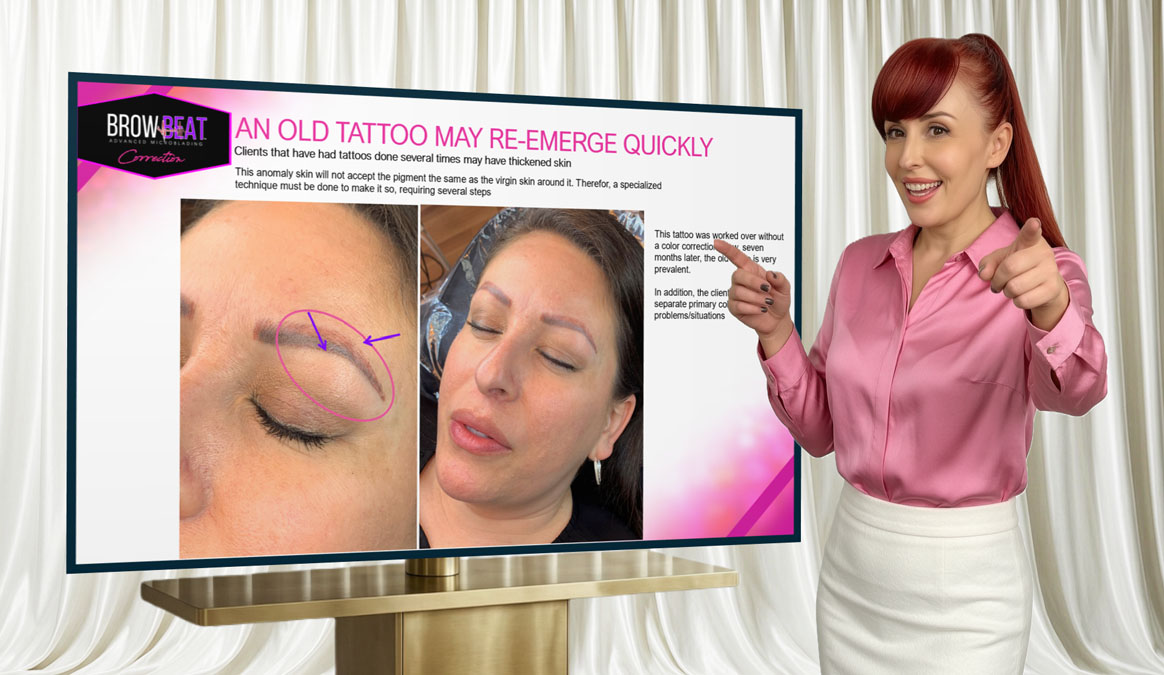
One of the most complex correction cases we see is an old eyebrow tattoo covered by microblading. At first, the results often look beautiful. Fresh hairstrokes sit over the existing tattoo, creating the appearance of a completely new brow. Months or years later, however, the older pigment underneath often begins becoming visible again as the newer microblading naturally softens.
Clients throughout Dallas, Highland Park, University Park, Preston Hollow, Plano and the DFW Metroplex frequently search for answers after noticing colors, shapes or old tattoo edges slowly returning beneath their microblading. Many wonder whether the old tattoo is “coming back.” In reality, it often never completely disappeared—it was simply hidden beneath newer permanent makeup.
This page is part of our complete Eyebrow Tattoo Repair hub. If your primary concern is a previous procedure that didn’t meet your expectations, you may also benefit from reading Botched Eyebrow Tattoo Fix. If your concern is several layers of previous permanent makeup, our Multiple Layers of Microblading guide explains how long-term pigment builds over time.
What Does Tattoo Covered by Microblading Mean?
Tattoo covered by microblading describes eyebrows where an older cosmetic tattoo already existed before microblading was performed over the top. Instead of removing or significantly fading the previous pigment first, new hairstrokes were placed over the existing tattoo in an attempt to create a more natural appearance.
Initially this approach can look very successful.
The crisp microblading strokes become the feature people notice, while the older tattoo quietly blends into the background. As time passes, however, the relationship between the two pigment layers begins changing.
- Microblading naturally softens.
- The older tattoo continues evolving.
- Eventually both layers become visible together.
- That is when many clients begin searching for correction.
Why Older Tattoo Pigment Starts Showing Again
One of the biggest misconceptions is believing the original tattoo disappeared. Usually it didn’t. Older permanent makeup often remains within the skin even when it becomes difficult to see. Fresh microblading simply draws the eye away from it by creating crisp new hairstrokes above the older pigment.
Years later, as those hairstrokes gradually soften, the previous tattoo begins becoming more noticeable again. Clients often describe it as:
- “My old tattoo is coming back.”
- “The grey underneath is showing again.”
- “I can see two different brows.”
- “The old shape is starting to appear.”
- “The hairstrokes are fading but the old tattoo isn’t.”
These observations are often completely accurate. What clients are seeing is two generations of permanent makeup aging at different speeds.
fixing
Treatments
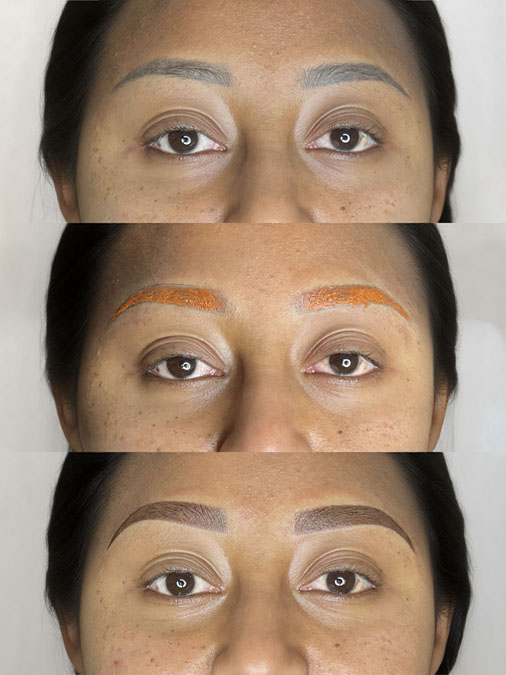
Many clients believe their old eyebrow tattoo disappeared once microblading was completed. In reality, the older pigment often remains beneath the surface while the new hairstrokes become the dominant feature. But if correction techniques are used, the previous work can be assimilated into the current work. During consultations we explain that this is usually the result of two permanent makeup procedures aging at different rates rather than the old tattoo suddenly “coming back.” All previous work must be corrected and blended.
many
Correction
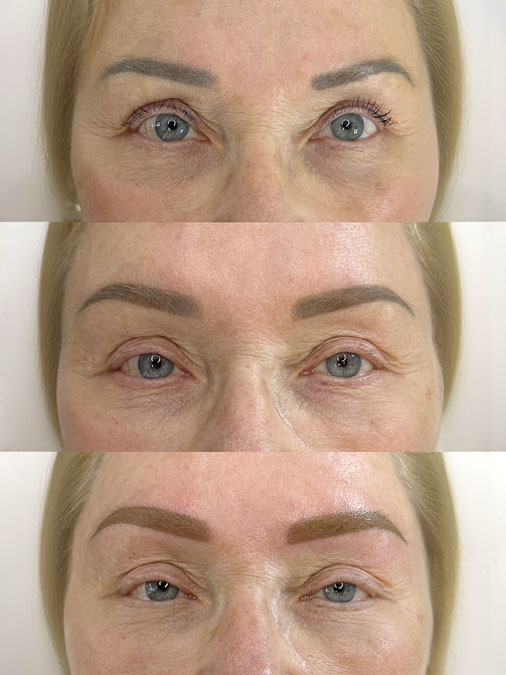
An eyebrow tattoo and microblading are rarely the same procedure. They were usually performed at different times, using different pigments and different techniques. As each procedure continues evolving independently, both layers eventually contribute to the appearance of the brows. Understanding those separate pigment histories allows correction to become much more predictable while preserving healthy permanent makeup wherever possible.
overworked
Correction
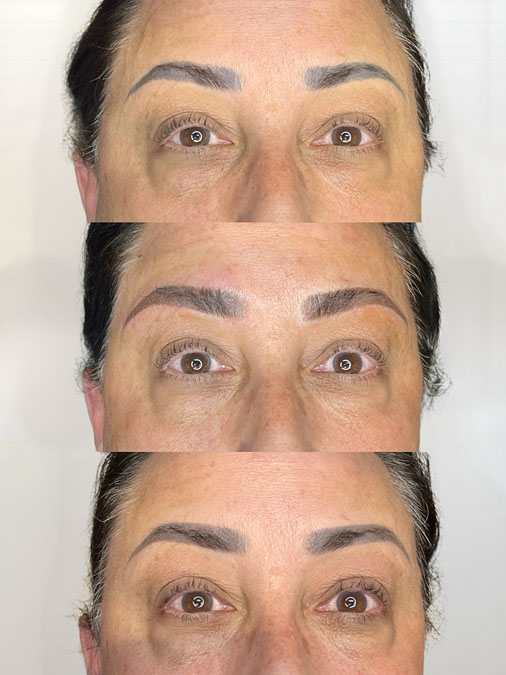
Many clients notice that an older eyebrow shape slowly becomes visible after several years. This usually happens because the microblading has naturally softened while the original tattoo outline remains beneath it. During consultations we explain that correction begins by identifying which shape should guide the future of the brows instead of allowing two separate designs to compete within the same eyebrow. In these cases all steps should be taken to soften, and color correct blending these two scenarios into one.
pigment
Correction
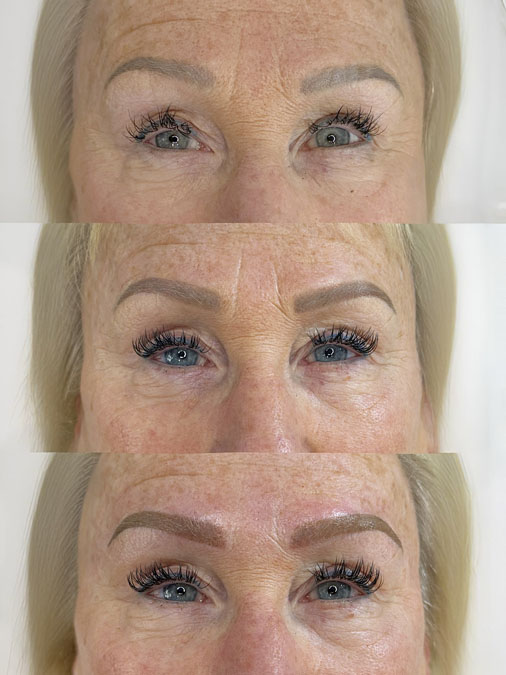
The more permanent makeup history a brow contains, the more important thoughtful planning becomes. Previous tattoos, microblading, refreshes and corrections all influence how future pigment will heal. During consultations we evaluate every layer individually before recommending treatment. This careful approach helps avoid unnecessary pigment buildup while creating healthier long-term permanent makeup.

Microblading and Tattoo Do Not Age the Same Way
This is one of the most important concepts in long-term permanent makeup. The older eyebrow tattoo and the newer microblading are not one procedure. They are two completely different procedures performed at different times using different pigments, different techniques and often different artists.
Because of that, they continue changing independently. The microblading may lose definition while the tattoo underneath remains strong. The tattoo may become grey while the hairstrokes still appear warm. The old shape may slowly become visible beneath the new design. This is why correction begins with understanding every pigment layer rather than treating the brow as though it contains only one tattoo.
Why Covering a Tattoo Isn’t Always the End of the Story
Covering an old tattoo with microblading is sometimes an appropriate decision. However, it should always be viewed as part of a long-term plan rather than a permanent solution. Because both pigment layers continue evolving, future maintenance eventually becomes more complex than maintaining first-time microblading. Years later, the artist is no longer working only with fresh hairstrokes. They are working with:
- An older tattoo.
- Newer microblading.
- Natural pigment changes.
- Previous maintenance.
- The current condition of the skin.
Understanding all of those factors creates much healthier long-term planning than simply adding another layer of pigment.
When Tattoo Layers Begin Competing With Each Other
Many clients describe the brows as looking “busy.” That feeling often comes from several visual elements competing for attention at the same time. The eye sees:
- Old tattoo edges.
- Softened hairstrokes.
- Different healed colours.
- Multiple brow shapes.
- Several pigment depths.
Instead of reading as one beautiful eyebrow, the permanent makeup begins reading as several different procedures occupying the same space.
This is exactly why tattoo covered by microblading correction requires a different philosophy than a routine refresh.
Correction Begins With Understanding Every Layer
Our first objective is never choosing a new pigment. Our first objective is understanding the permanent makeup already present. We evaluate:
- The original tattoo.
- The microblading.
- The healed colours.
- The amount of remaining definition.
- The current skin quality.
- The long-term goals for the brows.
Only after understanding each layer do we begin planning what should happen next. If the previous pigment has also become increasingly faded, you may benefit from our Faded Eyebrow Tattoo Fix guide. Clients wondering whether another maintenance appointment or a more comprehensive approach is appropriate should also compare Microblading Refresh vs. Correction before deciding their next step.
Every Procedure Becomes Part of the Brow’s History
One of the most important ideas in eyebrow tattoo correction is understanding that permanent makeup is cumulative. Every procedure leaves something behind. The original eyebrow tattoo becomes part of today’s brow.
The microblading becomes part of today’s brow. Every refresh becomes part of today’s brow. Every correction becomes part of today’s brow. By the time many clients seek correction, they are no longer looking at one procedure. They are looking at years of permanent makeup history layered together inside the same skin. Understanding that history is what allows modern correction to become much more predictable.
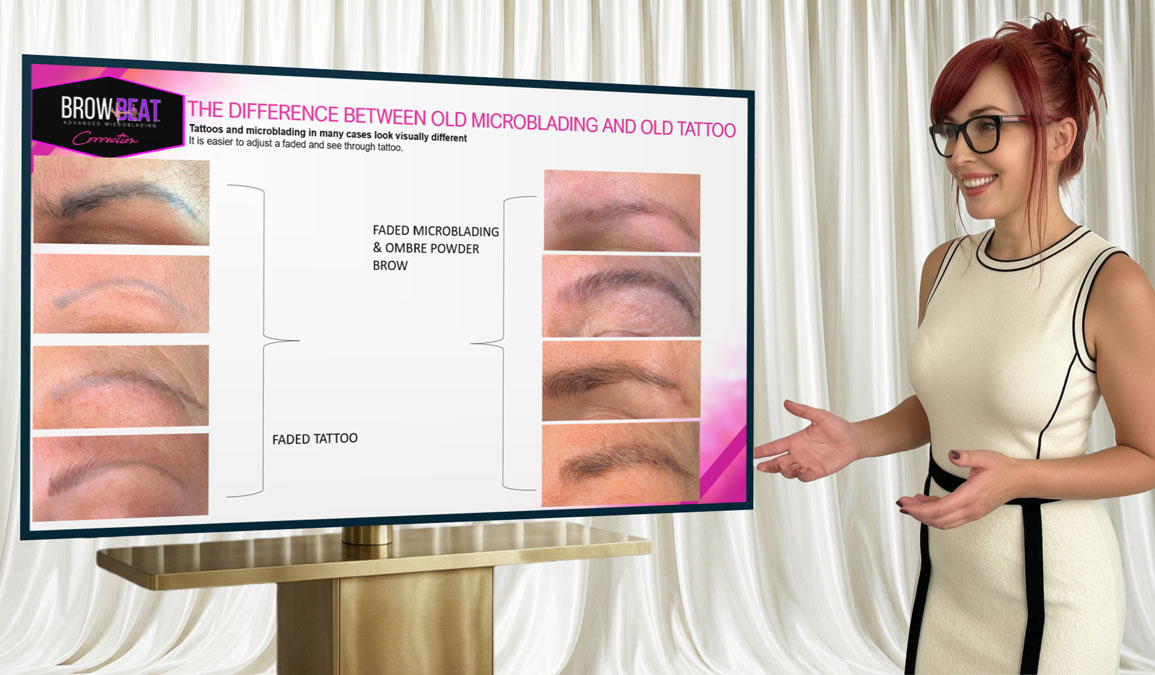
Why Cover-Ups Eventually Become More Visible
Immediately after microblading, the new hairstrokes usually become the dominant feature. They are crisp. Fine. Detailed. The older tattoo becomes much less noticeable.
As permanent makeup naturally evolves, however, those delicate hairstrokes gradually soften while the broader pigment underneath continues existing within the skin. This creates a point where both procedures begin competing visually. The older tattoo hasn’t suddenly appeared. The newer microblading has simply become softer.
Understanding this relationship helps explain why clients often feel their brows have changed dramatically several years after loving their original results.
When Two Brow Shapes Exist Together
Sometimes the previous tattoo followed one eyebrow shape while the newer microblading followed another. Initially, the fresh hairstrokes successfully redirected the eye toward the newer design. Years later, the original outline may slowly become visible again. Clients often describe this as:
- seeing two arches
- two tails
- two fronts
- an old outline showing underneath
- the original tattoo “coming back.”
This is one of the reasons tattoo-covered-by-microblading correction often involves evaluating shape as carefully as color. If the previous outline has also become asymmetrical, our Uneven Eyebrow Tattoo Correction guide explains how long-term brow balance is evaluated.
Why Layering More Pigment Is Not Always Better
One of the easiest responses to fading microblading is adding more pigment. However, when an older tattoo already exists underneath, simply adding another layer may not create the healthiest long-term result. Each new procedure increases the amount of pigment already living inside the skin. Eventually the eyebrows may contain:
- an original tattoo
- microblading
- a refresh
- a colour adjustment
- another maintenance appointment
Instead of becoming more natural, the permanent makeup may gradually become more saturated. This is why experienced correction asks a different question. Not… “Can we add more pigment?” But… “Should we?”

Sometimes the Healthiest Decision Is a Different Direction
One of the greatest advances in permanent makeup has been recognising when the original treatment philosophy should change. Fresh skin often responds beautifully to microblading. Skin containing years of previous pigment may benefit from a different approach. That does not mean microblading was a mistake. It means the brow journey has naturally reached another stage.
Many long-term clients eventually benefit from techniques that work with the existing pigment rather than continually placing additional hairstrokes over previous procedures.
Every Correction Plan Is Individual
No two tattoo-covered-by-microblading cases are identical. Some clients have very light older tattoo pigment. Others have dense previous work beneath faded hairstrokes. Some have color concerns. Others have shape concerns. Many have both. This is why every correction begins with evaluating:
- the original tattoo
- the microblading
- current pigment colours
- skin quality
- existing brow shape
- future maintenance goals.
Only then can the healthiest treatment pathway be recommended.
Looking Beyond Today’s Appointment
One appointment should never be planned in isolation. Every recommendation should also consider what the brows are likely to look like several years from now. Will today’s correction continue ageing naturally?
- Will future maintenance become easier?
- Will the brows remain soft and believable?
Thinking beyond today’s procedure is one of the defining differences between modern eyebrow correction and simply covering old permanent makeup again.
If your previous tattoo has also become oversaturated, continue with our Oversaturated Eyebrow Tattoo guide. Clients whose previous correction attempts were unsuccessful may also benefit from reading Failed Previous Correction before deciding their next step.
The Goal Is One Beautiful Brow—Not Two Competing Procedures
One of the easiest ways to recognize a tattoo covered by microblading is when the eye begins seeing two separate procedures instead of one complete eyebrow.
- The original tattoo may define one outline.
- The newer hairstrokes suggest another.
- Different pigment colors compete for attention.
- Different densities appear throughout the brow.
Instead of creating a soft, natural eyebrow, the permanent makeup begins telling two different stories at the same time. The purpose of correction is restoring visual unity. The brow should once again look like one intentional design instead of several procedures layered together over many years.
Respecting the Work That Still Looks Beautiful
One of the biggest misconceptions about correction is believing everything must be replaced. Often that isn’t true. Many clients still have beautiful elements within their existing permanent makeup. The tail may still frame the face nicely. The overall shape may still be flattering. Some pigment may have healed exceptionally well. Instead of treating every previous procedure as a problem, modern correction asks a much better question:
What still deserves to be preserved?
By protecting healthy permanent makeup while improving the areas that have naturally evolved, the final result often feels much softer and more believable.
Correction Should Never Feel Rushed
Clients are often understandably eager to “fix everything.” After living with several layers of permanent makeup, it is natural to want immediate improvement. However, experienced correction is rarely rushed.
The healthiest plan is often the one that protects the skin, respects previous pigment and considers how today’s treatment will continue aging years into the future. That thoughtful approach consistently produces more elegant long-term outcomes than trying to solve every concern during one appointment.
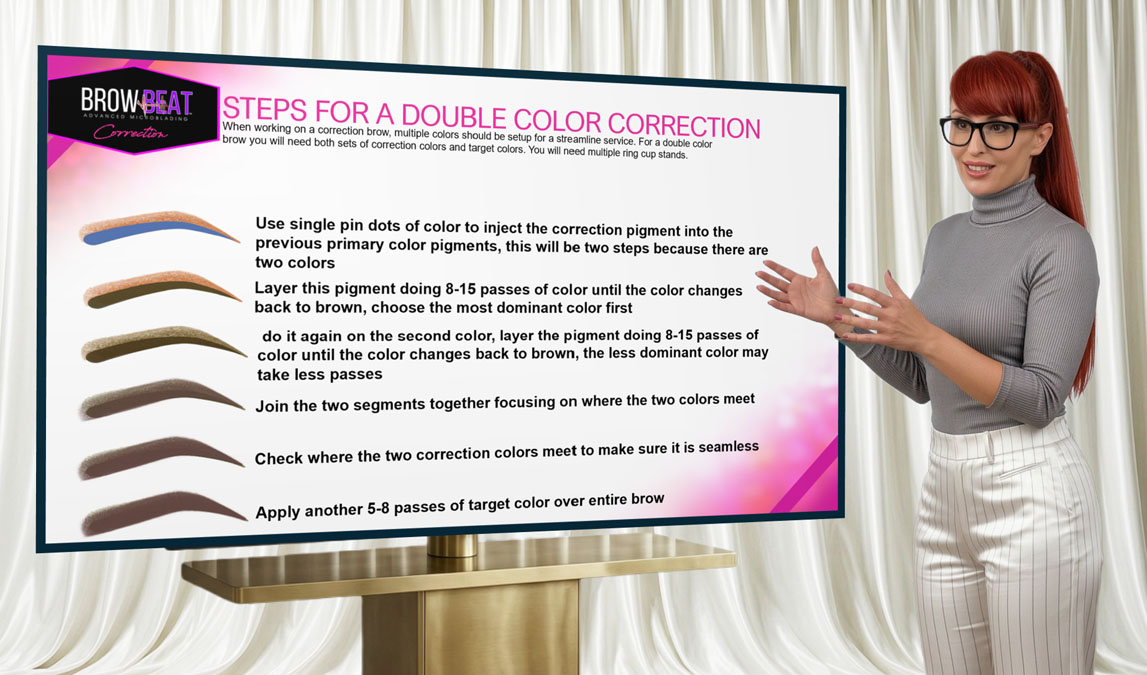
Why Long-Term Planning Matters
Every recommendation should answer two questions. How will the brows look after this appointment? And equally important… How will they continue looking five years from now? Long-term planning is what separates maintenance from repeated layering.
Rather than continually adding pigment whenever the brows fade, today’s permanent makeup philosophy encourages treatments that support the future of the brows while preserving healthy skin and natural-looking results.
Serving Dallas, Fort Worth & North Texas
Clients visit from throughout Dallas, Highland Park, University Park, Preston Hollow, Lakewood, Plano, Frisco, Southlake, Grapevine, Coppell, Richardson, McKinney and surrounding North Texas communities seeking experienced evaluation after microblading has been performed over an older eyebrow tattoo.
Many are unsure whether they need colour correction, reshaping, a redo or a completely different maintenance approach.
That uncertainty is normal.
Every layered brow follows a different history, and every correction should begin by understanding that history before planning the next chapter.
Frequently Asked Questions About Tattoo Covered by Microblading
Previous tattoos need a proper correction treatment to be neutralized. So, if that was not done previously it can show back through.
Sometimes, yes, but it depends on the existing pigment, color, density, shape and skin condition. Tattooing over old eyebrow pigment should be planned carefully because adding more pigment can sometimes create layering, darkness or mixed colors instead of a softer result. A correction approach would blend previous work with the new application.
You can still see the old tattoo because microblading does not erase previous pigment. It may temporarily distract from the older tattoo, but as the hairstrokes fade, the original pigment, shape or color can become noticeable again. A powder brow correction is the better choice for neutralizing previous tattoo.
Old permanent makeup does not usually come back—it was often still there. Newer microblading may have made it less noticeable for a while. As the microblading fades, the older tattoo underneath can become easier to see. Color neutralization and blending needs to take place so it doesn’t look like its returning.
Sometimes removal is helpful, but not every client needs it. The decision depends on how dark, saturated, uneven or discolored the old tattoo is. A professional evaluation helps determine whether correction, soft shading, a redo or removal is the better path.
Yes. Many clients have more than one generation of permanent makeup in the same brow. An old eyebrow tattoo, newer microblading, refreshes and correction pigment can all exist together, which is why layered brows need careful evaluation before adding more pigment.
Yes. Faded microblading can reveal old tattoo pigment underneath. As hairstrokes soften, the older pigment may become visible again, especially if the previous tattoo was grey, blue, orange, red, dark and not color corrected to begin with.
An eyebrow tattoo covered by microblading is fixed by evaluating every pigment layer first. The old tattoo, newer hairstrokes, current color, shape, density and skin condition all guide the plan. Correction may include color balancing, reshaping, soft shading, a redo strategy or staged treatment.
Not always. Some old eyebrow tattoo pigment can be improved without removal, especially if the shape, color and density are workable. Removal may be recommended when pigment is too dark, too saturated, poorly placed or likely to interfere with a natural correction.
BrowBeat Blog