
Finding the right eyebrow correction artist sounds simple until it is time to actually do it. On the surface, it seems like the process should be straightforward. Search for an artist, look through a portfolio, choose the work that looks the most appealing, and book. That is how many people approach it. It is also where many people get it wrong. Correction is not the same as choosing someone for fresh brows on untouched skin. It is not just about who creates pretty results. It is about who understands existing pigment, structural change, color behavior, healed outcomes, and long-term strategy.
That difference matters more than most people realize. A person can be highly capable at creating beautiful fresh brows and still not be the right person to correct old microblading, faded brow tattoos, layered pigment, or brows that have changed over time. Those are two different skill sets. One is application. The other is correction. One begins with clean conditions. The other begins with history. And in correction work, history is everything.
This is why looking for a real eyebrow correction artist requires a shift in thinking. The search cannot be built around surface beauty alone. It has to be built around evidence of understanding. It has to be built around whether the artist clearly works with corrected brows, not just fresh ones. It has to be built around whether the explanations make sense, whether the results are consistent, and whether the process feels structured rather than rushed. If the work only looks good in perfect lighting on day one, that is not enough. Correction does not live in day one. It lives in healing, in month three, in month six, and in the way the brows continue to sit in the skin over time. A knowledgeable artist should be able to guide you through the full range of eyebrow tattoo redo, refresh, revision, and correction options instead of recommending the same procedure for every client.
Why Correction Is a Specialization, Not a Side Service
The first thing to understand is that not every PMU artist does correction, and not every PMU artist should. That is not criticism. It is clarity. Correction is not a small add-on to a brow menu. It is not something that can be approached casually between other services. It is a specialization. It requires repetition, pattern recognition, restraint, and the ability to work with skin that already carries pigment, movement, and change.
That is why correction should be approached as its own category of expertise. The artist should not merely mention that they “also do corrections.” There should be visible evidence that correction is part of the real body of work. It should appear in the language they use, the cases they show, the problems they discuss, and the way they explain outcomes. The more central correction is to the artist’s world, the more likely it is that the work is based on true familiarity rather than occasional exposure.
This is also why dedicated educational material matters. An artist who regularly works with correction cases will usually explain different kinds of pigment change, different kinds of structural issues, and different reasons why previous work evolves. The information tends to be clearer because it is rooted in repetition. There is less guessing, less mystery, and less decorative language standing in for actual understanding. When correction is a real specialization, the explanation becomes part of the proof.
That same distinction is why it helps to understand why eyebrow correction is a different skill from standard brow work. It is not simply more advanced because it is harder. It is more advanced because it requires a different way of seeing what is already there and a different way of deciding what should happen next.
Why Pretty Pictures Are Not Enough
Visuals are powerful in this industry. They draw attention quickly, and they influence decisions instantly. But visuals can also be misleading when they are not supported by context. This is especially true in correction. A polished after photo does not automatically mean the work was difficult, strategic, or even particularly revealing. A beautiful image may still tell very little about how the pigment behaved, what the skin looked like before, or how meaningful the correction actually was.
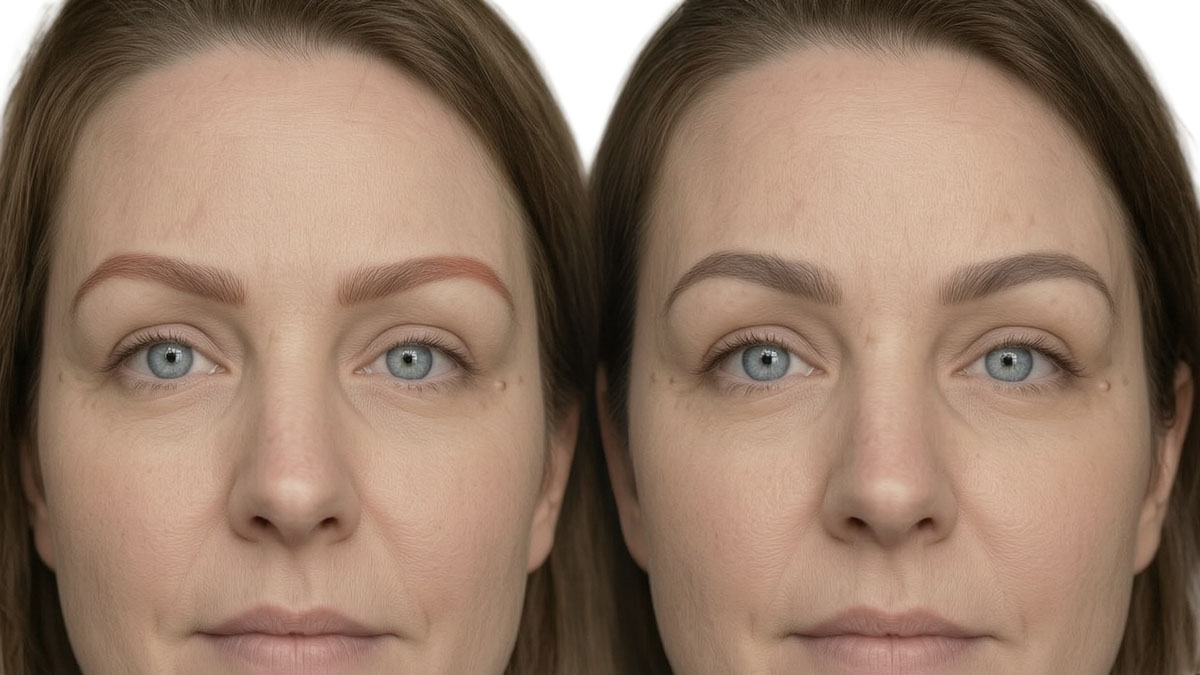
The most important shift in evaluating portfolios is this: do not just look for beautiful brows. Look for corrected brows. Those are not the same thing. Correction work often begins with a more complex starting point. The “before” matters deeply, because it shows the real problem being addressed. Without a clear before, the after loses much of its meaning.
This is why a strong correction portfolio is not built on beauty alone. It is built on contrast, explanation, and consistency. The before image should reveal the challenge. The after should show improvement that makes sense in relation to that challenge. If the problem is not obvious, then the result may not tell much at all. The before tells the truth. The after shows the outcome. Both matter, but the before often says more about the artist than the after does.
That is one reason it helps to study what to look for in eyebrow correction before-and-after photos. It changes the way the work is read. Instead of being impressed by lighting, styling, and presentation alone, the focus moves to whether real correction is actually happening.
What the Before Photo Should Be Telling You
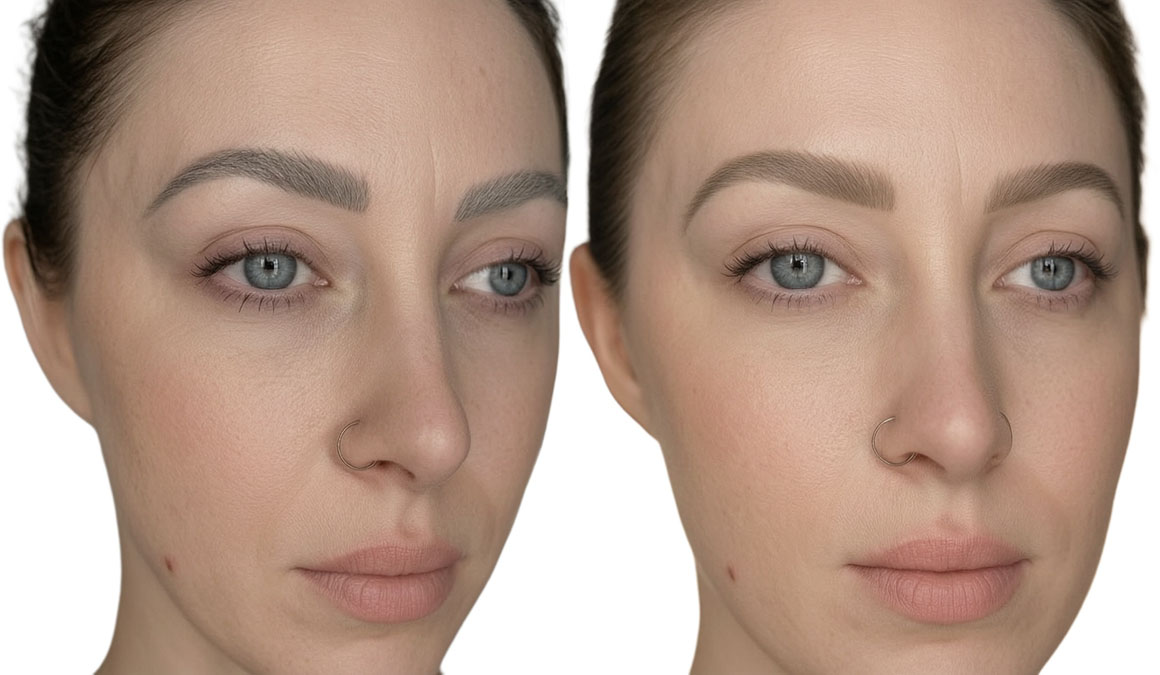
A real correction artist is usually not hiding the problem. The before photo should show visible evidence of what needed to be addressed. That may be old blue or gray pigment, faded warmth, blurred structure, heavy layering, soft edges, uneven saturation, or shapes that have gradually changed over time. The point is not that every before must look dramatic. The point is that the artist is willing to show the actual issue rather than presenting only easy cases that already looked acceptable before treatment.
The more honest the before images are, the more trustworthy the portfolio becomes. Real correction work often begins with real imperfection. That is part of the value. Improvement is the goal, not theatrical perfection. When correction is done properly, the result should feel more balanced, more controlled, more intentional, and more stable. That kind of improvement is often more meaningful than an after photo that appears polished but says little about what was involved.
This matters because many people searching for help are not looking at untouched skin. They are looking at their own brows, which already carry a story. If the artist only shows fresh, ideal cases, there is very little reason to believe they deeply understand more complex starting points. A correction artist should feel familiar with complexity, not selectively distant from it.
Healed Results Matter More Than Fresh Results
One of the clearest signs of a real correction specialist is the presence of healed work. Fresh photos are easy to make look appealing. The pigment is newly placed, the lines are visible, the skin is prepped, and the moment is controlled. But brows do not live in that moment. They live after the swelling settles, after the skin renews itself, after the pigment integrates, and after time begins doing what time always does.
This is why healed results matter so much. They show whether the strategy held up. They show whether the color behaved well. They show whether the brow still looks balanced once the initial freshness has passed. In correction, healed work is not optional evidence. It is some of the most important evidence available.
The stronger the correction artist, the more likely it is that healed results appear repeatedly rather than occasionally. One healed example may be reassuring, but it is not enough to establish consistency. Consistency is what builds trust. One good result can happen for many reasons. A pattern of good healed results points to skill, repeatability, and understanding.
That is also why healing should never be treated as an afterthought. It is central to correction. If an artist shows almost exclusively immediately-after photos, that should create pause. Beautiful day-one work is pleasant to look at, but correction should be judged by where the brows settle, not where they start.
Anyone trying to understand this more deeply should also spend time with the eyebrow color correction healing process, because healing is where many assumptions fall apart and the true quality of the work begins to show.
Color Understanding Separates Artists Quickly
A real correction artist does not only understand where to place color. A real correction artist understands how color behaves. That difference is enormous. Placement is technique. Behavior is judgment. In correction work, behavior is often the more important skill because the pigment already in the skin is part of the equation.
That means a true specialist should be able to explain why brows turned gray, why warmth developed, why certain old pigments lean blue, why some tones soften differently than others, and why covering one color with another is not the same as correcting it. The explanation should not sound mystical or overcomplicated. It should sound clear. It should feel understandable. If the artist’s explanation creates more confusion than clarity, that is usually not a good sign.
This is one of the places where experience becomes visible in conversation. The right artist will not just say that something “needs correcting.” They will usually explain what they see and why it happened in a way that feels grounded. That grounded explanation creates calm confidence, because it shows the problem has been recognized before.
This is also why it helps to understand why color does not simply cover color in brow correction. Once that principle is understood, it becomes much easier to identify whether the artist is speaking from real correction knowledge or from a generalized PMU mindset.
Communication Is One of the Strongest Clues
People often underestimate how much can be learned from the way an artist communicates. Technical skill matters deeply, but communication reveals whether the process itself is likely to be safe, structured, and realistic. A strong correction artist tends to explain clearly. Not excessively. Not theatrically. Clearly.
That clarity usually sounds like this: this is what is visible, this is what may be contributing to it, this is what can likely be improved, and this is what the process may involve. There is no need for dramatic promises. There is no need for confusing language. The goal is understanding.
That is important because correction already carries emotional weight for many people. There may be frustration, hesitation, embarrassment, uncertainty, or fatigue from living with brows that no longer feel right. In that environment, confusing communication creates even more instability. Clear communication creates relief.
A real correction artist does not need to pressure or persuade aggressively. The right explanation tends to do the work on its own. The artist explains, and the client understands. That feeling is powerful. It is usually one of the clearest signs that the process is being handled by someone who truly works in this space.
Evaluation Before Acceptance Is a Good Sign
One of the most overlooked clues is how quickly the artist accepts the case. In correction, immediate acceptance without assessment should not always feel reassuring. It should sometimes feel incomplete. Real correction is not automatic. It is evaluated.
That means photos should usually be requested. Questions should usually be asked. The artist should want to know what has been done, how many times it has been done, how the brows have changed, and what the current concern actually is. These are not barriers. They are signs of professionalism.
Fast acceptance may feel convenient, but convenience is not the same thing as expertise. Correction benefits from deliberate assessment, because assessment is what prevents thoughtless continuation. A real specialist is rarely in a hurry to promise outcomes before understanding the case.
This is one reason people often feel safer once they reach the right level of expertise. The process may feel slower at first, but it also feels more intentional. And intentionality matters in correction far more than speed does.
For those comparing options, it can also be useful to read through the red flags to watch for when choosing a brow or correction artist. Sometimes knowing what to avoid is just as valuable as knowing what to seek.
What the Right Confidence Looks Like
There is a difference between calm confidence and exaggerated confidence, and that difference matters. A real correction artist usually does not sound like someone selling fantasy. They sound like someone outlining a plan. The tone tends to be realistic, measured, and specific. The process is explained without theatrical certainty.
That kind of confidence is more valuable than a promise of perfection. In fact, promises that sound too easy are often a warning sign. Correction is layered. It requires control, timing, and strategy. The right artist usually acknowledges that. The wrong one often tries to simplify it in a way that sounds appealing but ignores the reality of the work.
This is why realistic language should be treated as a strength, not a weakness. A phrase such as “this is what can realistically be achieved” may sound less dramatic than “this will be perfect,” but it usually reflects more experience, more honesty, and a more stable outcome.
That is also why experience matters so much in eyebrow correction. Experience does not just improve technique. It improves judgment, pacing, language, and the ability to recognize what is likely to happen before it happens.
Finding a real eyebrow correction artist is not about choosing the person who looks the most polished online. It is about choosing the person who understands the most, explains the most clearly, and shows the most meaningful evidence. That kind of choice creates something far more valuable than a pretty appointment. It creates direction. It creates trust. And it creates the kind of outcome that is worth taking the time to choose properly. Start by looking for a dedicated eyebrow tattoo correction specialist whose portfolio includes healed correction work, not only fresh photographs taken immediately after treatment.
Why Easy Promises Should Make You Pause
One of the clearest signs that someone may not truly specialize in correction is how easy they make it sound. Correction is not impossible, but it is not casual either. It is not a one-click service, not a simple continuation, and not something that should be presented as though every case follows the same pattern. Existing pigment changes the equation. Previous work changes the equation. Time changes the equation. A real correction artist understands that immediately.
That is why quick promises should create hesitation rather than reassurance. If the language sounds too simple, the thinking behind it may be too simple as well. A promise of an instant transformation, a one-session fix, or a complete turnaround without careful review often ignores the very thing that makes correction different in the first place. Real correction is layered. It is strategic. It moves through assessment, treatment, healing, and refinement. It is not based on shortcuts. It is based on control.
This does not mean correction should sound frightening or overly complicated. It means it should sound structured. The right artist will not try to impress by flattening complexity into something overly neat. The right artist will guide. That guidance creates confidence because it reflects real understanding rather than performance. A responsible appointment should clarify whether your brows need a refresh or a more involved correction before you commit to adding more pigment.
What a Specialist Usually Looks Like Online
A real correction artist often has a different digital footprint from a general PMU artist. The language is usually more specific. The education is deeper. The examples are more grounded in real concerns. Instead of only featuring fresh, untouched, highly polished work, there is often visible evidence of old pigment, color shifts, structural issues, healed outcomes, and explanations of why the brows changed over time.
This is where separation matters. If correction is truly part of the artist’s specialization, the content usually reflects that in a clear and recognizable way. It may appear through case studies, dedicated galleries, detailed explanations, or an entire section focused specifically on correction work. The point is not aesthetic branding alone. The point is clarity. A person searching for help with blue brows, gray brows, old microblading, or layered pigment should feel immediately that they have landed in the right category of expertise.
That clarity reduces confusion. It replaces the feeling of “maybe this person can do it” with something much stronger: “this person clearly works with cases like this.” That difference builds trust before any appointment is even discussed. It also helps explain why many people turn to dedicated correction resources that clearly define what correction actually is before making a decision. The more specific the information is, the easier it becomes to recognize whether the artist truly belongs in this space.
The Questions a Real Correction Artist Should Be Asking
A real correction artist is rarely satisfied with a vague summary. The process usually begins with questions, because questions reveal history, and history shapes the plan. That may include how many treatments have been done, what kind of service was originally performed, how often the brows were revisited, how the color has changed, whether the shape has drifted visually, and what the current concern actually is.
These questions are not administrative. They are diagnostic. They help reveal whether the situation is primarily about color, structure, layering, saturation, expectation, or some combination of all of them. The more detailed the history, the more intentional the correction plan can become.
This is also where many people begin to notice the difference between a general artist and a real correction specialist. A general artist may move quickly toward booking. A correction specialist often slows the process down. Not to create friction, but to protect the outcome. A slower, more thoughtful start is often a very good sign. The artist should also be able to explain whether your existing brows can be improved without starting over and what limitations may affect the final result.
How to Read the Artist’s Language
Language reveals a great deal. It reveals whether the artist respects the complexity of correction, whether expectations are being managed honestly, and whether the explanations are rooted in understanding. If the artist uses language that is overly vague, overly promotional, or overly absolute, that should be noticed.
Correction usually benefits from measured language. It sounds realistic rather than dramatic. It sounds thoughtful rather than impulsive. It often includes phrases that communicate structure, such as what can be improved, what may take time, what should be reassessed after healing, and what is likely to require more than one step. This kind of language does not weaken confidence. It strengthens it, because it demonstrates awareness of how the process actually works.
The same principle applies to educational content. A strong correction artist should be able to explain not only what can be done, but why the brows changed in the first place. That may include why microblading does not remain crisp forever, why pigment becomes more solid visually over time, and why repeating the same service does not always preserve the same look. When the artist can explain these shifts clearly, it usually means the work is being interpreted through a correction lens rather than a basic application lens.
Why Structure Matters More Than Charm
Charm can be appealing. So can beautiful branding, polished videos, and visually refined presentation. None of those things are inherently negative. But in correction, they should never be mistaken for proof of specialization. A calm, structured process is more valuable than a highly charming but loosely defined one.
Structure is what creates predictable outcomes. Structure is what allows complexity to be handled without panic. Structure is what separates a plan from an impulse. A real correction artist tends to have a process that feels ordered. The consultation feels intentional. The explanation feels coherent. The expectations are set in stages. The healing timeline is respected. The result is approached as something being built rather than something being forced.
This is why the right artist often makes people feel calmer rather than more excited. The feeling is less about being dazzled and more about being understood. That feeling matters. It usually means the process is being guided by thought rather than by performance.
What Happens When Understanding Is Missing
When understanding is missing, the signs often appear quickly. The artist may focus on covering rather than correcting. The plan may sound generic. The questions may be minimal. The explanation may be thin. The proposed solution may look suspiciously similar to what has already been done several times before.
That is often how people end up repeating the same cycle. Another treatment. Another touch up. Another temporary improvement followed by further softening, merging, or color shift. This is why so many people eventually find themselves searching for a new artist after years of repeated microblading. The issue is not always the initial service. It is often the lack of adaptation afterward.
A correction specialist recognizes that continuation is not always care. Sometimes continuation is exactly what needs to stop. That recognition is one of the strongest signals of true specialization.
Why the Right Artist Should Not Feel Rushed
There is a certain pace to real correction work. It is rarely frantic. It is rarely immediate. It is rarely sold as though the best possible outcome comes from moving faster. That slower pace is not hesitation. It is discipline.
The right artist usually takes time to interpret the case, explain the sequence, and allow the process to unfold through healing. This creates a more stable result because decisions are being made based on what the skin actually does, not on what someone hopes it will do.
That is also why healed work matters so much, and why many artists do not take on old microblading cases at all. Once previous pigment is involved, the margin for assumption gets smaller. A specialist respects that. A non-specialist may unknowingly underestimate it.
How the Right Decision Usually Feels
The right decision often feels quieter than people expect. It does not always come with a dramatic sales pitch or a bold promise. More often, it comes with clarity. The explanations make sense. The examples feel relevant. The process feels measured. The tone feels calm. There is a sense that the work is being seen for what it really is, not reduced to something more convenient or more marketable.
That kind of clarity creates a different emotional experience. Instead of feeling rushed into a decision, there is room to understand it. Instead of feeling uncertain, there is a sense of direction. Instead of feeling that the artist is trying to convince, it feels more like the artist is helping the situation become understandable. That is one of the strongest signs that the choice is moving in the right direction.
It is also why many people find reassurance in reviewing real correction galleries with visible case variety before booking. Evidence reduces uncertainty. And in correction work, evidence matters.
The Real Goal Is Not Finding Someone Popular
The real goal is not popularity. It is not convenience. It is not the most polished social feed or the broadest PMU menu. The real goal is understanding. The person chosen should understand what happened, understand what is possible, and understand how to move the brows in a better direction without pretending the process is simpler than it is.
That is what creates better decisions. Better decisions create better outcomes. Better outcomes create confidence. And confidence is ultimately what most people are looking for when they begin this search.
Finding a real eyebrow correction artist is less about choosing a person who can do brows and more about choosing a person who can interpret change. That interpretation is what protects the next step from becoming a repeat of the last one.
For anyone ready to move from searching to action, the next step should feel informed rather than impulsive. It should feel guided rather than rushed. And it should feel specific to correction, not just beauty. When that is in place, it becomes much easier to book the next step with confidence, because the choice is no longer being made on appearance alone. It is being made on understanding.
FAQs
What is the difference between a PMU artist and a correction artist?
A PMU artist may offer brows as a general service, while a correction artist specializes in improving previous work, managing existing pigment, and creating a plan based on healed changes over time.
Should every PMU artist be able to correct old microblading?
No. Correction is a specialization. It requires a different level of assessment, color understanding, and experience with already worked skin.
What should be visible in a real correction portfolio?
A strong correction portfolio should show meaningful before-and-after cases, visible starting issues, healed results, and consistency across multiple corrected brows rather than only fresh work.
Why are healed results more important than fresh photos?
Fresh photos only show the immediate appearance. Healed results show how the pigment actually settled, how the color behaved, and whether the correction strategy held up over time.
Is it a red flag if an artist accepts the case without seeing photos?
It can be. Correction should be evaluated, not automatically accepted. Photos and questions help the artist understand the history and decide on the right approach.
What if the artist promises a one-session fix?
That should be approached carefully. Many correction cases require structure, healing, and more than one step. Easy promises often ignore the complexity of existing pigment.
How can someone tell if the artist truly understands color correction?
A real correction artist should be able to explain why pigment changed, why certain tones developed, and how correction works in a way that is clear and understandable.
Does a correction artist need to have a separate correction-focused website or section?
Not always, but dedicated correction education, galleries, or case-specific content are strong signs that correction is a real specialization rather than an occasional service.
Why does calm communication matter so much?
Clear, measured communication usually reflects real understanding. It helps set realistic expectations and creates confidence in the process rather than confusion around it.
What is the most important thing to look for when choosing a correction artist?
Look for evidence of true specialization: corrected brows, healed work, clear explanations, case evaluation, realistic expectations, and a process that feels structured rather than rushed.