
Microblading is one of the most recognized words in the beauty industry. It carries familiarity, trust, and a sense of proven success. For many clients, it is the starting point—the technique they request before they fully understand what they actually need. And that makes sense. It was the technique that defined a shift in brows. It introduced realism, structure, and a more natural approach at a time when heavy tattooed brows were the standard. It created a new expectation. But recognition and suitability are not the same thing. Microblading is not flawed. It is not outdated. And it is not something to avoid. What it is, however, is specific. And when something is specific, it is not designed to solve every situation. This is where the misunderstanding begins. Because what most clients are actually seeking is not a technique. They are seeking a result. And those two things are not always aligned.
To understand how different approaches affect results over time, this explains how technique choice changes outcomes: why repeating the same technique changes results. Repeating the same method does not always lead to better results. Sometimes, it leads to limitations becoming more visible.
The Moment Clients Begin to Want “More”
There is a very specific moment that happens in the client journey, and it is one that most artists recognize immediately. A client returns, sits down, and expresses satisfaction—but with a quiet addition. They love their brows. But they want more. Not dramatically more. Not something entirely different. Just more fullness. More density. More presence. And this is where the limitation of strokes begins to reveal itself. Because microblading is built on individual lines. Each stroke is placed intentionally, with space around it, to mimic natural hair. That spacing is what creates realism. It is also what reduces coverage. And when a client has minimal natural brow hair—or desires a more defined, softly filled look—those gaps begin to matter. From a distance, the brow may appear complete. Up close, it may feel lighter than expected. Over time, as pigment softens and strokes lose crispness, that feeling of “not quite enough” becomes more noticeable. This is not a failure of technique. It is a mismatch between technique and expectation. No two sets of brows heal the same way, which is why professional eyebrow tattoo correction should never follow a one-size-fits-all formula.
Why Strokes Alone Create Long-Term Limitations
Microblading relies on precision at a very detailed level. Each stroke must be placed with correct angle, spacing, and pressure. The design is delicate, and the outcome depends on how those individual lines behave over time. This introduces variables. Each stroke can soften differently. Each section of the brow can heal slightly differently. And over time, those differences can begin to merge, blur, or lose definition. This is why many clients begin to notice changes months or years later. Not dramatic changes, but subtle ones. A loss of crispness. A shift in clarity. A feeling that the brow is no longer as defined as it once was. This process is explained more deeply here: why microblading blurs spreads loses shape. Because what you see initially is not what remains permanently. And understanding that difference is what allows for better long-term decisions.
The Difference Between Appearance and Performance
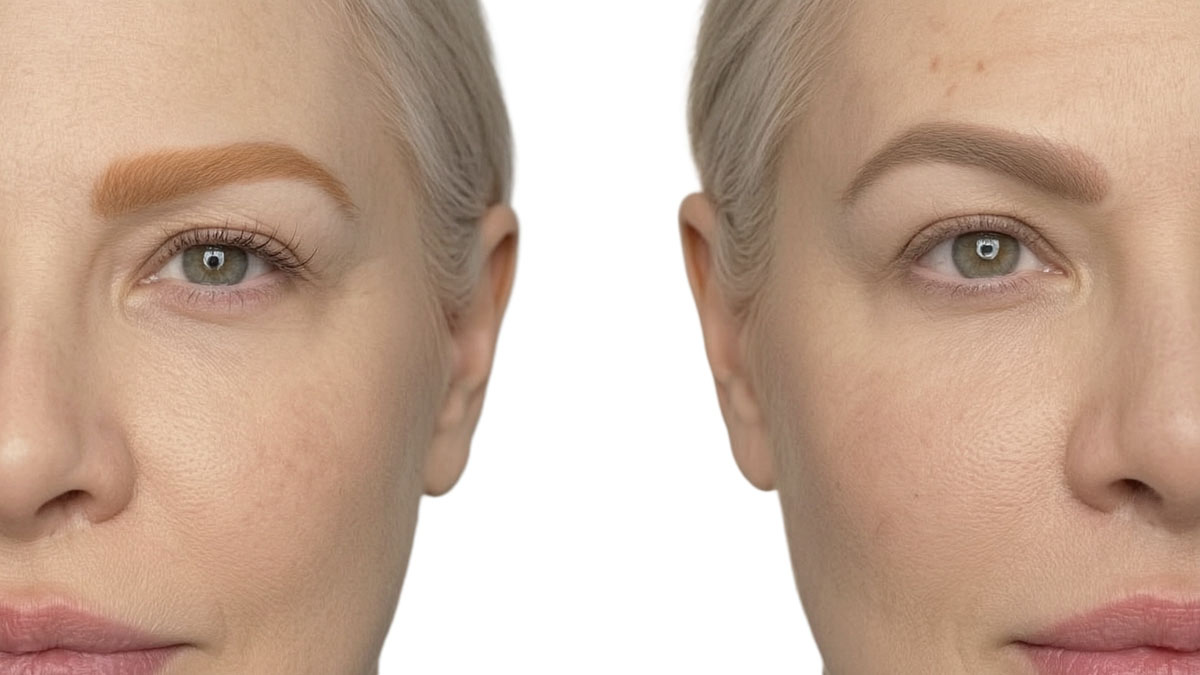
There is a distinction that is often overlooked in brow work, and it is one of the most important to understand. A technique can look beautiful initially, but that does not mean it will perform the same way over time. Microblading creates a very specific aesthetic. It is detailed, hair-like, and subtle. But its performance depends on how those fine lines hold within the skin. Shading techniques, on the other hand, are built differently. They are layered, diffused, and more evenly distributed. Instead of relying on individual strokes, they create a soft concentration of color that behaves more uniformly as it fades. This difference is not about which technique is better. It is about which technique offers more control over time. And control is what creates consistency.
Why Fading Behavior Matters More Than Day-One Results
Most clients evaluate their brows based on how they look immediately after the appointment. And while that moment is important, it is not the most important one. The true result is revealed in how the brow fades. When pigment is placed in a consistent, layered way, it tends to soften evenly. The shape remains cohesive, and the color transitions gradually. When pigment is placed in isolated lines, the fading can be less uniform.
This is why some clients begin to feel that their brows change in ways they did not expect. This evolution is explored here: why your brows look different years later. Because time is a factor in every brow result. And how the technique responds to time is what determines long-term satisfaction.
When Clients Don’t Have the Language—But Feel the Difference
Clients rarely describe their concerns in technical terms. They do not say they want more density or a different pigment distribution. They say they want their brows to look fuller, softer, or more complete. And that is where interpretation becomes essential. Because what they are responding to is not the technique itself. It is the outcome of that technique. The shape, the balance, the way the brow frames the face. This is why choosing the right approach matters more than defaulting to the most familiar one. Understanding how to evaluate results visually is key, which is why this is helpful: what to look for in eyebrow correction before and after photos. Because once you know what to look for, the difference between techniques becomes much clearer.
The Evolution of Technique and Why It Matters
Every experienced artist reaches a point where their approach begins to shift. Not because what they were doing was incorrect, but because they begin to see patterns. Clients wanting more fullness. Clients returning for adjustments. Clients seeking a result that feels more complete. This is where evolution happens. New techniques are introduced not to replace older ones, but to complement them. To provide options. To allow for more flexibility in achieving the desired result. Because no single technique can address every variation of brow structure, skin type, and client preference.
The Role of Combination Techniques
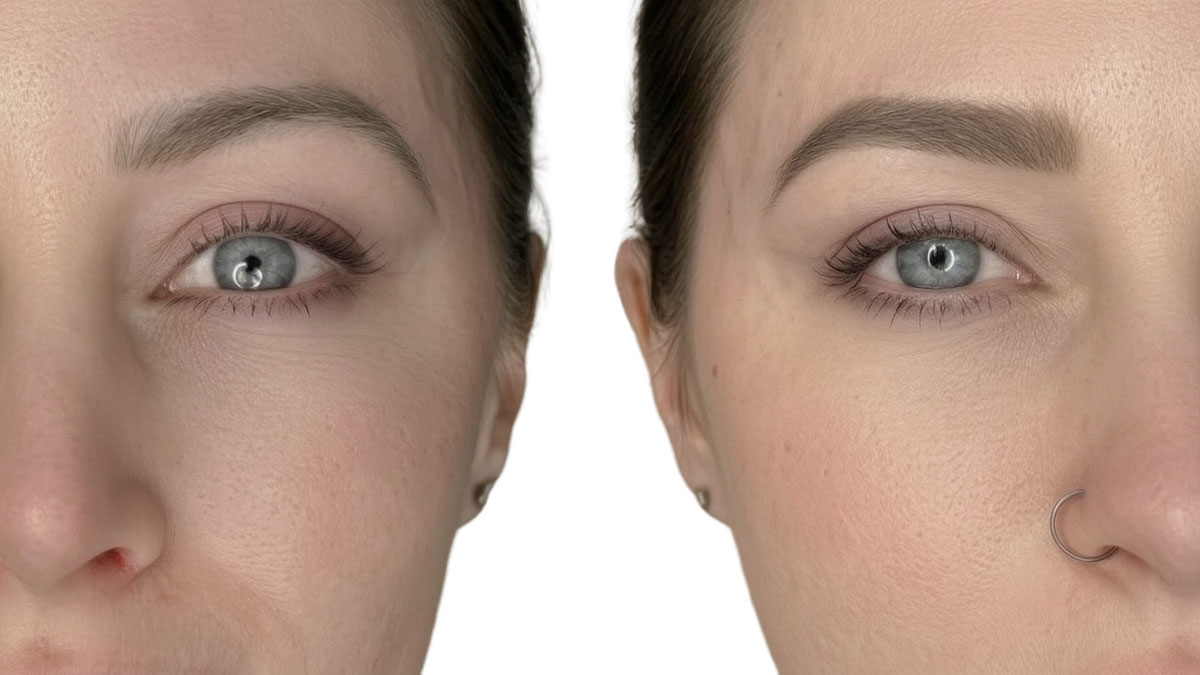
The most refined results often come from combining techniques rather than relying on one alone. Strokes can create realism in the front of the brow. Shading can provide density through the body and tail. This balance allows the brow to feel both natural and complete. It also allows for better long-term performance, because the structure is supported by both detail and distribution. This is where the industry has moved—not away from microblading, but beyond using it in isolation.
The Real Meaning Behind “Not the Long-Term Solution”
When we say that microblading alone is not always the long-term solution, it is not a criticism. It is a clarification. It means that long-term success is not defined by the technique you start with. It is defined by how that technique performs over time, and whether it continues to meet your expectations as your brows age. This perspective is explored further here on our microblading corrections page. Because the goal is not just to create a beautiful brow on day one. It is to create a result that remains balanced, controlled, and satisfying long after that first appointment.
The Takeaway: Choosing for the Future, Not Just the Moment
The most important shift a client can make is moving from choosing a technique to choosing a result. From focusing on what is popular to focusing on what performs. Because brows are not static. They change. They soften. They evolve. And the approach used must be able to adapt to that. When that is understood, the decision becomes clearer. Not based on familiarity, but on suitability. And that is what leads to results that do not just look good initially—but continue to feel right over time.
When Microblading Stops Being Enough
There is a point in many clients’ journeys where something subtle begins to shift. It is not dramatic, and it is not always immediate, but it is noticeable. The brows still look good, but they no longer feel complete. This is where the conversation changes. Because what once felt like the perfect solution begins to feel like a starting point. Not a mistake, not a failure—just not the full picture.
This is often when clients begin to explore other options. Not because they want something different, but because they want something more aligned with how they see themselves now. More fullness, more softness, more cohesion. And this is where understanding the long-term behavior of different techniques becomes essential. Microblading multiple times over itself, is the result of an earlier correction that never fully resolved the original problem.
The Difference Between Adding and Building
One of the most important distinctions in brow work is the difference between adding to a brow and building a brow. Microblading adds detail. It creates fine lines that mimic natural hair. But building requires something more foundational. Building requires structure. It requires consistency in color distribution. It requires a base that supports the overall shape rather than relying on individual elements to carry it. This is where shading techniques begin to take the lead. Not because they replace strokes, but because they support them. They fill the gaps that strokes naturally leave behind and create a more unified appearance. Without that structure, the brow can feel incomplete over time, even if it initially looked correct. In many cases, patchiness from additional forced strokes can occur creating underlying asymmetry that becomes more obvious over time.
Why Density Changes Everything
Density is one of the most underestimated elements in brow design. It is not about making the brow darker or heavier. It is about creating enough visual presence for the brow to hold its shape and balance the face. When density is too low, the brow can feel faint. When it is too high, it can feel heavy. The goal is to find the balance where the brow feels intentional without appearing overworked.
Microblading alone often sits on the lighter end of that spectrum. This works beautifully for clients with strong natural hair or those who want a very subtle enhancement. But for clients seeking more definition, that lightness can become a limitation. This is where adding controlled shading creates a shift. It allows the brow to hold its structure more consistently, especially as it fades.
How the Industry Has Evolved
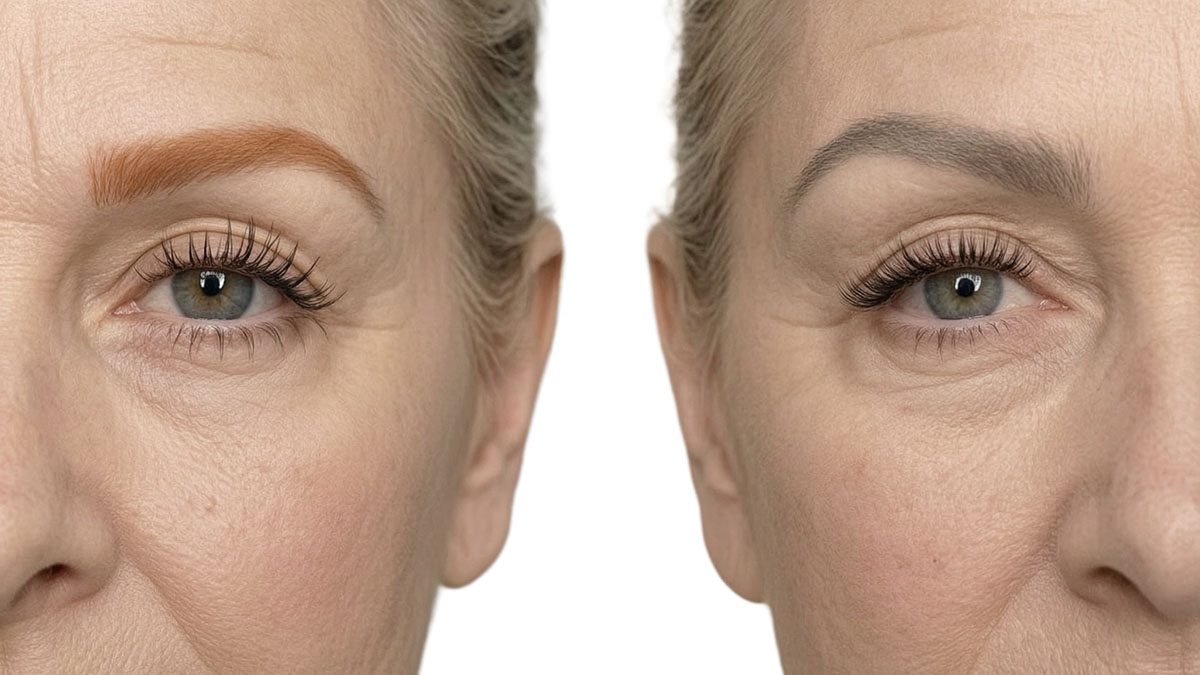
The industry has moved beyond single-technique solutions. Where microblading once dominated the conversation, there is now a broader understanding of how different techniques interact and support each other. This evolution has not removed microblading from the equation. It has placed it in context. Instead of being the default, it is now one option among several. And that shift has allowed for more tailored results. Clients are no longer limited to choosing one method. They can choose a combination that aligns with their features, their goals, and how they want their brows to behave over time. Forcing strokes over strokes increases patchiness, patchiness is often caused by inconsistent pigment retention and poor healing, making specialized patchy microblading correction necessary.
Why Long-Term Results Depend on Flexibility
Long-term results are not created by committing to a single approach. They are created by adapting as the brow changes. This is one of the most important principles in advanced brow work. Your skin changes. Your pigment softens. Your preferences evolve. And the approach used must be able to evolve with those changes. This is why flexibility matters. Because a technique that works perfectly at one stage may not be the best choice at another. Understanding this prevents the cycle of repetition that often leads to overworked brows: why most artists won’t fix old microblading. Because when techniques are repeated without adaptation, the result becomes layered rather than refined.
The Subtle Transition Toward Powder and Combination Work
Over time, many clients naturally transition toward powder or combination techniques. Not because they were advised to abandon microblading, but because their preferences shift toward more coverage and consistency. This transition often feels intuitive. Clients may not be able to explain it technically, but they recognize the difference visually. They notice that a softly shaded brow feels more complete, more balanced, and more aligned with their expectations. This is not about replacing one technique with another. It is about layering techniques in a way that enhances the overall result.
Why Maintenance Becomes Easier with the Right Approach
One of the clearest indicators of a successful brow is how easy it is to maintain. When the structure is correct, maintenance becomes predictable. Adjustments are minimal, and the brow continues to look balanced as it fades. When the structure is not fully supported, maintenance becomes more reactive. Small inconsistencies require correction, and the process begins to feel less controlled. This is where technique choice plays a significant role. A more evenly distributed pigment base creates a smoother fading pattern, which simplifies future appointments.
Understanding What You Actually Want
Most clients do not walk in with a clear technical request. They do not ask for specific pigment distributions or layering techniques. They ask for brows that look right. And what “right” means is often a combination of shape, color, and presence. It is how the brow fits the face, how it balances the features, and how it holds up over time. This is why the consultation process matters. Because translating what a client feels into what a client needs requires experience.
This is also why choosing the right artist is critical: how to find a real eyebrow correction artist. Because understanding the difference between techniques is only part of the equation. Knowing how to apply that understanding is what creates the result.
Frequently Asked Questions
Is microblading still a good option?
Microblading is an excellent technique when used in the right context. It is particularly effective for clients with existing brow hair who want subtle enhancement. However, microblading cannot be performed on a brow that requires correction.
Why do some people feel like their microblading fades unevenly?
Because strokes are individual lines, they can soften at different rates. This can create variations in how the brow appears as it fades.
Are powder brows more permanent?
Both techniques are semi-permanent, but powder brows often fade more evenly, which can make them feel more stable over time.
Can I combine microblading and shading?
Yes. Combination brows use both techniques to create a balanced result, offering both detail and density.
Why do I feel like my brows need more after microblading?
Because microblading focuses on detail rather than coverage. If you are looking for more fullness, additional techniques may be needed.
How do I know which technique is right for me?
This depends on your natural brow hair, skin type, and desired result. A professional assessment is the best way to determine this.
Is it better to start with microblading or powder brows?
It depends on your goals. Starting with the technique that aligns with your long-term vision often leads to the most satisfying result. Powder brows may requre less long-term correction, and more long-term satisfaction.
The Final Perspective
Microblading is not the problem. The assumption that it is the complete solution for every client is where the limitation begins. When you understand how different techniques perform, how they interact, and how they evolve over time, the decision becomes clearer. It is no longer about choosing what is popular. It is about choosing what works. And when that choice is made correctly, the result is not just a better brow. It is a more stable, more consistent, and more satisfying experience.
Schedule Your Appointment
If you are ready to move beyond one-size-fits-all approaches and choose a brow design that is built for long-term results,
schedule your appointment. Because the best brows are not just created—they are designed to last.