
There is a question that comes up in eyebrow correction more often than people say out loud. Sometimes it is asked directly, and sometimes it just sits quietly behind everything else a client is feeling. The question is simple: why is mine taking longer? It usually arrives after someone has seen another person move through correction more quickly, or after they expected their own brows to resolve in fewer sessions. that question is understandable, because from the outside, correction can look like it should follow a neat timeline. It can seem like one client is on two sessions, another is on three, and therefore the process should somehow be standardized. But it isn’t. And that is not a vague or evasive answer. It is the truth.
Every Brow Has Its Own Starting Point
The first thing that has to be understood is that no two sets of brows begin in the same place, even when they appear similar at a glance. One person may have fading that is relatively soft, shallow, and consistent. Another may have layering from multiple treatments, varying depths of pigment, and color shifts happening in different parts of the brow at the same time. From a distance, both may simply look like “old brows.” But once correction begins, the differences reveal themselves quickly. That is why comparing timelines rarely helps. You are not comparing the same canvas, the same pigment history, or the same tissue response. You are comparing completely different starting points that only happen to share the word brows.
Some Brows Are Simple and Some Are a Full Renovation
Think of correction this way: some brows are a Sunday tidy-up, and some are a full renovation. Some need refinement, a little color adjustment, and a careful reshaping of what is already there. Others arrive carrying years of decisions in the skin. They may have older tattoo underneath, newer microblading around the edges, and a structure that has gradually become less readable over time. You do not always know which kind of case you are dealing with until the work begins. That is one of the reasons experience matters so much in correction. It is not just about knowing what should happen in theory. It is about being able to read what is actually happening in real time, and to adjust when the brows reveal that they are more complex than they first appeared. That is also why eyebrow correction is a different skill from standard brow work. Standard work creates. Correction interprets, recalibrates, and rebuilds.
Color Complexity Changes the Entire Timeline
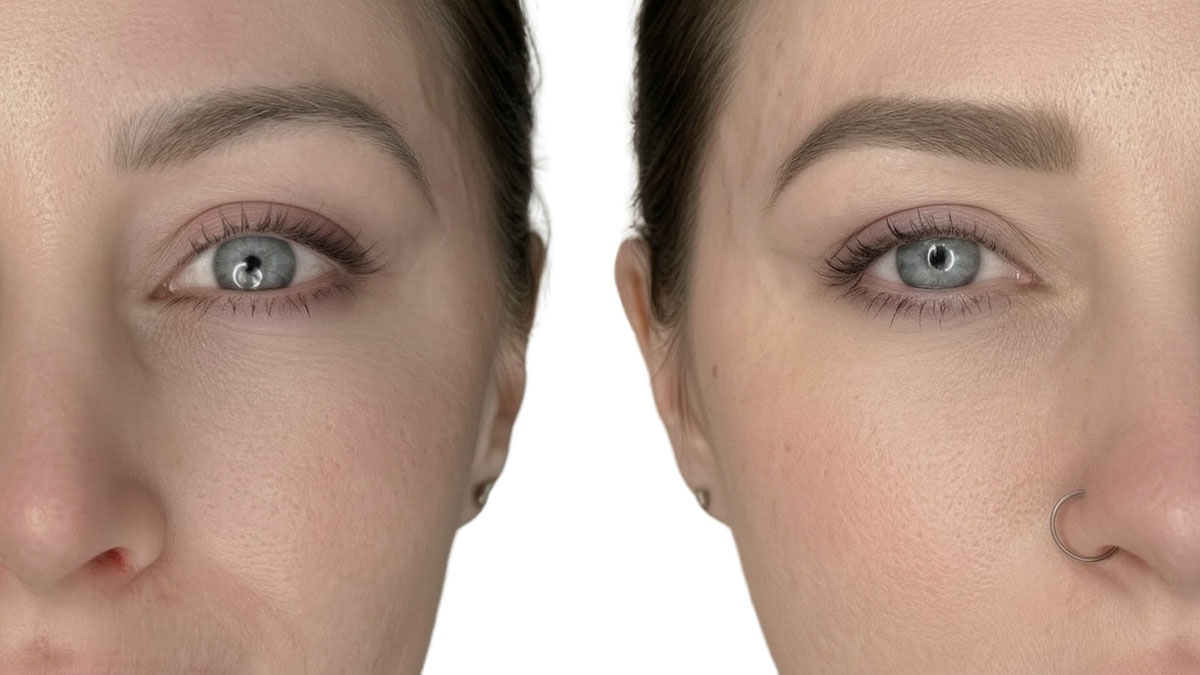
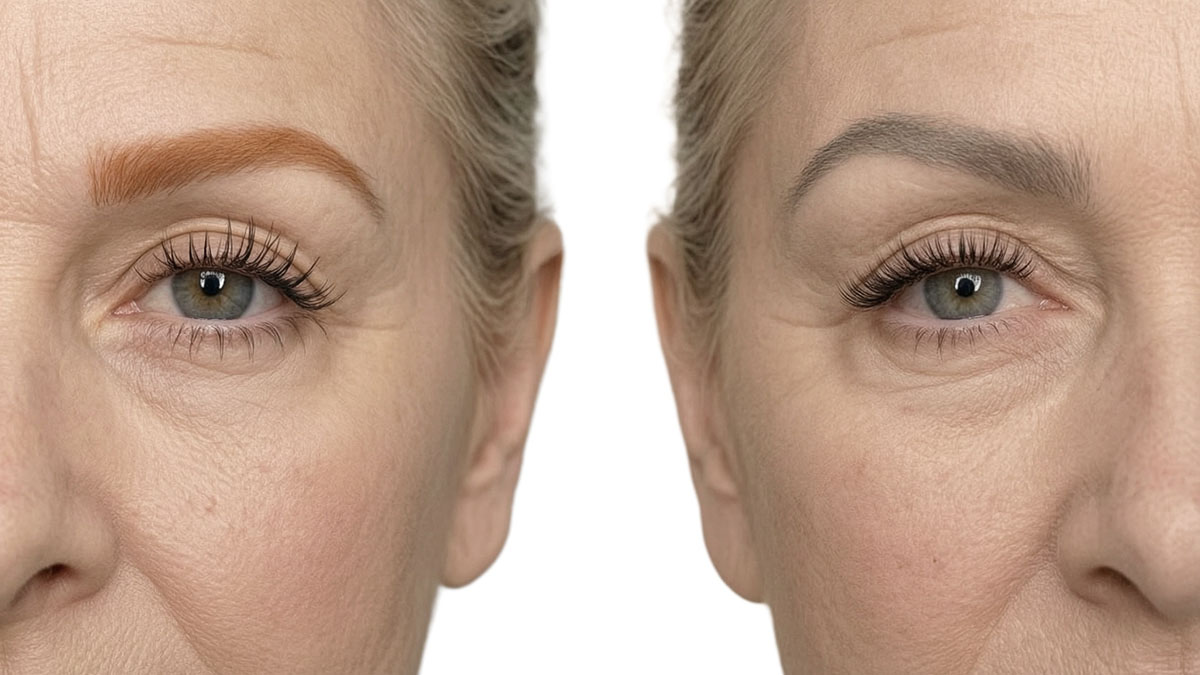
One of the biggest reasons some brows take longer to fix than others is color. If a client comes in with one faded tone, perhaps a soft, worn brown that has simply lost freshness over time, that is a very different situation from a brow carrying multiple competing colors. A single faded tone allows the correction to move in a more direct direction. Only one color to correct. The artist can focus on refining, enhancing, and rebuilding. But when multiple colors are present at once, the process changes entirely. Old blue tattoo may still be sitting underneath while newer red or warm microblading has been added abs is still being seen around the edges. In cases like that, there is no single correction step. There are separate problems that each need to be handled in the correct order.
When a Brow Has More Than One Problem
This is where clients often begin to understand why their timeline is different. If a blue area must be corrected in one way and a red area must be corrected in another, the appointment is no longer about one smooth pass toward improvement. It becomes a layered, sectional process. One part of the brow may need warmth to bring it back toward brown. Another part may need the opposite. And all of that must happen before rebuilding can even begin in a meaningful way. This is exactly why color does not cover color in brow correction. Color interacts. It blends. It carries history forward if it is not corrected properly first. So when clients wonder why one case seems quick and another takes more time, this is often one of the reasons. A case with one issue is not the same as a case with several.
Saturation Can Make Two Similar Brows Behave Completely Differently
Another major factor is saturation. Two brows can look surprisingly alike on the surface and still behave completely differently once correction begins. This happens more often than people realize. A brow can appear softly faded and relatively manageable from the outside, but once you start working, it becomes obvious that the pigment is holding much more strongly than expected. It may sit deeper. It may be denser. It may resist movement in a way that the surface appearance never suggested. That is why one person may respond beautifully within a certain number of passes, while another—with what looked like the same presentation—requires significantly more time and more precision. This is not inconsistency. It is individuality. And it is one of the clearest examples of why correction is case by case, not copy and paste. No two correction journeys follow exactly the same timeline, which is why our eyebrow tattoo repair and redo guide emphasizes individualized treatment planning instead of one-size-fits-all expectations.
Depth Changes Everything
Depth is one of the quietest but most influential factors in the entire process. Shallow pigment is easier to shift, easier to soften, and often easier to integrate back into a more balanced result. Deeper pigment holds differently. It resists more. It often requires more patience, more passes, and more careful judgment throughout the appointment. This is one of the reasons why what actually happens during eyebrow correction cannot be reduced to a neat, universal sequence that looks the same on every client. The principles may remain the same, but the way they unfold depends heavily on what is physically in the skin. And when pigment is deeper, the timeline naturally extends.
Tissue Response Matters More Than Most People Realize
Then there is tissue. This is something clients do not always think about, but it matters enormously. After multiple treatments, the skin can become slightly thicker or less responsive. Not dramatically, not in a way that always looks obvious, but enough to change how it behaves during correction. An experienced artist can feel that difference while working. The skin may not respond as quickly. The pigment may not move as easily. The brow may require a different pace, a different pressure, a different level of restraint.
Longer Does Not Mean Worse
When something takes longer, it does not mean it is worse. It means it is more complex. That is a very important distinction. Complexity means more steps, more observation, more adjustment, and more care. It does not mean less success. In fact, in many cases, the brows that take longer are the ones being handled most correctly, because the process is being respected rather than rushed. A slower timeline does not mean the brows are behind. It means the artist is responding to what the case actually needs. And that is always the better outcome. Every appointment builds on the last, beginning with a thorough understanding of the correction process from consultation to healing.
What This Means for Your Process
If your brows are taking longer than someone else’s, that does not mean you are off track. It means your brows require their own path. And that path may include more color balancing, more passes, more tissue response management, or simply more careful correction before rebuilding can happen. What matters is not how quickly you move through the process. What matters is whether the process is being handled properly. Not “why am I taking longer?” but “what does mine require?” Once that becomes the question, the frustration begins to soften, and the process starts to make sense.
The Better Result Is Rarely the Fastest One
At the end of the day, correction is not about taking the fastest route. It is about taking the right one. And the right route is not always short, neat, or easy to compare. It is the one that respects the complexity of the case, responds to the skin honestly, and builds toward balance with patience instead of pressure. If your brows are taking longer, it does not mean they are failing. It means they are being handled with the level of detail they deserve. And that is not a setback. It is the reason the result has a better chance of holding up beautifully over time.
Why Comparison Creates the Wrong Kind of Pressure
Once you understand that brow correction timelines are individual, the next shift becomes just as important: you have to stop comparing. Comparison is where so much unnecessary frustration begins. A client sees another person’s result, hears that it took two sessions, and immediately starts measuring her own process against it. But timelines in correction are not benchmarks. They are reflections of different starting points, different pigment histories, different tissue behavior, and different levels of complexity. So when someone says, “Hers only took two,” you are not her. Your skin is not her skin. Your pigment is not her pigment. And your history is definitely not her history.
What It Really Means When Your Correction Takes Longer
If your correction is taking longer, it does not mean something is wrong. It means something is being handled properly. That is the reframe most people need. A longer timeline is often a sign that the artist is adjusting rather than guessing, responding rather than repeating, and respecting the case instead of trying to force it into a standard schedule. Fast is not the goal in correction. Right is the goal. Because fast results that are built on oversimplification often do not age well. They may look like progress in the short term, but they tend to create more instability later. Controlled results, on the other hand, are built to settle, hold, and make sense as time passes.
Why Expectations Shape the Entire Experience
This is where expectations become so powerful. If you enter correction believing it should be quick, you will almost always feel impatient. Every extra layer will feel like a delay. Every additional session will feel like a problem. But if you enter correction understanding that it is a guided, responsive process, then the experience changes completely. Now the timeline does not feel like something working against you. It feels like something being shaped around you. And that is a much stronger position to be in. Because correction is not a race. It is a process that unfolds according to what the case actually needs, not according to what would feel emotionally convenient in the moment.
Trust Deepens When the Process Makes Sense
Once clients begin to understand that their correction is individual, they stop looking for a standard timeline and start trusting a guided one. That is a very different emotional experience. Instead of asking, “Why isn’t this finished yet?” they begin to understand, “This is being adjusted properly.” And that shift matters. It turns anxiety into trust. It turns comparison into clarity. It turns impatience into a much more grounded kind of confidence. This is also where the right artist makes a tremendous difference. A strong correction artist does not leave the client guessing. That is one of the most important distinctions explored in how to find a real eyebrow correction artist, because the experience of correction is shaped as much by guidance as it is by technique. Complex cases like a tattoo already covered by microblading often benefit from evaluation by an eyebrow tattoo correction specialist, particularly when previous procedures have altered the skin.
Every Session Is Informed
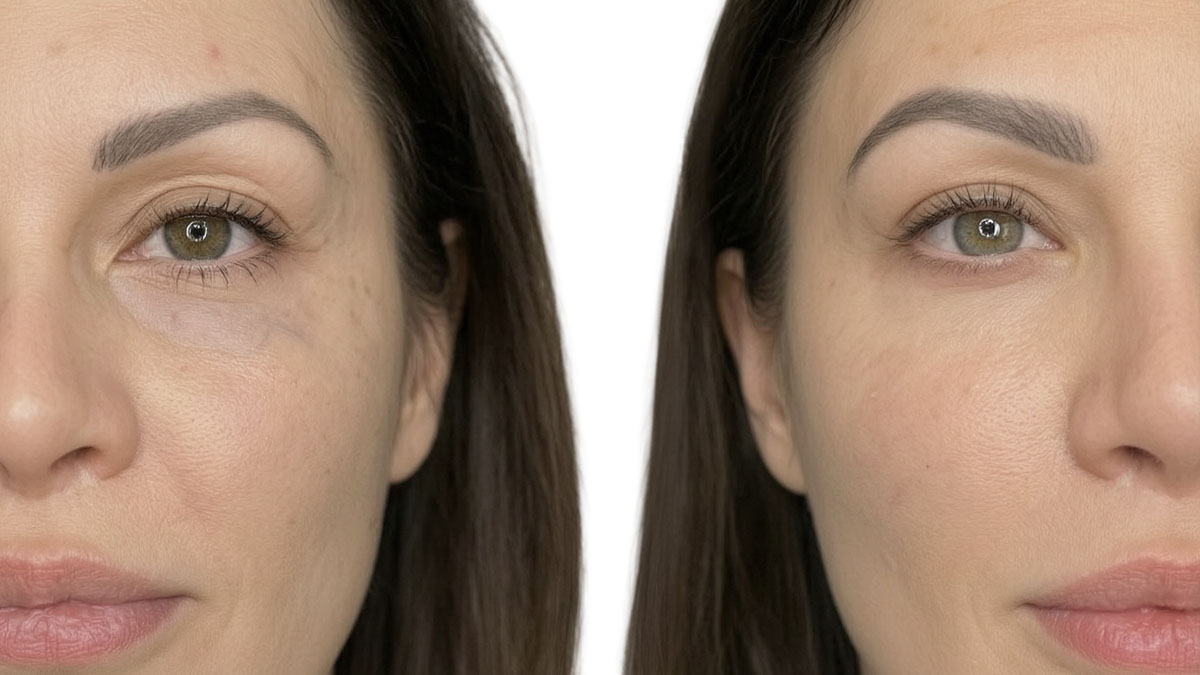
This is another point that deserves to be understood more deeply. In correction, sessions should never feel like blind repetition. A good artist is not simply doing the same thing over and over and hoping it lands differently. Each session is informed by what the skin did previously. What healed well. What shifted more than expected. What still needs refinement. What has stabilized enough to support the next phase. That means every session carries new information. It is not a copy of the last one. It is a response to the last one. And that is why results improve in a way that feels steady rather than dramatic. They are being guided step by step, not rushed through the same motion again and again. Some clients initially believe they only need another touch-up, but learning they need a true shape correction often changes the treatment plan completely.
Patience Protects the Outcome
Patience is not a passive quality in correction. It is one of the most protective forces in the entire process. Patience allows the skin to heal properly. It allows the pigment to reveal its true behavior. It allows the artist to make better decisions based on what is actually happening, rather than what she hoped would happen. Without patience, correction becomes reactive. The skin is overworked. Pigment is over-layered. Results become less predictable. This is one reason understanding the eyebrow color correction healing process matters so much. Healing is not an interruption between appointments. It is part of the information the artist needs in order to continue properly.
Your Timeline Is Not a Problem
Your timeline is not a problem. It is a reflection of your case. Once that lands, everything becomes easier. You stop seeing the process as something to endure, and you start seeing it as something tailored. You stop asking, “Why is mine taking longer?” and start understanding, “This is what mine needs.” That is a much more powerful place to be, because it shifts the entire emotional tone of the journey. You are no longer fighting the process. You are working with it. And that is where peace enters the room.
What We’re Actually Aiming For
At the end of correction, everyone wants the same thing: balance. Not speed. Not shortcuts. Not a timeline that sounds satisfying in conversation. Balance. That means color that behaves more predictably, shape that feels more harmonious, and a brow that no longer looks like multiple decisions fighting each other. Balance takes time, adjustment, and care. It is not created by pushing harder. It is created by respecting what the brow needs and building the result in the right order. This is also why making eyebrow correction last longer depends so heavily on the quality of the process itself. Results that are built properly usually behave better later.
Why More Detail Deserves More Appreciation
If your correction is taking longer, that usually means more detail is being applied, not less success. It means more thought, more precision, more reading of the skin, more careful adjustment of pigment, and more respect for the complexity of the case. That is not something to be discouraged by. It is something to value. Because that level of detail is what separates average work from high-level correction. It is what prevents the process from becoming rushed, repeated, or carelessly optimistic. It is what gives the result the best chance of becoming stable, believable, and beautifully resolved.
Getting There Right Matters More Than Getting There Fast
If you are in this process right now, or considering starting it, remember this: your brows are not on a deadline. They are on a process. And when you follow that process properly, you do not just get a quicker answer. You get a better one. This is not about arriving fast. It is about arriving correctly. It is about letting the work unfold with the level of control and intelligence it deserves. And when that happens, the final result does not just look better in the mirror. It makes more sense from the inside out.
Ready to Move Forward the Right Way
If you are ready to approach your brows according to what they need, that is where correction begins to feel calmer, clearer, and far more grounded. Because in correction, the better result is rarely the fastest one. It is the one that was built with patience, precision, and respect for the complexity of your case. If your brows feel inconsistent, uneven, or difficult to manage, it may be time to begin a correction process tailored to your specific case. Understanding what a correction involves is the first step.
Ready for a personalized correction approach?
Schedule your appointment and begin a process designed specifically for your brows.