
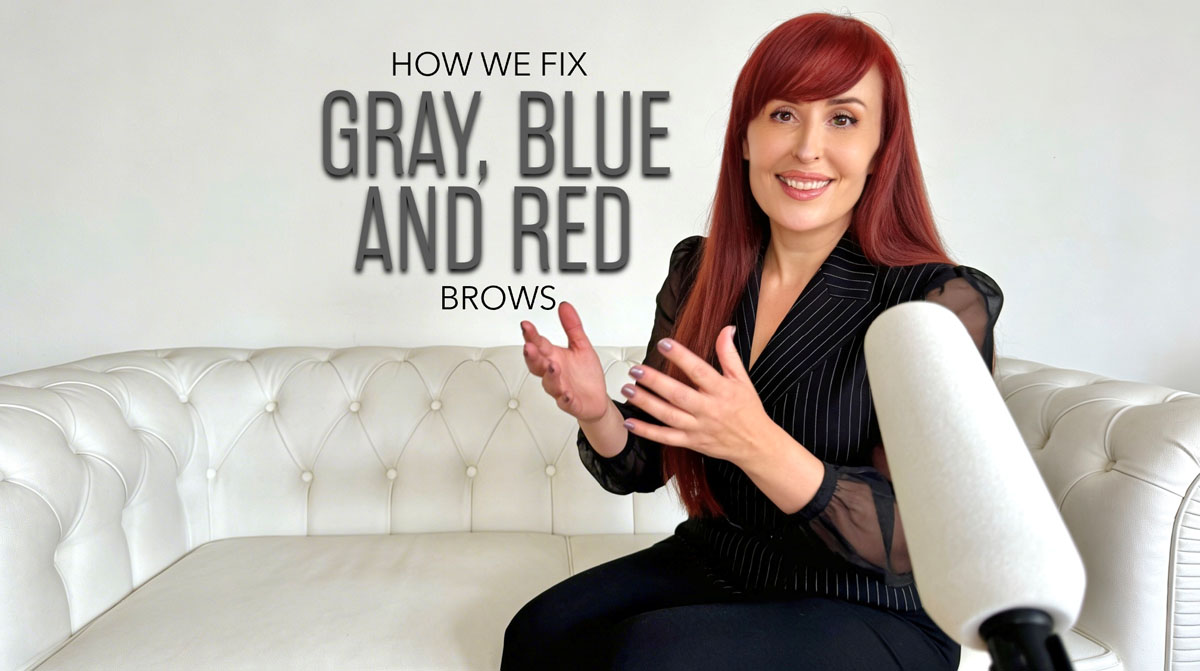
One of the clearest distinctions between ordinary brow work and refined correction work is this: Guessing versus knowing. And nowhere is that distinction more visible than in color. When brows begin to fade grey, red, orange, or a strange in-between tone that no longer feels elegant, balanced, or intentional, the answer is never to reach for a random brown and hope the problem disappears. That is not correction. That is layering without direction. And over time, that is exactly how brows begin to look heavier, duller, and more visually unresolved. True eyebrow correction is far more sophisticated than that. It begins with analysis. It continues with control. And it succeeds because it is guided by knowledge, not improvisation.
Color Drift Is Common — But It Is Not Random
When clients notice their brows shifting tone over time, they often assume something unusual has happened. In reality, color change is a very normal part of how pigment behaves in skin. What is not normal is pretending every faded brow can be corrected the same way. Brows do not always fade into a soft, beautiful neutral. They may begin to reflect:
- a cooler grey cast
- a blue-grey depth
- residual warmth
- orange undertones
- or uneven tones across different parts of the brow
This is why brows can look different years later. Time changes the way pigment reads in the skin, and that change must be interpreted correctly before anything else is done. What many people don’t realize is that pigment continues evolving beneath the skin long after the initial procedure, which is why understanding eyebrow color correction is essential before deciding on your next step.
Real Correction Begins with What Exists Now
Luxury correction is not based on the original intention of the brow. It is based on its current reality. That means the starting point is never:
- the old pigment label
- what the brow was meant to become
- what someone hoped it would heal into
The starting point is simple: What is visibly present in the skin right now? That question changes everything. Because once the brow is assessed in its current state, the correction becomes precise. This is one reason eyebrow correction is a different skill. It is not merely pigment placement. It is interpretation, restraint, and order.
Grey, Red, and Orange Brows Are Not the Same Problem
This is where less experienced work often begins to unravel. Too many brows are grouped together emotionally rather than technically. They are labeled as “bad brows,” when in reality they are very different correction categories. Grey brows are not the same as red brows. Red brows are not the same as orange brows. Orange brows are not the same as a cool, dense blue-grey tattoo base. Each one reflects a different color in the skin. And if different colors are treated with the same corrective approach, the outcome will never feel truly refined. This is why the difference between bad brows and old pigment matters so much. The brow may not be “bad” in the dramatic sense. It may simply be aged, faded, or visually off-balance in a way that now requires expertise.
Why Grey Brows Develop
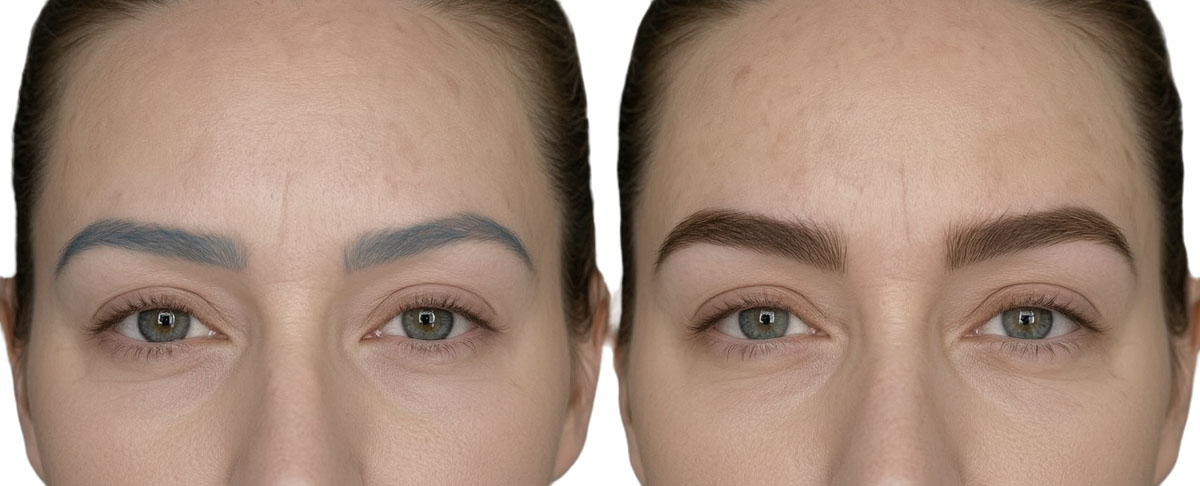
Grey brows often emerge when warmth has faded and cooler elements remain more visible in the skin. Sometimes that coolness is soft and ashy. Sometimes it is deeper, stronger, and more stubborn. These are not identical cases. A softer grey may require a more subtle return of warmth. A stronger blue-grey may require a more assertive corrective strategy. The distinction is important. If the correction is too weak, it accomplishes very little. If it is poorly chosen, it simply adds more visual confusion. This is where sophistication matters. The artist must understand not only what family of correction is required, but how much corrective influence the brow can realistically support. Brows that lose warmth altogether require a strategy for grey eyebrow tattoo correction.
Why Red and Orange Brows Require a Different Kind of Correction
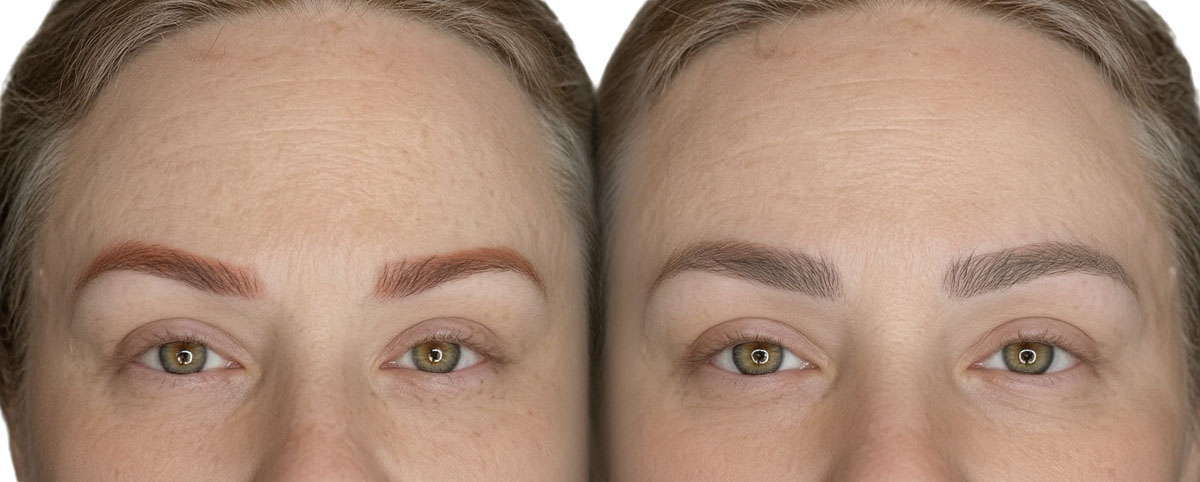
Warm brows are their own conversation entirely. Some warmth develops softly and transparently over time. Some warmth is deeply saturated and visually dominant. Some brows even hold multiple warm and cool influences at once, which makes correction more nuanced still. Orange, especially, can present in dramatically different strengths. A sheer and faded orange may be relatively straightforward to rebalance. A dense, established orange may require considerably more control and a longer correction pathway. This is why some brows take longer to fix than others. The timeline is not arbitrary. It reflects the pigment history, the degree of saturation, the condition of the skin, and the complexity of the case. Some brows gradually develop unwanted warm tones, making red eyebrow tattoo correction one of the most common solutions for aging pigment.
Why More Brown Is Usually Not the Answer
This is one of the most important principles in all of brow correction. When a brow is off-tone, placing more brown over the top rarely creates elegance. It usually creates weight. Because pigment in skin does not behave like paint over a blank surface. The old color remains present if no neutralization occurs. The new tone interacts with it. So, when brown is placed over cool grey, the result is often grey-brown, not truly corrected brown. When brown is layered over strong warmth, the warm result may still be overbearing. This is precisely why color does not cover color in brow correction. It mixes with what already exists. And when what already exists is out of balance, the order of correction becomes everything.
Neutralization Must Come Before Rebuilding
There is a very clear hierarchy in sophisticated correction work: Neutralize first. Rebuild second. If the brow tone is visibly wrong, that imbalance must be addressed before the final target color is introduced. This is what keeps the result refined. This is what prevents unwanted results. This is what allows the healed brow to look balanced. And it is also why most artists won’t fix old microblading. Because true correction requires order, pigment knowledge, restraint, and the ability to work with complexity without forcing it.
Color Theory Is the Foundation of Elegant Correction
In high-level brow correction, color theory is not a side note. It is the foundation. The artist must understand:
- which color is unwanted
- which balancing color is required
- how strongly that correction must be introduced
- how the skin is likely to respond
- whether different areas of the brow require different decisions
Because many brows do not present one uniform issue from front to tail. One section may lean cooler. Another may be warmer. Another may be relatively neutral. Luxury correction is never broad and careless. It is measured, sectional, and intentional. Understanding how pigment shifts over time is the foundation of successful microblading color correction, rather than simply adding another layer of brown.
Different Parts of the Brow May Need Different Solutions
This is where refined work separates itself very clearly from generic work. The entire brow cannot always be treated as one flat problem. The front may be lighter and less saturated. The middle may hold a more neutral base. The tail may be cooler, deeper, or more heavily layered. If one identical correction is applied everywhere simply because it is quicker, the result rarely feels harmonious. True correction reads the brow section by section. It does not rush through it with broad decisions. It makes smaller, smarter decisions that lead to a more coherent healed result.
Why Some Brows Need More Than One Correction
Even when the right corrective direction has been chosen, not all brows will respond equally or immediately. Some colors shift elegantly and relatively quickly. Others require a more patient, layered approach. That does not mean the correction is failing. It means the artist is choosing control over haste. Correction should never be aggressive simply to create a dramatic same-day impression. It should be deliberate enough to heal beautifully. This is why eyebrow correction is not a one-session fix. The healed result reveals the truth of what happened, and that healed truth guides the next step.
What Poor Correction Looks Like
When correction is guessed rather than understood, the result often begins to look visually conflicted. The old pigment is still speaking. The new pigment is speaking too. But they are not saying the same thing. So the brow starts to read as:
- unnatural
- dense
- manufactured
- unresolved
This is often when clients say they have already “had a correction,” but nothing really improved. And frequently, what they had was not correction at all. It was another brown layer placed over an existing problem. That distinction matters. Layering says, “Add something on top.” Correction says, “Resolve the imbalance underneath first.”
Why Proper Correction Makes Everything Cleaner
Once the unwanted tone has been corrected properly, the brow becomes easier to refine in every way. The artist is no longer constantly working against visual interference from the old pigment. The foundation becomes calmer. The color reads more cohesively. The next stage begins to make sense. This is why correction can rebuild shape more beautifully after color has been handled first. A balanced color foundation allows the structure to read more clearly and more elegantly.
The Emotional Experience Matters Too
Clients living with grey, red, or orange brows are often carrying more than a pigment issue. They are carrying hesitation. Sometimes disappointment. Sometimes the feeling that they have already trusted the wrong process once before. This is why the correction experience must feel grounded, calm, and deeply informed. When clients understand that the problem is not that their brows are impossible, but that the prior process lacked correct analysis or order, the entire journey becomes more hopeful. This connects beautifully with what it feels like to go through eyebrow correction. The emotional experience of the process matters just as much as the technical one.
What Sophisticated Correction Actually Creates
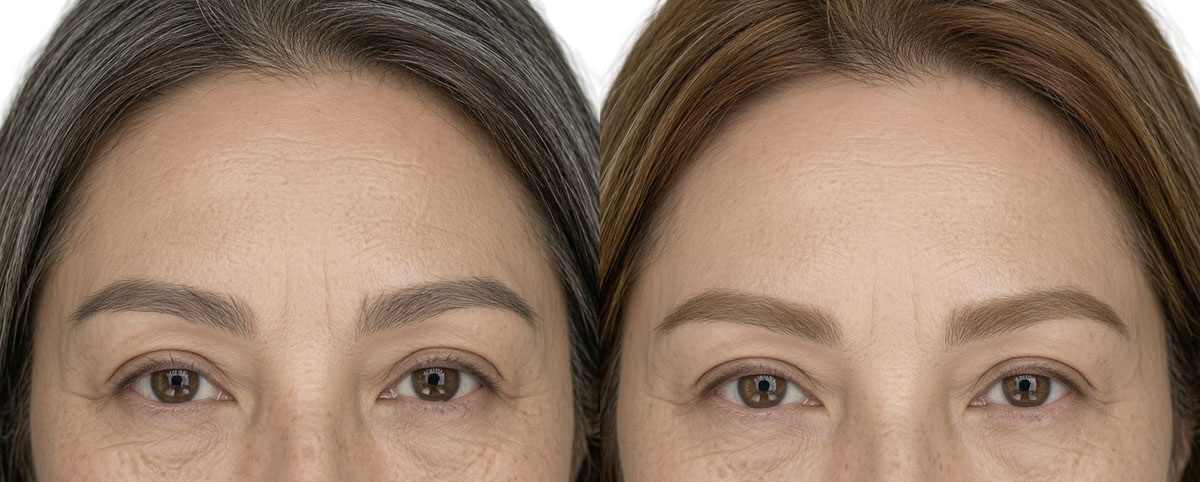
When correction is done properly, the goal is not simply to darken the brow until the old tone is less obvious. The goal is to create harmony. That means:
- the color reads more balanced
- the brow feels cleaner and calmer
- the healed result feels more unified
- future refinement becomes more intelligent and more beautiful
Correction does not chase the problem wildly. It stabilizes the foundation first. Then it rebuilds with intention. That is the difference between a brow that keeps getting heavier and a brow that begins to feel resolved.
Every Problem Tone Has a Corrective Path
This is the reassuring truth at the heart of all excellent correction work: Grey has a path. Red has a path. Orange has a path. But the path must be:
- the right one
- at the right strength
- in the right order
That is why true correction works. Not because anyone is lucky. Because the process is deliberate.
Final Thought
If your brows have shifted into grey, red, orange, or any tone that no longer feels polished, the answer is not another random layer of brown. The answer is analysis. The answer is neutralization. The answer is rebuilding only after the unwanted tone has been properly understood and corrected. That is the difference between average work and luxury correction. If your brow color no longer feels like you, begin here: What Is a Correction?. And when you are ready for a more refined path forward, you can schedule your appointment and begin a correction process built on precision, elegance, and control.