PATCHY MICROBLADING CORRECTION • DALLAS • DFW • TX
REAL RESULTS, INDUSTRY LEADER
If your microblading once looked beautiful but now appears patchy, with some strokes still visible while others seem to have disappeared, you are not alone. One of the most common concerns we hear from clients is,
“My brows looked great for the first couple of years… now half the strokes are gone.” Patchy microblading rarely happens overnight.
Instead, it usually develops gradually as older microblading changes over time. Some areas continue holding pigment while other areas slowly become lighter, softer, or disappear almost completely. The result is an eyebrow that no longer looks balanced, even though nothing dramatic seemed to happen.This page has been written specifically for people with older patchy microblading.
If your concern is microblading that has gradually become uneven over the years, this guide will explain why that happens, why some strokes remain while others disappear, and how patchy microblading is evaluated before determining whether correction may be appropriate.
If your patchiness occurred immediately after your original procedure, we’ll discuss that too. However, most clients searching for patchy microblading correction are dealing with eyebrows that have naturally changed over several years rather than fresh healing.
Patchy Microblading Correction is one part of our complete Microblading Correction Guide. If your brows have become blurry rather than patchy, you may also benefit from reading our Blurry Microblading Correction guide.
What Is Patchy Microblading?
Patchy microblading describes eyebrows where pigment has not remained evenly throughout the entire brow. Instead of seeing a consistent pattern of healed hairstrokes, some areas remain visible while other sections become much lighter or disappear almost completely.
Clients often describe their eyebrows as:
- Missing strokes.
- Uneven retention.
- One brow fading faster than the other.
- Patchy tails.
- Sparse-looking microblading.
- Microblading that no longer looks complete.
Although the word “patchy” sounds dramatic, it usually develops very gradually. Many clients don’t notice it immediately because they see themselves every day. Instead, they eventually compare current photographs with older pictures and realize just how much the appearance of their microblading has changed.
Patchy Healing vs. Patchy Aging
One of the biggest misconceptions surrounding patchy microblading is that every patchy eyebrow has the same cause. In reality, there are two very different situations.
Patchy Healing
Some clients notice uneven retention during the initial healing period after their original microblading procedure. Certain strokes heal beautifully while others become much lighter during the first several weeks.
In many cases, this is exactly why a planned second treatment exists—to evaluate the healed result before deciding whether additional work is appropriate.
Patchy Aging
The second situation is much more common on a correction website. These clients often loved their microblading for several years before gradually noticing that the eyebrows no longer looked as complete as they once did. Instead of one dramatic event, the eyebrows slowly become less consistent.
Some hairstrokes remain beautifully visible.
Others soften.
Others disappear.
The tails often become lighter first, while different areas of the eyebrow continue aging at different speeds. This guide focuses primarily on patchy aging, because it represents the majority of clients seeking correction for existing microblading. To see diverse correction before and afters, follow this link to the gallery.
patchy
Correction
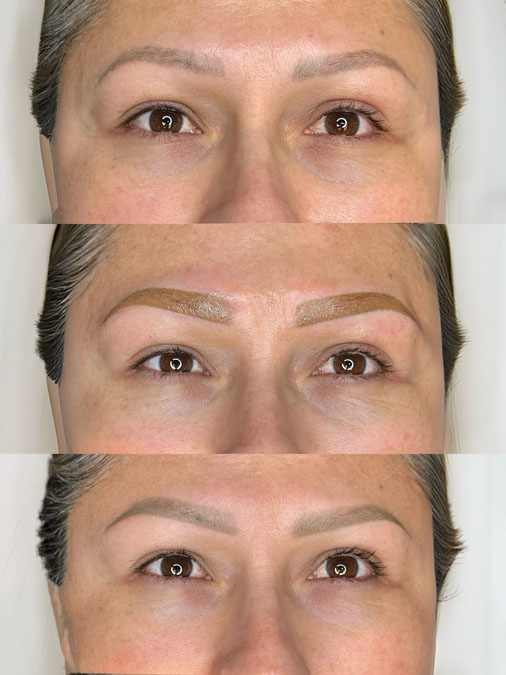
This 39-year-old client with Fitzpatrick Skin Type III had been living with patchy microblading. While portions of the original hairstrokes remained visible, much of the pigment had gradually faded, leaving obvious gaps throughout both brows. Following a detailed evaluation of the healed pigment, remaining hairstrokes and natural eyebrow hair, we recommended patchy microblading correction to rebuild a softer, more complete appearance. This case demonstrates how patchy microblading correction, patchy healed microblading, patchy brows after microblading, spotty microblading, and microblading has faded unevenly over the years but can still be corrected.
spotty
Correction

This 29-year-old client with Fitzpatrick Skin Type I noticed that her brows had become increasingly spotty and warm over several years. Some strokes turned pink while others gradually disappeared, leaving noticeable gaps throughout the eyebrows. Following a professional evaluation of the healed pigment and remaining hairstrokes, we planned a patchy microblading correction to restore a more even appearance. This case demonstrates how spotty microblading, missing microblading strokes, and pink patchy faded microblading commonly occur together.
overworked
Correction

This 36-year-old client with Fitzpatrick Skin Type VI had a microblading touch-up approximately two years after her original procedure, but the brows continued blurring. The touch-up improved some areas while other sections remained noticeably patchy. After evaluating the healed pigment and remaining hairstrokes, we recommended a patchy microblading correction moving to powder brow, rather than another routine touch-up. This example highlights microblading didn’t heal evenly, patchy brows after microblading, and missing microblading strokes.
aged faded
Correction
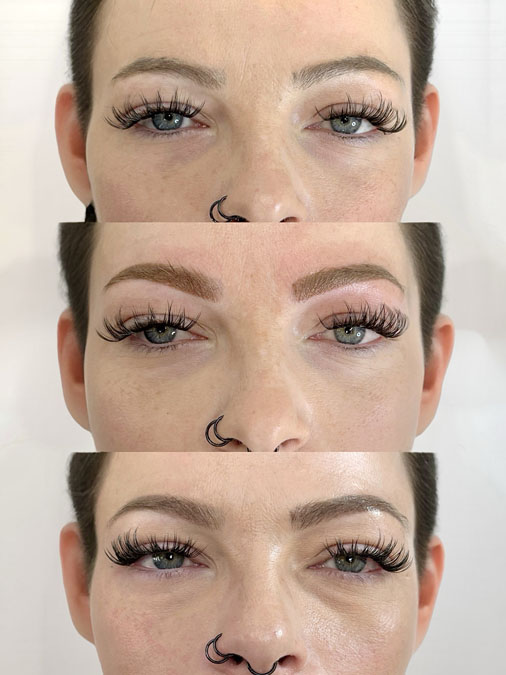
This 30-year-old client with Fitzpatrick Skin Type II had microblading completed many years earlier. Although the brows initially healed well, natural fading eventually created patchy microblading, particularly through the arch of both brows. Following a detailed evaluation of the remaining hairstrokes, healed pigment and natural eyebrow hair, we planned a patchy microblading correction moving to powder brow to restore better balance. This case demonstrates how patchy aged microblading, unevenly healed brows, and patchy brows after microblading often become more noticeable as older microblading ages.
Why Older Microblading Becomes Patchy
One of the most reassuring things for clients to learn is that patchiness is often part of the natural aging process of cosmetic eyebrow tattooing. Cosmetic tattoos are designed to soften over time. However, they rarely soften perfectly evenly.
Different areas of the eyebrow experience different movement, different skin characteristics, different oil production, different sun exposure, and different healing histories. Because of those natural differences, one section of the eyebrow may continue holding pigment long after another section has become noticeably lighter. This gradual change creates the patchy appearance many clients notice several years after their original microblading appointment.
Professional Insight
Patchy microblading doesn’t always mean something went wrong. Very often it simply reflects how cosmetic eyebrow tattoos naturally evolve over time. The important question isn’t whether your brows have changed. It’s understanding how they have changed before deciding what they may need next.
Why Some Strokes Remain While Others Disappear
One of the questions clients ask most often is: “Why did these strokes stay when the others disappeared?”
The answer is usually not one single reason. Instead, several small factors work together over many years. Different areas of the eyebrow naturally experience different amounts of movement, different skin thickness, different oil production, and different environmental exposure.
As the years pass, those differences become more noticeable. The result is an eyebrow that no longer fades as one complete design, but instead fades in sections. This is one of the reasons every patchy eyebrow should be evaluated individually rather than assuming every client requires the same correction approach.
Why One Eyebrow Often Becomes Patchier Than the Other
One of the most common questions we hear is, “Why has one eyebrow faded so much more than the other?”
This is actually much more common than many people realize. Although both eyebrows were completed during the same appointment, they rarely continue aging at exactly the same rate. Small differences in the skin, healing, lifestyle, and natural facial movement often become more noticeable over several years.
As a result, one eyebrow may continue looking relatively full while the opposite brow gradually loses more visible hairstrokes. Patchy microblading does not always affect both eyebrows equally, which is one reason every correction appointment begins by evaluating each eyebrow individually before looking at them together as a pair.
Common Reasons Older Microblading Becomes Patchy
Although every client heals differently, several factors commonly contribute to patchy-looking microblading over time.
Natural Aging of Cosmetic Tattoo Pigment
Cosmetic eyebrow tattoos are designed to soften over time. As they age, pigment rarely fades at exactly the same speed throughout the entire eyebrow. Instead, some areas naturally retain more visible pigment than others.

Natural Differences Within the Skin
The skin across the eyebrow is not identical from beginning to end. Some areas naturally produce more oil. Some areas experience more movement. Some areas are exposed to more sunlight. Over many years these small differences contribute to uneven fading throughout the eyebrow.
Previous Touch-Up Appointments
Many clients have received more than one microblading procedure over the years. Some areas may have been reinforced several times while others received less attention. As those different layers continue aging, the healed appearance may gradually become less uniform.
Natural Eyebrow Hair
Existing eyebrow hair also influences how patchiness is perceived. Areas with more natural hair often continue looking fuller even after cosmetic pigment begins fading. Areas with sparse natural hair may appear patchier much sooner because there is less natural hair helping support the overall eyebrow.
Patchy Doesn’t Always Mean Failed Microblading
One of the biggest misconceptions surrounding patchy brows is the assumption that uneven fading automatically means the original procedure failed. In reality, many beautifully performed cosmetic eyebrow tattoos gradually become patchy simply because every eyebrow ages differently.
Clients often tell us,
“My microblading looked perfect for years.” That statement is actually very reassuring. It tells us the original procedure provided a beautiful foundation and that the changes developed gradually rather than immediately after treatment.
Understanding how the eyebrow has changed over time helps us determine what type of correction, refresh, or revision may be appropriate today.
When Patchy Microblading May Benefit From Correction
Some brows have softened very naturally and continue looking balanced despite lighter pigment. Others have reached a point where missing strokes begin affecting the overall appearance of the eyebrow. Rather than making recommendations based only on the amount of fading, we evaluate the eyebrow as a complete design. During your appointment we consider:
- The remaining hairstrokes.
- The overall eyebrow shape.
- Current healed pigment.
- Natural eyebrow hair.
- Symmetry between both brows.
- How the eyebrows relate to your facial features.
- Your long-term goals.
Only after understanding those factors do we determine whether your brows would benefit from correction, a conservative refresh, or another eyebrow tattoo correction category.

Our Philosophy on Patchy Microblading Correction
One of the biggest mistakes we see is assuming that every missing hairstroke should simply be replaced. Beautiful correction is rarely about rebuilding every individual stroke. Instead, we evaluate the eyebrow as a complete design and determine what improvements are likely to create the healthiest, most balanced, and most natural-looking long-term result.
Professional Insight
Our goal is not to chase every missing stroke. Our goal is to create an eyebrow that looks balanced as a whole. Every recommendation begins with evaluating the eyebrow you have today—not the eyebrow you had several years ago.
What to Expect if Your Older Microblading Has Become Patchy
One of the biggest concerns clients have is not simply that their eyebrows have become patchy—but that they are unsure what happens next. Many people spend months researching online because they don’t know whether their brows need correction, a refresh, or whether they should simply leave them alone for now.
The answer depends entirely on the eyebrow you have today.
During your appointment we evaluate the remaining hairstrokes, the healed pigment, the overall eyebrow design, and your long-term goals before recommending what we believe is the most appropriate path forward.
Who Is a Good Candidate for Patchy Microblading Correction?
You may be a good candidate if your previous microblading has become uneven over time and the overall appearance of your eyebrows no longer reflects the look you would like today. Many of our clients tell us they still like the overall shape of their brows—they simply feel the missing strokes now make the eyebrows appear incomplete.
Others have one eyebrow that has faded much faster than the other or notice isolated areas where very little pigment remains. Every candidate is evaluated individually because patchiness can develop for many different reasons.
Questions We Consider During Evaluation
Rather than looking only at the missing pigment, we evaluate the eyebrow as a complete design. Some of the questions we ask include:
- How much of the original microblading remains?
- Has the fading occurred evenly or in isolated areas?
- Does one eyebrow differ significantly from the other?
- How much natural eyebrow hair remains?
- Has the healed pigment changed color?
- Does the current shape still complement the face?
- Has previous work been performed by more than one artist?
- Would another correction category better suit the existing eyebrows?
Answering these questions allows us to recommend the most appropriate path forward rather than assuming every patchy eyebrow requires the same treatment.
Serving Dallas, Fort Worth & North Texas
Clients visit us for patchy microblading correction from throughout Dallas, Highland Park, University Park, Preston Hollow, Lakewood, Uptown Dallas, Irving, Plano, Frisco, McKinney, Richardson, Garland, Arlington, Fort Worth, Southlake, Grapevine, Colleyville, Keller, Coppell, Flower Mound, and surrounding North Texas communities.
Many clients have been living with patchy microblading for several years before deciding to have their eyebrows evaluated. Others simply want professional guidance before deciding whether their brows would benefit from correction, refreshing, or another treatment approach.
Frequently Asked Questions About Patchy Microblading Correction
Both eyebrows rarely age at exactly the same rate. Natural differences in the skin, healing, previous procedures, and environmental exposure often cause one eyebrow to fade differently than the other.
No. Many beautifully performed eyebrows simply age unevenly over several years. Every eyebrow heals and fades differently.
Many cases can be improved after carefully evaluating the remaining hairstrokes, healed pigment, natural eyebrow hair, and overall eyebrow design.
Microblading can become blurry for several reasons, including skin type, natural aging, repeated procedures, closely spaced strokes, and how the pigment healed over time. Blurry strokes do not automatically mean your brows cannot be improved, but they should be evaluated individually before deciding on the next step.
Fading is a normal part of cosmetic eyebrow tattooing. The amount and pattern of fading varies from person to person. Evenly faded brows may simply benefit from a refresh, while uneven fading may require a different correction strategy.
Many uneven eyebrows can be improved by carefully evaluating the overall brow design, healed pigment, natural facial asymmetry, and existing stroke pattern. The goal is to create brows that appear balanced rather than perfectly identical.
Patchiness refers to missing or unevenly faded areas, while blurry microblading involves hairstrokes that have softened or lost definition.
Not necessarily. Every correction plan is individualized. The goal is to create the most balanced, natural-looking healed result possible rather than simply making the eyebrows darker or denser.
Yes. Many of our clients have previous microblading that is five, eight, or even ten years old. Older brows often require a different strategy than more recent work because the healed pigment and overall appearance have changed over time.
Previous work from multiple artists is very common. During evaluation we consider every layer of existing pigment, the different stroke patterns, healed colors, and overall brow design before recommending a correction plan.
Eyebrow Correction Blog