EYEBROW TATTOO COLOR CORRECTION • DALLAS , TEXAS
REAL RESULTS, INDUSTRY LEADER
If you have an eyebrow tattoo from the 1980s, 1990s, or even the early 2000s, you may have been told that nothing can be done except complete removal. Many clients visit us after hearing exactly that. Their brows have faded to blue, gray, red, orange, or several different colors, and they assume they will have to live with them forever.
Fortunately, that is not always true.
Old eyebrow tattoo color correction has advanced dramatically over the past decade. Modern pigments, improved color theory, better understanding of healed cosmetic tattooing, and corrective techniques now allow many older cosmetic tattoos to be transformed into natural-looking modern brows without laser tattoo removal.
Every case is different. Some older tattoos require only thoughtful color correction. Others benefit from reshaping, a powder brow conversion, or staged correction. Some heavily saturated tattoos may first need peach color correcting neutralization. The important point is that an old tattoo should be evaluated individually—not dismissed simply because of its age. View Before & After Gallery
Why Do Old Eyebrow Tattoos Change Color?
Every cosmetic tattoo changes over time. The skin changes. Pigments change. Sun exposure, skincare, hormones, immune response, aging, and the original pigment formulation all influence how an eyebrow tattoo ages over years.
Many permanent makeup procedures performed during the 1970s, 1980s and 1990s used pigment formulations and implantation techniques that are very different from those used today. At the time, artists simply did not have decades of healed results available for study. Cosmetic tattooing was still evolving, and many long-term color changes had not yet been observed.
Today we have the benefit of seeing what those early procedures looked like after 10, 20, 30, and even 40 years. That experience has fundamentally changed how experienced correction artists approach aging cosmetic tattoos. Instead of asking,
“How do we cover this old tattoo?” the better question is: “What has this pigment become, and what is the effective way to improve it?”
That difference is what separates corrective planning from simply placing new pigment over old pigment.
Common Color Changes Seen in Older Cosmetic Tattooing
When decades have passed, eyebrow color correction is likely. eyebrows often develop one or more unwanted undertones that become increasingly noticeable as the years pass. Some of the most common include:
- Blue eyebrow tattoos
- Gray eyebrow tattoos
- Red eyebrow tattoos
- Orange eyebrow tattoos
- Purple undertones
- Ashy cosmetic tattoo pigment
- Mixed colors within the same eyebrow
- One eyebrow aging differently than the other
Many clients assume these colors mean the tattoo was performed incorrectly. Sometimes that is true. Many times it simply reflects the natural aging process of older pigments combined with decades of skin changes.
If your brows have shifted toward one specific color, you may also find our individual correction guides helpful:
cosmetic
Correction
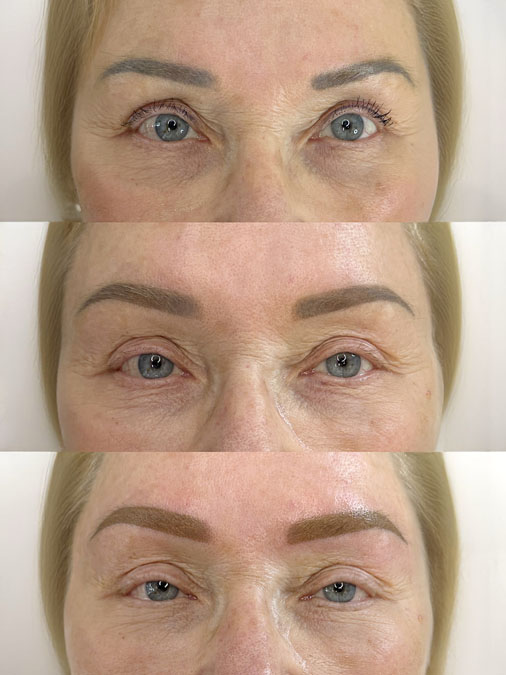
This transformation shows how an eyebrow tattoo created during an earlier era can be thoughtfully modernized. The existing shape and aged pigment were evaluated together to create softer color, improved balance, and a more current appearance.
orange
Correction
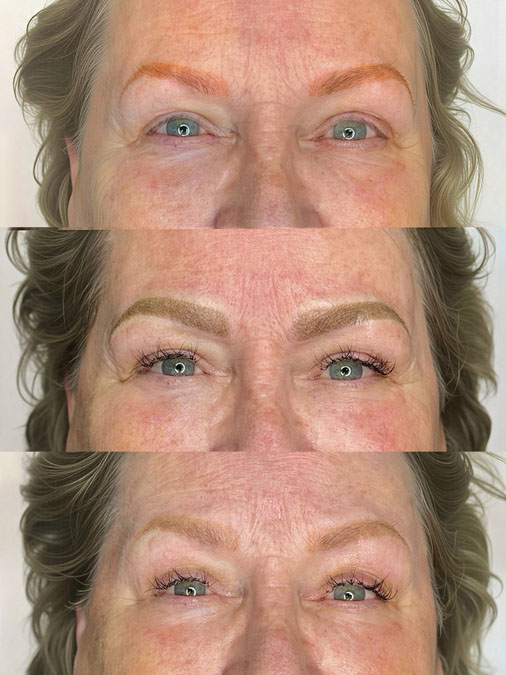
Warm red and orange undertones can become more noticeable as older cosmetic tattoos fade. This transformation demonstrates how customized color planning can create a natural-looking brow while respecting the pigment already within the skin.
GRAY
Correction
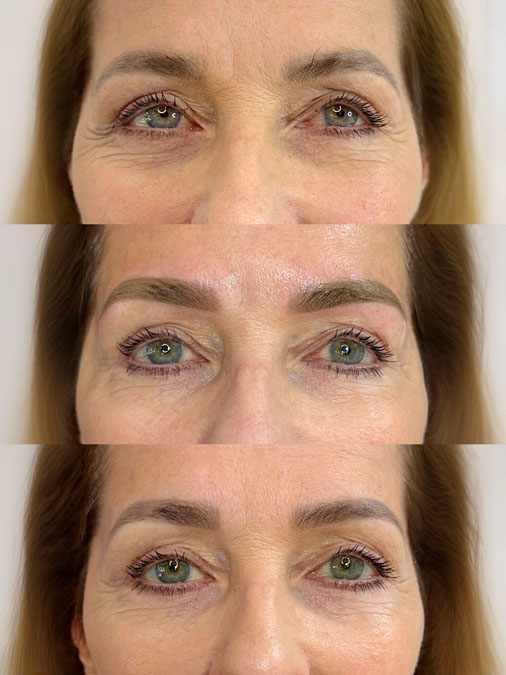
This before-and-after shows how an older eyebrow tattoo with cool gray undertones can be thoughtfully updated. The correction was planned around the pigment already present, creating a softer, warmer, and more balanced appearance.
SCARRED
Correction
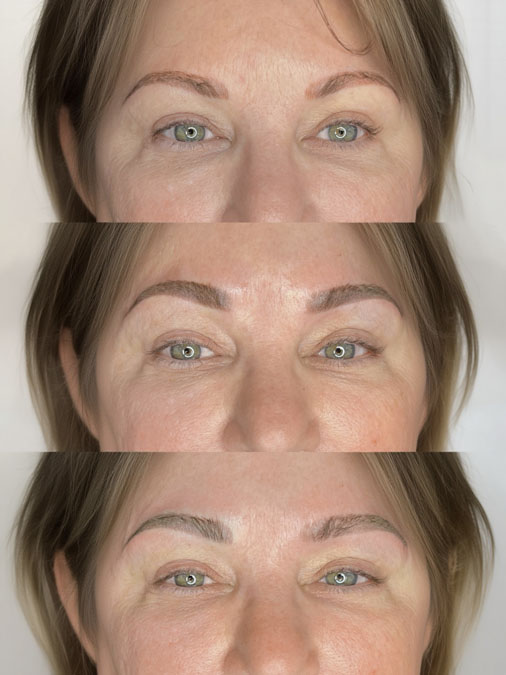
Some tissue change is common after many years of cosmetic tattoo procedures. This correction shows how a conservative, carefully planned treatment can improve old discoloration while minimizing additional trauma and respecting the condition of the skin.
Can Very Old Eyebrow Tattoos Really Be Corrected?
This is probably the question we hear more than any other. The answer is often yes—but not because we ignore the old tattoo. Successful correction begins by respecting what is already in the skin.
An eyebrow tattoo that is thirty years old has a completely different history than a tattoo completed last year. The pigment has settled. The skin has matured. Previous touch-ups may have added multiple layers of color. Some clients have had corrections by several different artists over decades.
All of those things become part of the treatment plan. Rather than trying to pretend the old tattoo isn’t there, we evaluate:
- Current pigment color
- Overall saturation
- Skin quality
- Previous scar tissue
- Remaining brow shape
- Symmetry
- Natural eyebrow hair
- Facial proportions
- Client goals
Only after understanding all of those factors do we determine whether correction, reshaping, powder brows, color neutralization, or staged treatment is the best option.
Older Cosmetic Tattooing Was Created During a Different Era
One important thing we like clients to understand is that permanent makeup has evolved tremendously. The artists who performed cosmetic tattooing thirty years ago were working with the knowledge available at the time. Today’s industry has decades of additional experience. We now understand:
- Long-term pigment behavior
- Color drift
- Healing differences
- Pigment saturation
- Scar tissue management
- Modern brow design
- Natural powder brow techniques
- Long-term maintenance planning
That knowledge allows experienced correction artists to approach older tattoos much differently than they could years ago. The goal is not simply making the brows darker. The goal is creating brows that look appropriate today while respecting the history already present in the skin. Eyebrow tattoo correction is a niche skill developed more recently so learning about the skillset of your correction artist is of the utmost importance.
Scar Tissue Does Not Automatically Prevent Correction
Many older eyebrow tattoos have some degree of scar tissue from multiple procedures performed over many years. Clients are often told that scar tissue means nothing more can be done. That is not true. Scar tissue simply becomes another part of the evaluation. We examine:
- Skin texture
- Pigment retention
- Elasticity
- Thickness
- Previous procedures
- Overall brow condition
Some scarred brows accept correction beautifully. Others require a more conservative treatment plan. The important point is that scar tissue should be evaluated—not assumed to be an automatic disqualification.
Color Correction Is Not the Same as Covering Old Pigment
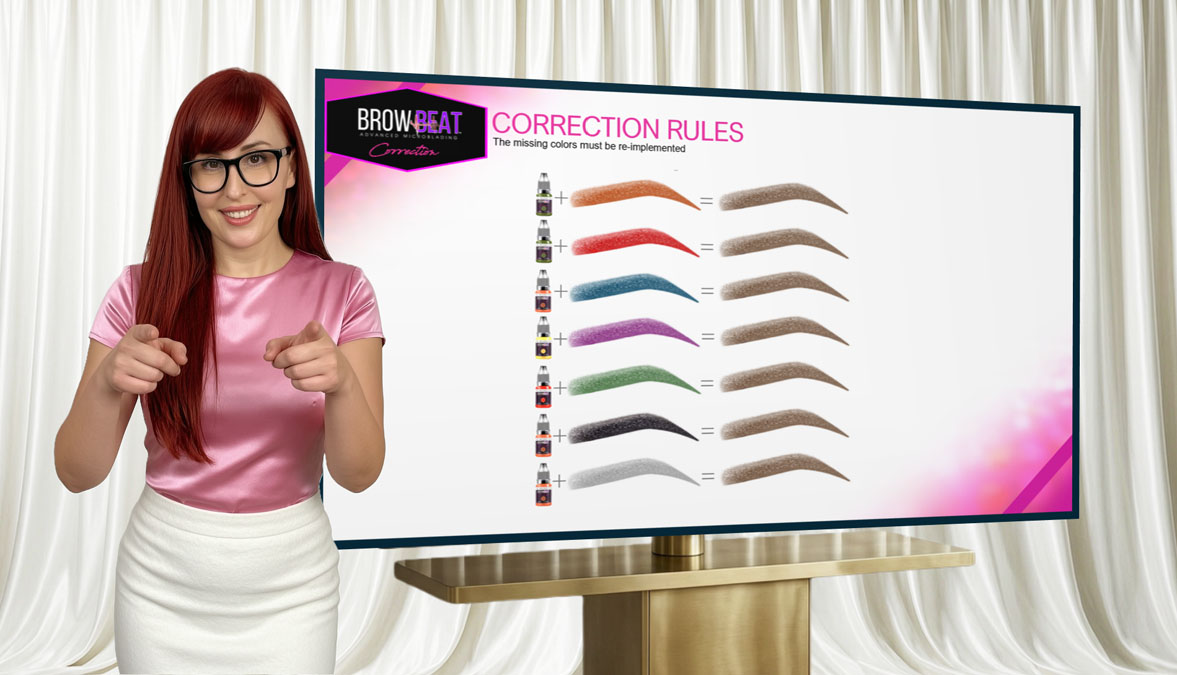
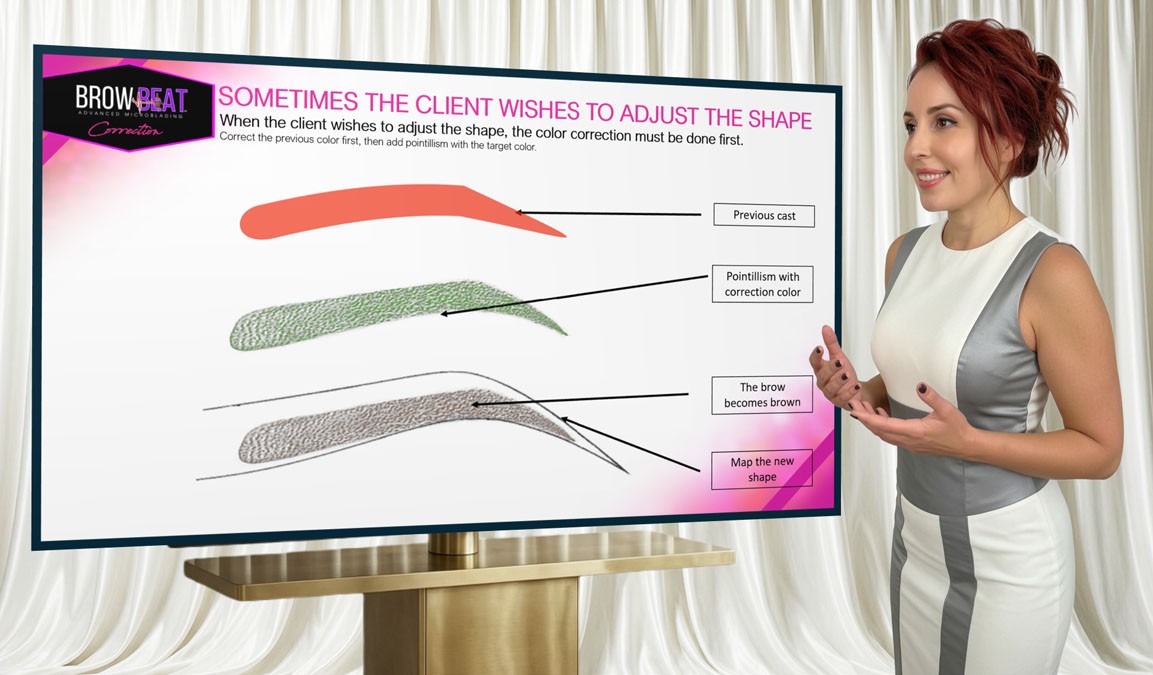
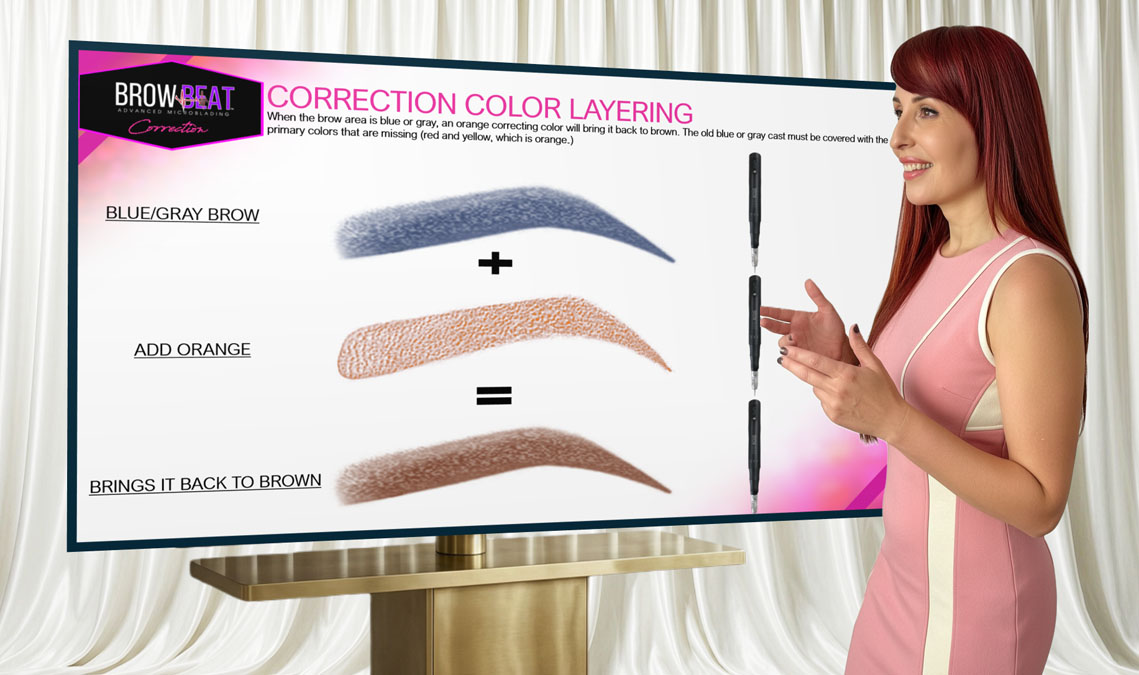
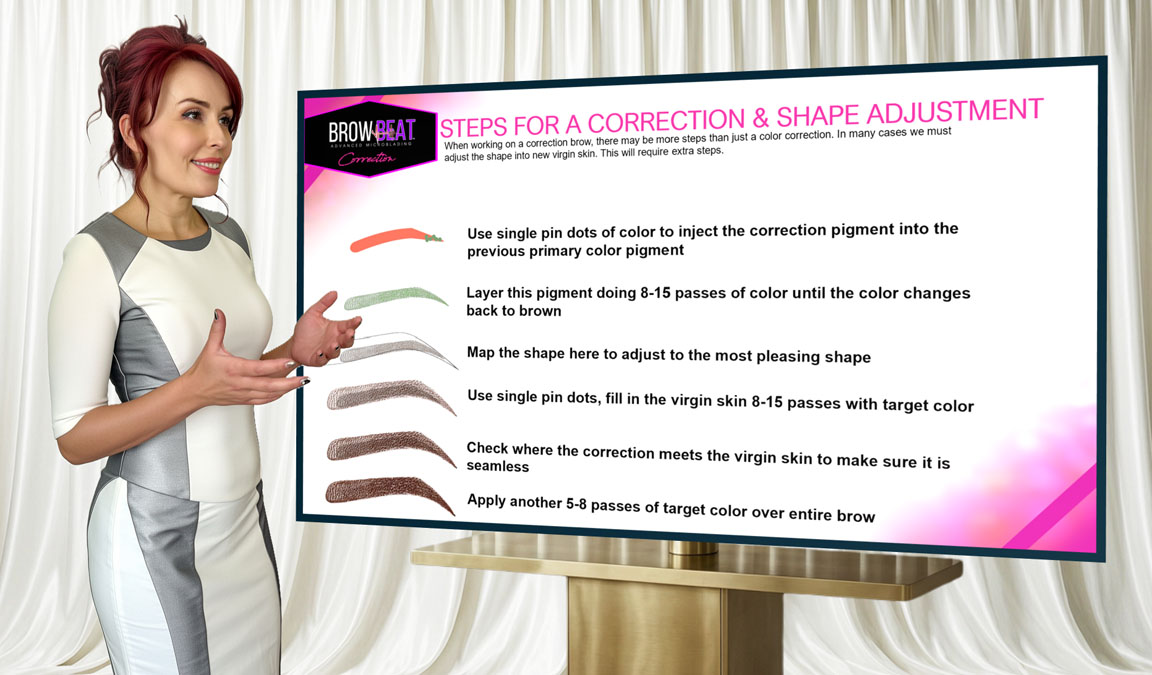
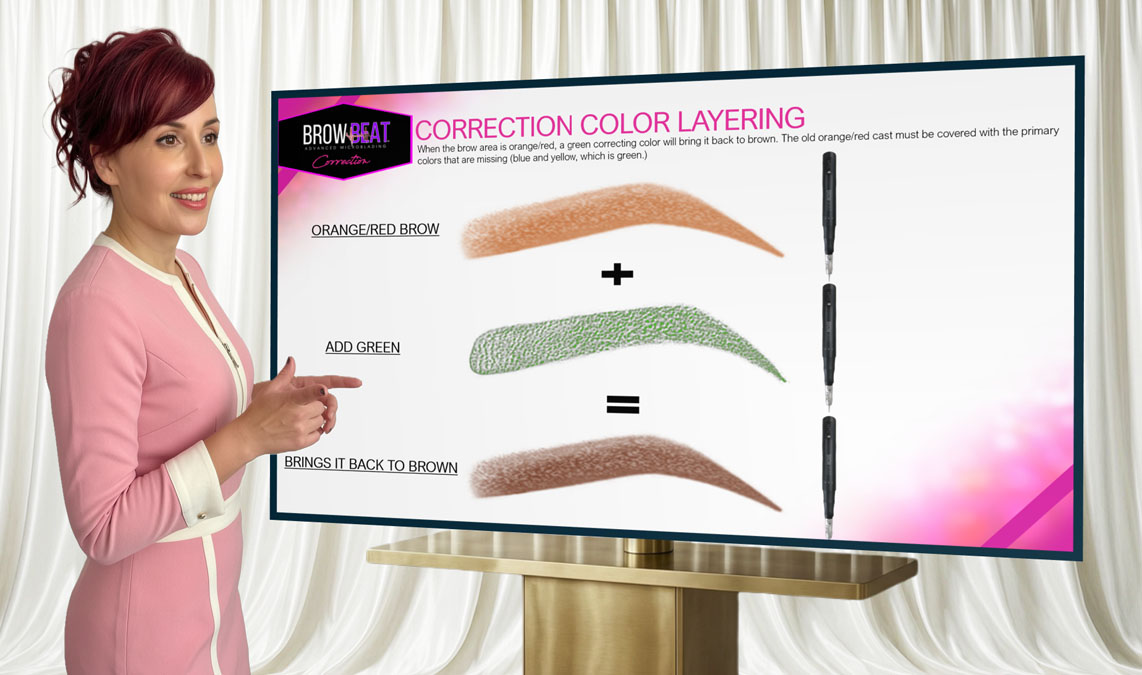
One of the biggest misconceptions in permanent makeup is that correction simply means placing darker pigment over old pigment. Experienced correction artists know that pigments visually interact. Brown over gray does not magically become brown. Brown over red does not erase red. Blue pigment underneath still influences the healed appearance. That is why corrective color planning begins with understanding the existing undertones before choosing the new pigment.
Sometimes the solution involves neutralization.
Sometimes reshaping.
Sometimes a powder conversion.
Sometimes staged correction.
Every old eyebrow tattoo has its own history.
That history determines the treatment.
Modernizing Older Eyebrow Tattoos
One of the most rewarding aspects of corrective permanent makeup is helping clients finally enjoy brows they have disliked for years—or even decades.
Many older eyebrow tattoos were created with shapes that reflected the beauty trends of their time. Some were thinner than today’s preferred styles. Others sat higher, lower, or farther apart than modern brow design typically calls for. Color is only one part of the correction. When appropriate, we also evaluate whether the existing shape can be refined to better complement your current facial features.
Modern correction is about more than changing pigment. It is about creating brows that feel current, balanced, and natural while respecting the cosmetic tattoo that already exists.
Every Old Eyebrow Tattoo Tells a Different Story
One of the biggest misconceptions about old permanent makeup is that every aging eyebrow tattoo behaves the same way. In reality, no two corrective cases are identical. Two clients may have brows that appear almost identical from across the room, yet require completely different treatment plans once the skin and pigment are evaluated closely.
Some tattoos were completed more than thirty years ago and have simply faded into cool gray tones. Others have been touched up every few years, creating multiple layers of pigment from several artists. Some clients remember exactly who performed their brows. Others honestly have no idea because the procedure happened decades ago.
That history matters.
Every appointment leaves behind information inside the skin. Previous pigments, application depth, healing patterns, scar tissue, and old design choices all become part of the correction strategy.
Rather than asking how old the tattoo is, we ask a much more important question:
“What condition is the tattoo in today?”
Older Doesn’t Always Mean Darker
Many people assume older eyebrow tattoos are extremely dark. Surprisingly, many older cosmetic tattoos actually become lighter while simultaneously becoming more noticeable. This happens because the unwanted undertone begins to dominate the remaining pigment. Instead of seeing soft brown eyebrows, clients often begin noticing:
- Blue eyebrows
- Gray eyebrows
- Reddish eyebrows
- Orange eyebrows
- Patchy pigment
- Different colors within the same eyebrow
The tattoo may technically be lighter than it once was, but because the remaining color is less flattering, it attracts more attention. This is one reason color correction requires much more than simply matching a brown pigment.
What We Evaluate Before Recommending Treatment
Every corrective appointment begins with evaluation. We carefully examine the entire brow before deciding what approach makes the most sense.
Pigment Color
Understanding the existing undertones helps determine whether color neutralization may be appropriate before adding additional pigment.
Pigment Saturation
Some tattoos contain surprisingly little remaining pigment despite their age. Others remain densely saturated after decades of touch-ups.
Shape
Many older cosmetic tattoos reflect beauty trends that have changed considerably over time. A beautiful correction often includes subtle improvements to the overall design rather than focusing only on color.
Scar Tissue
Previous procedures may have altered the texture of the skin. We evaluate how that may influence pigment placement and healing.
Natural Brow Hair
Existing eyebrow hair provides valuable guidance when designing a correction that looks natural instead of obviously tattooed.
Client Goals
Some clients simply want the unwanted color corrected. Others hope for a complete modernization. Understanding those goals helps create the right treatment plan.
Correction Is About Working With Existing Pigment
One of the biggest differences between corrective permanent makeup and brand-new cosmetic tattooing is that corrective artists rarely begin with blank skin. Instead, every decision must consider what already exists underneath. Old pigment affects:
- The final healed color.
- How much additional pigment can safely be implanted.
- The overall brow design.
- Long-term maintenance planning.
- Future correction options.
That is why correction is rarely a one-size-fits-all procedure. Each brow has its own history, and successful correction begins by respecting that history rather than ignoring it.
Case Study: Updating a 1990s Cosmetic Tattoo
A client visited us with eyebrow tattoos originally completed during the 1990s. Over the years, several touch-ups had left the brows unevenly gray with small areas of reddish pigment near the tails.
Rather than immediately making the brows darker, we evaluated the remaining pigment, skin condition, and facial proportions.
Because the original shape still complemented her face, the treatment plan focused on correcting the unwanted colors while modernizing the overall appearance with a softer, more natural finish.
The client was surprised that the conversation centered on planning—not simply adding more pigment.
Case Study: Thirty-Year-Old Brows With Scar Tissue
Another client assumed she was no longer a candidate for brows because she had been told that scar tissue made further work impossible. During evaluation, we found that although some scar tissue was present, there were still opportunities to improve the appearance through careful corrective planning.
Instead of focusing on what could not be changed, we focused on what could realistically be improved while respecting the condition of her skin. That realistic approach gave the client a result that felt significantly more current without creating unnecessary trauma.
Case Study: Mixed Pigments From Multiple Artists
Over nearly twenty years, one client had received treatments from three different permanent makeup artists. Each appointment introduced slightly different pigments and techniques. The final result included gray, warm brown, and faint reddish undertones throughout the brows.
The correction strategy accounted for the differences within each brow so the healed appearance would look balanced instead of patchy.
A Modern Brow Should Age Gracefully
One philosophy guides every correction we perform: Today’s correction should still make sense years from now. That means avoiding unnecessary pigment stacking, choosing colors thoughtfully, respecting the existing skin, and planning future maintenance before the client ever leaves the appointment. Cosmetic tattooing should evolve with the client—not fight against the natural aging process. Our goal is not simply making old eyebrows darker. Our goal is helping them look naturally beautiful again.
Who Is a Good Candidate for Old Eyebrow Tattoo Color Correction?
Many clients assume their cosmetic tattoo is simply too old to improve. Fortunately, age alone is rarely the deciding factor. We have evaluated eyebrow tattoos that were completed ten years ago, twenty years ago, thirty years ago, and occasionally even older. The better question isn’t, “How old is the tattoo?” Instead we ask, “What condition is the tattoo in today?” Good candidates often include clients who:
- Have eyebrow tattoos from the 1980s, 1990s, or early 2000s.
- Have brows that have turned gray, blue, red, orange, or several colors.
- Have had multiple previous touch-ups.
- Want a softer, more modern appearance.
- Want to avoid unnecessarily dark brows.
- Are open to individualized treatment planning.
- Understand that correction may require more than one appointment.
Even clients who have previously been told nothing could be done are often surprised by the possibilities available after a professional corrective evaluation.
When Lightening May Be Recommended First
Although many old eyebrow tattoos can be improved through corrective permanent makeup, there are situations where additional pigment is not the best first step.
If existing pigment is extremely dense, extends well beyond the desired shape, or contains multiple heavily saturated layers, professional laser removal may create a better foundation for future correction. That recommendation is never made simply because the tattoo is old. It is based on:
- Current pigment saturation
- Overall brow design
- Desired outcome
- Skin quality
- Amount of previous work
Sometimes immediate correction is appropriate.
Sometimes gradual correction produces a significantly better long-term result.
Maintaining Corrected Brows for the Future
One advantage of modern corrective permanent makeup is that we now understand much more about long-term maintenance than the industry did decades ago. Rather than repeating the exact same procedure indefinitely, maintenance should evolve alongside the healed pigment.
For many clients, we recommend having their brows professionally evaluated approximately every 12 to 18 months. Each visit becomes an opportunity for:
- A minor refresh.
- Color adjustment.
- Shape refinement.
The objective is preserving beautiful brows.
Why Experience Matters With Older Cosmetic Tattoos
Corrective permanent makeup requires a different mindset than creating brand-new brows. Instead of designing on untouched skin, experienced correction artists must interpret years—or decades—of existing pigment beneath every new decision. Older eyebrow tattoos require understanding:
- Long-term pigment aging.
- Historic cosmetic tattoo techniques.
- Scar tissue.
- Color theory.
- Neutralization.
- Modern brow design.
- Future maintenance planning.
Perhaps most importantly, corrective work requires patience. Sometimes the safest recommendation is not the quickest recommendation. A carefully staged plan often creates a better result than trying to accomplish everything during one appointment.
Old Doesn’t Mean Hopeless
An eyebrow tattoo may be decades old, but that does not automatically mean you have reached the end of your options. Many cosmetic tattoos created years ago can be thoughtfully modernized using today’s understanding of pigment behavior, corrective color theory, and long-term brow planning.
We evaluate every brow individually. Rather than making assumptions based on age alone, we develop a personalized treatment plan that respects your existing pigment while creating the most natural result possible.
If your eyebrows have turned gray, blue, red, orange, or simply no longer reflect how you want to look, we’d be happy to evaluate your options. Book an appointment.
How Cosmetic Tattoo Pigments Have Changed Over the Last Four Decades
Permanent makeup has evolved tremendously since eyebrow tattooing first became popular. Clients who received cosmetic tattoos during the 1980s or 1990s were treated with the best techniques available at that time, but the industry has learned an enormous amount since then.
Today’s artists benefit from decades of healed results that simply did not exist when many older cosmetic tattoos were created. We now understand how different pigment families age, how various skin types retain color, and why long-term maintenance is just as important as the initial procedure.
Earlier cosmetic tattooing often emphasized longevity above all else. Modern permanent makeup places much greater emphasis on predictable aging, softer healed results, color stability, and planning for future maintenance.
That evolution is one reason older eyebrow tattoos often look dramatically different from brows created using today’s techniques.
Why Some Older Eyebrow Tattoos Age Better Than Others
Clients frequently compare their brows with friends who had permanent makeup performed around the same time and wonder why the results aged so differently. Several factors influence how an eyebrow tattoo changes over the years, including:
- The original pigment formulation.
- Depth of implantation.
- Sun exposure.
- Skin type.
- Previous touch-ups.
- Immune response.
- Skincare products.
- Natural aging of the skin.
For that reason, two tattoos completed on the same day may look completely different twenty years later.
This is why every correction begins with evaluating your brows—not assuming they will behave like someone else’s.
Case Study: A Cosmetic Tattoo From the Late 1980s
One client came to us with eyebrows that had been tattooed more than thirty-five years earlier. Over the decades, the brows had faded into an uneven gray-blue color with several previous touch-ups creating darker patches throughout the arches.
She had been told multiple times that complete removal was her only option.
After evaluating the remaining pigment, skin condition, and facial proportions, we developed a staged correction plan focused on improving the overall color while modernizing the shape to better complement her current features.
Rather than trying to erase the history of the brows, we worked with what remained, creating a softer and far more natural appearance.
Our Philosophy Toward Older Cosmetic Tattoos
We believe older eyebrow tattoos deserve thoughtful evaluation—not automatic rejection. Some artists prefer working only on untouched skin because correction requires considerably more planning and experience. Corrective work is one of our specialties. Our objective is always the same:
- Respect the existing skin.
- Understand the existing pigment.
- Create the most natural brow possible.
- Protect future correction options.
- Develop a maintenance plan that helps the brows continue aging gracefully.
Beautiful correction is rarely about covering mistakes.
It’s about understanding history, applying modern knowledge, and creating a plan that works for the client sitting in front of us today.
Frequently Asked Questions About Old Eyebrow Tattoo Color Correction
In many cases, yes. The age of the tattoo alone not determine whether correction is possible. Pigment color, saturation, skin condition, and overall brow design are much more important factors.
Yes. It can be improved through professional color correction. Blue pigment requires careful evaluation before selecting corrective pigment because simply covering it with brown rarely creates the best healed result.
Pigments naturally change over time. Older formulations, sun exposure, immune response, skin changes, and decades of healing can all contribute to gray cosmetic tattoo pigment.
Many red eyebrow tattoos can be improved through corrective color planning. Every case is evaluated individually because the amount of remaining pigment varies considerably from client to client.
No. Many older eyebrow tattoos can be corrected without laser removal. Others may benefit from partial laser lightening before additional pigment is introduced.
Not automatically. Scar tissue becomes part of the evaluation rather than an automatic reason to decline treatment.
Yes. One of the goals of correction is helping older cosmetic tattoos better reflect today’s softer, more natural brow styles whenever possible.
Many clients benefit from professional evaluation every 12 to 18 months. Maintenance should always be based on the condition of the brows rather than an automatic schedule.
Cases benefit from staged treatments just like when you first got your brows done on virgin skin. Treatment one addresses color concerns and treatment two addresses discrepancies left after healing.
Eyebrow Correction Blog