EYEBROW COLOR CORRECTION • DALLAS • FORT WORTH • TX
REAL RESULTS, INDUSTRY LEADER
If your eyebrow tattoo has turned gray, red, orange, blue, too dark, or simply doesn’t look the way it once did, you’re not alone. One of the most common reasons clients search for eyebrow color correction is because the healed pigment they see in the mirror today no longer matches the brows they originally received.
Many people are surprised when their cosmetic eyebrow tattoo changes color over the years. Brows that were once soft brown may gradually appear cooler, warmer, darker, or less flattering than expected. Others notice that one eyebrow seems to have healed differently from the other, or that previous touch-up appointments have changed the overall appearance of the pigment.
The important thing to understand is that eyebrow color correction is not about simply covering one color with another. Successful correction begins by understanding the color that already exists in the skin, how that pigment has healed, and how it visually interacts with both your skin tone and any new pigment that may eventually be added. This guide focuses entirely on aged eyebrow tattoo color.
Eyebrow color correction is one part of our complete Eyebrow Tattoo Correction library, where we explain the different correction categories and how they work together.
What Is Eyebrow Color Correction?
Eyebrow color correction is the process of evaluating healed cosmetic eyebrow pigment that has changed color over time. Rather than focusing only on the original pigment used during your appointment, correction begins by carefully studying the color that exists in your skin today.
Clients often describe their eyebrows as gray, blue-gray, red, orange, pink, salmon, olive, or simply “the wrong color.” Some brows become darker than expected. Others develop several colors within the same eyebrow. Occasionally, one eyebrow even heals differently than the other.
These color changes are one of the reasons eyebrow tattoo correction requires careful planning. Existing pigment influences every future treatment decision, which is why successful correction begins with understanding what has already healed rather than assuming all unwanted colors behave the same way.
Why Do Eyebrow Tattoo Colors Change?
One of the most common questions clients ask is, “Why did my eyebrows change color when they looked perfect at first?”
The answer is that every cosmetic eyebrow tattoo continues changing after it heals. Fresh pigment and healed pigment are not the same thing.
As pigment naturally ages within the skin, its appearance gradually evolves. At the same time, your own skin also changes. Age, skincare products, sun exposure, healing response, previous tattoo history, and many other factors all influence the final appearance of old eyebrow tattoos.
That is why two clients who received very similar procedures may have completely different eyebrow colors several years later.
Old eyebrow tattoo color correction always begins by evaluating the aged pigment—not the original pigment bottle.
orange
Correction
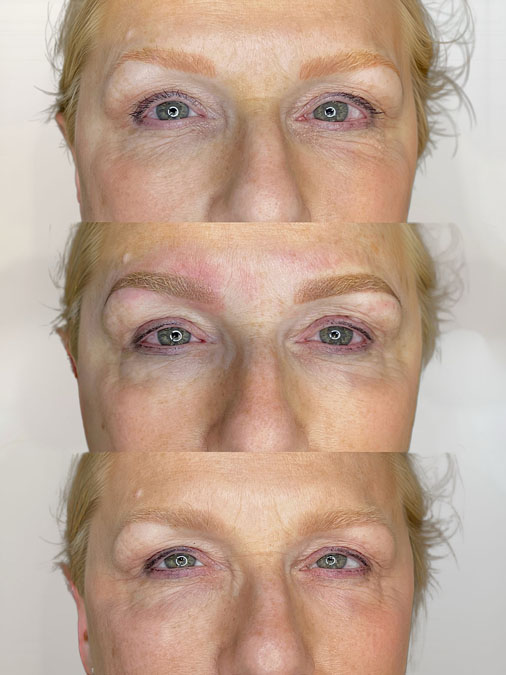
This client was a 47-year-old female with Fitzpatrick Skin Type I who received permanent makeup approximately 4 years earlier. Although the overall eyebrow design still suited her face, she became increasingly aware that the aged pigment appeared noticeably orange. She had searched online for orange eyebrow correction, believing she simply needed darker pigment, but learned that successful eyebrow color correction begins by understanding the existing aged color rather than simply adding more pigment.
During her appointment we evaluated the current pigment, previous permanent makeup history, natural eyebrow hair and eyebrow proportions before planning treatment. Every case involving unwanted eyebrow tattoo color is unique, making professional evaluation an essential part of eyebrow tattoo color correction.
This example demonstrates how orange eyebrow correction, cosmetic tattoo color correction, and permanent makeup color correction work together to create a more natural healed appearance for clients seeking professional eyebrow correction throughout Dallas.
GRAY
Correction
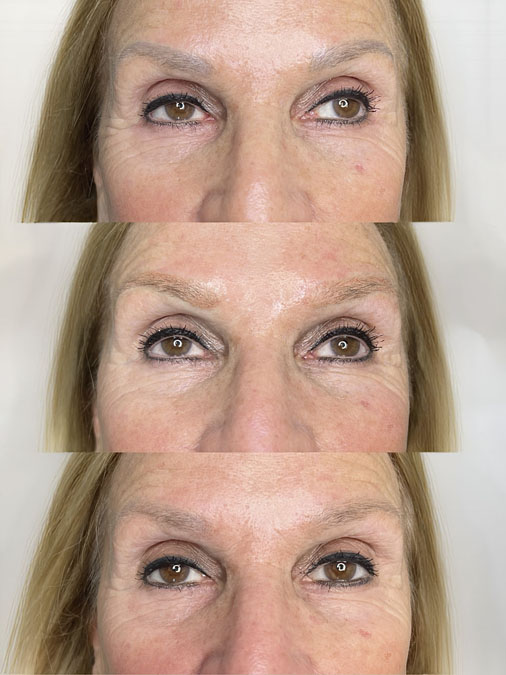
This client is 70-year-old female with Fitzpatrick Skin Type II who had permanent makeup completed approximately 20 years earlier. She remained happy with the general eyebrow shape but felt the aged pigment had gradually become increasingly grey. Rather than describing her brows as bad, she simply wanted to understand why the color had changed and whether eyebrow color correction could improve the appearance.
During evaluation we assessed the existing pigment, previous tattoo history, natural eyebrow hair and overall eyebrow design before determining the most appropriate treatment plan. Every case of grey eyebrow correction is different because existing pigment, previous procedures and healed color all influence the correction strategy.
This example demonstrates why eyebrow tattoo color correction, cosmetic tattoo color correction, and permanent makeup color correction should always begin with careful evaluation rather than assumptions. It also illustrates one of the most common unwanted eyebrow tattoo colors we see in our Dallas correction practice
blue
Correction
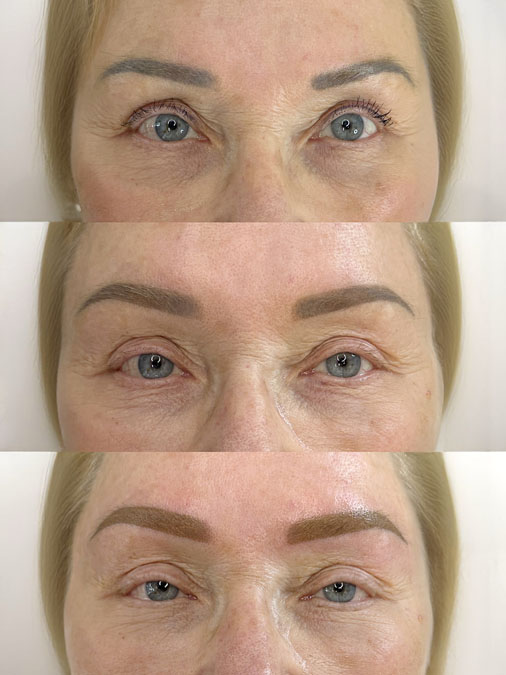
This client is a 67-year-old female with Fitzpatrick Skin Type I who originally received cosmetic eyebrow tattooing. Over time she noticed that the aged pigment appeared increasingly blue, especially in natural daylight and photographs. Although she had researched blue eyebrow correction, she was unsure whether color was the only concern or whether another correction category might also be appropriate.
Before planning treatment we evaluated the healed pigment, previous cosmetic tattoo history, natural eyebrow hair, eyebrow proportions and the overall healed appearance before recommending eyebrow color correction. Cases involving unwanted blue pigment often overlap with correction of colored eyebrow tattoos and cosmetic tattoo color correction, making individualized assessment essential.
This example demonstrates why understanding the existing healed color is one of the most important steps in planning successful eyebrow tattoo color correction for clients throughout Dallas seeking natural-looking results.
COLOR CORRECTIONG
Tattoos
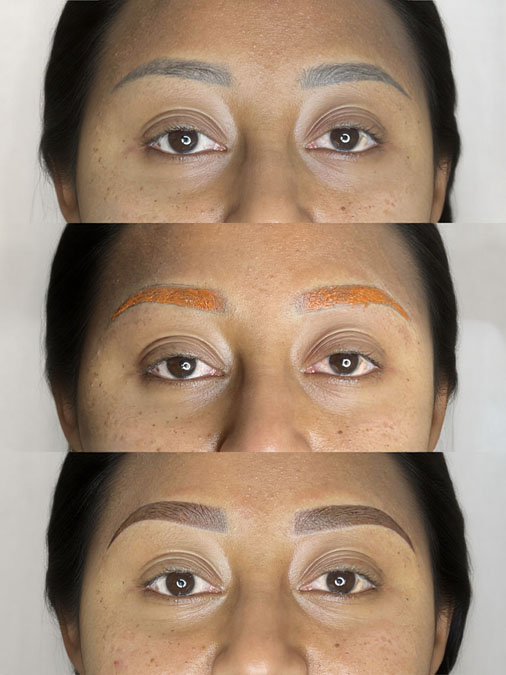
This client is a 32-year-old female with Fitzpatrick Skin Type V who originally received permanent makeup. Over time the brows had gradually changed in color, becoming less natural and no longer complementing her complexion. Although the overall eyebrow shape remained acceptable, the aged pigment had evolved into an unwanted color, making her feel that the previous application looked dated.
Before planning eyebrow color correction, we carefully evaluated the current pigment, previous permanent makeup history, natural eyebrow hair, facial proportions and the overall eyebrow design. Cases involving older cosmetic eyebrow tattoos often require a different evaluation than newer procedures because the pigment has had many years to change.
This example demonstrates why eyebrow tattoo color correction, permanent makeup color correction, and correction of colored eyebrow tattoos should always begin with understanding the eyebrow’s current healed appearance rather than simply selecting a new pigment. It represents one of the most common reasons clients throughout Dallas seek professional eyebrow color correction.
Healed Pigment Is More Important Than Fresh Pigment
One of the biggest misconceptions surrounding cosmetic eyebrow tattooing is believing that the fresh result tells us how the eyebrows will continue looking in the future.
Fresh cosmetic tattoos often appear darker, richer, warmer, or cooler than they eventually heal. Once the skin has fully healed and the pigment continues aging over the following months and years, the healed eyebrow becomes far more valuable than photographs taken immediately after the original appointment.
For this reason, eyebrow color correction always begins by evaluating:
- The healed pigment color.
- The amount of pigment remaining.
- The overall saturation.
- How evenly the color has healed.
- Whether multiple colors are visible.
- The relationship between the healed pigment and your skin tone.
Every correction plan is based on the eyebrow you have today—not the eyebrow you remember having years ago.
Eyebrow Color Correction Is Not About Covering Pigment
One of the biggest misunderstandings about eyebrow color correction is the belief that unwanted pigment can simply be covered by placing another color on top.
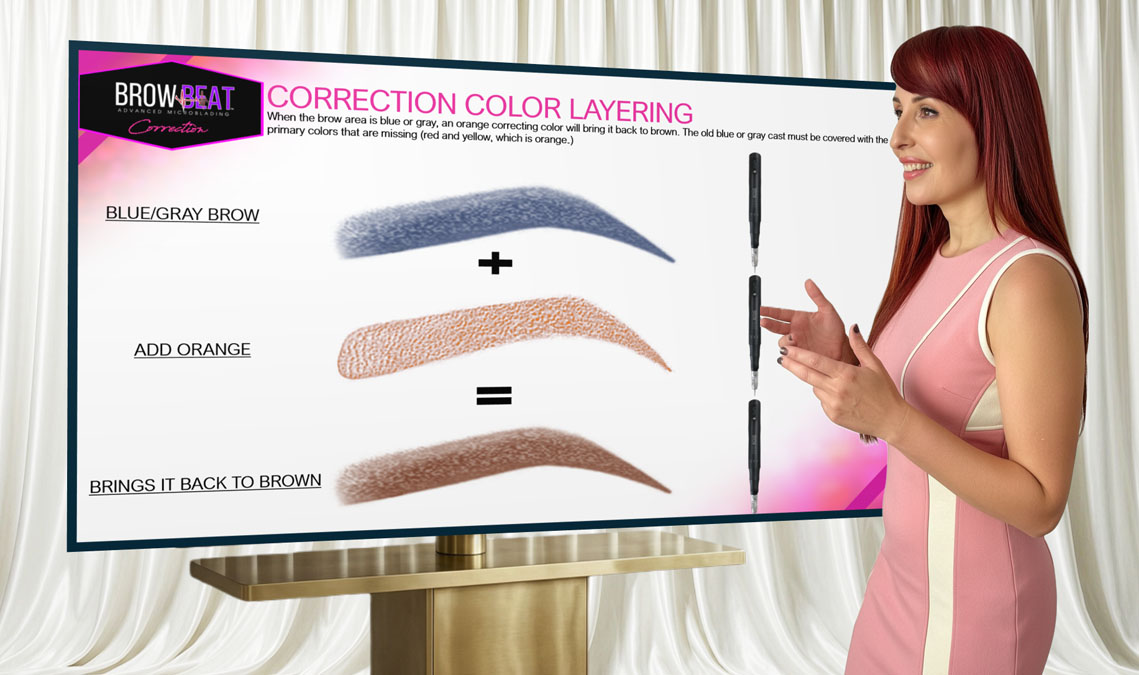
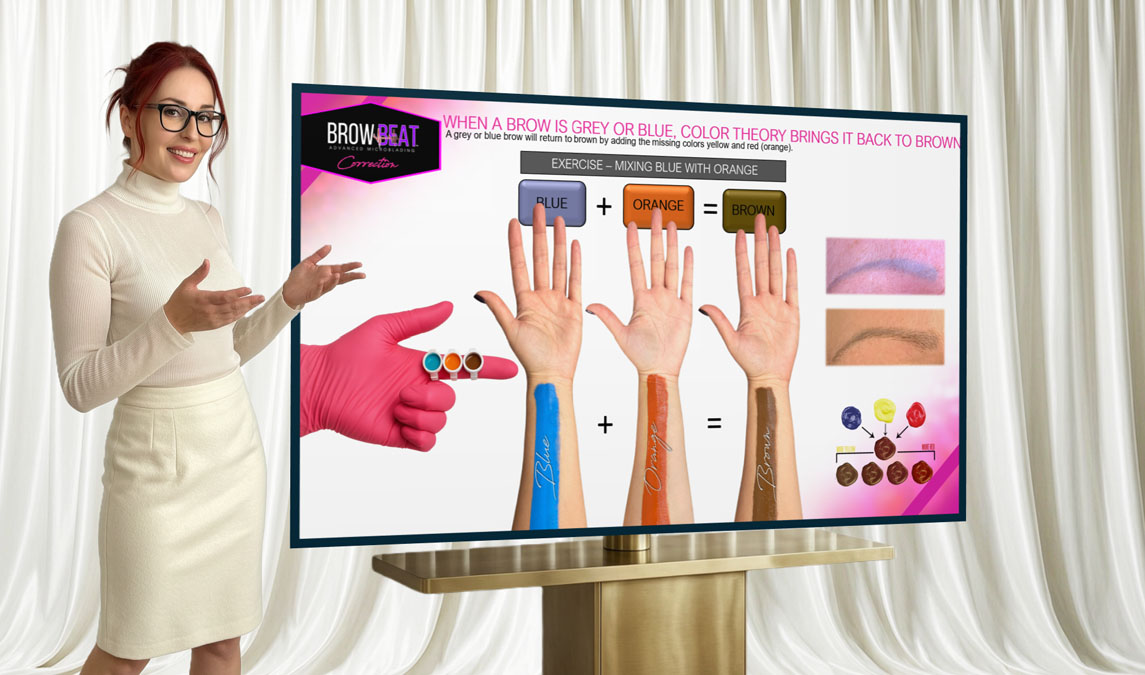
In reality, pigments visually interact with one another. The existing pigment remains inside the skin. Any future pigment must work with that existing color rather than pretending it isn’t there. This is why experienced correction artists spend far more time evaluating healed pigment than selecting new pigment.
Professional Insight
- Pigments visually mix rather than completely cover one another.
- Brown placed over red may still appear red-brown.
- Blue placed over orange may create muddy-looking brows.
- Successful eyebrow color correction begins with understanding existing healed pigment before new pigment is ever considered.
Who Is This Guide For?
This page is written for people searching for answers about unwanted healed eyebrow pigment. You may be in exactly the right place if you’ve searched for:
- Eyebrow color correction
- Gray eyebrow tattoo correction
- Red eyebrow correction
- Orange eyebrow correction
- Blue eyebrow correction
- Dark eyebrow tattoo correction
- Unwanted eyebrow tattoo colors
- Permanent makeup color correction
- Correction of colored eyebrow tattoos
- Cosmetic tattoo color correction
If your primary concern is the hairstrokes themselves continue with our Microblading Color Correction page.
Understanding Healed Eyebrow Tattoo Colors
One of the biggest misconceptions about eyebrow tattoo color correction is that every unwanted color has the same cause. In reality, two gray eyebrows may require completely different correction strategies, while two red eyebrows may have developed that way for entirely different reasons.
This is why experienced correction artists spend far more time evaluating the existing healed pigment than selecting a new pigment. The color visible today tells us much more about the eyebrow than the pigment originally used years ago.
Successful eyebrow color correction begins with understanding how healed pigment behaves—not simply identifying the color you dislike.
Gray Eyebrow Correction
Gray eyebrows are one of the most common reasons clients begin researching eyebrow color correction. Some eyebrows develop a soft gray appearance, while others become charcoal, blue-gray, cool-toned, or ashy over time.
Many clients assume gray eyebrows simply need more brown pigment. However, successful correction begins by evaluating the existing healed color, the amount of pigment remaining, the saturation within the skin, and how the current color interacts with your natural complexion.
Every gray eyebrow correction should be evaluated individually because not every gray pigment behaves the same way.
Red Eyebrow Correction
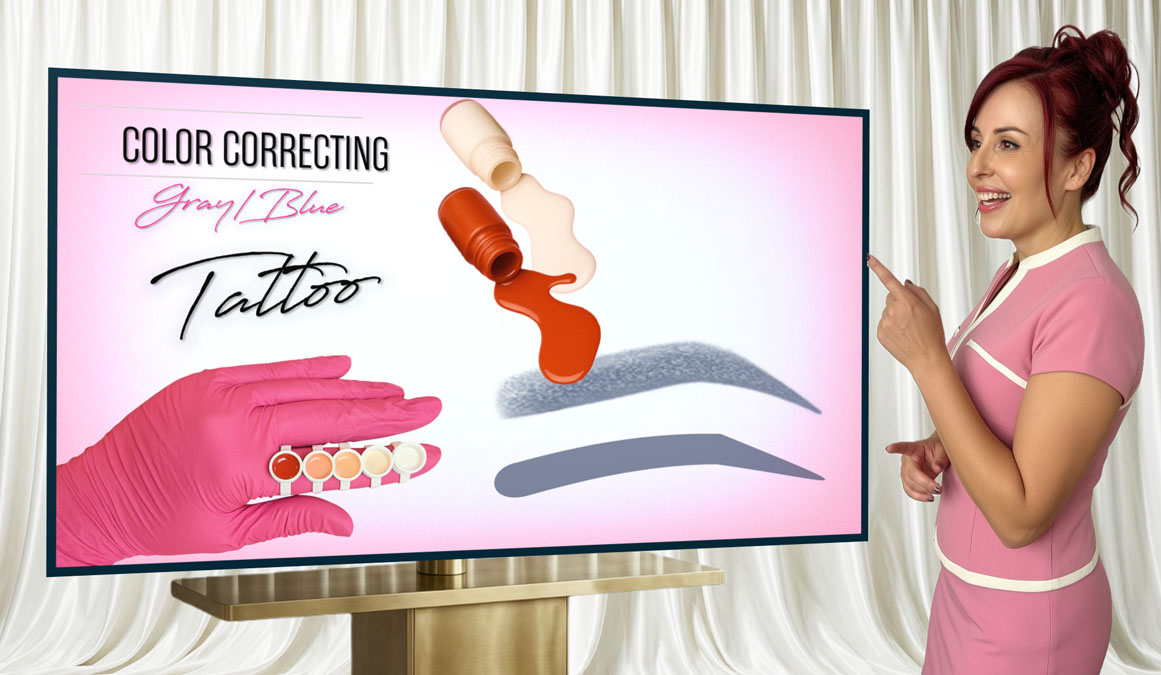
Red eyebrows often concern clients because they gradually become more noticeable over time. Some appear warm red, while others heal into reddish-brown or brick-colored tones.
Rather than treating every red eyebrow the same, we first determine how much pigment remains, how saturated the healed tattoo appears, and whether additional correction categories should also be considered.
Red pigment tattoo correction is simply one part of the eyebrow’s overall correction story. Shape, density, healed saturation, and previous tattoo history remain equally important during treatment planning.
Professional Insight
The visible color is only one part of the evaluation. Two clients may both describe their brows as “red,” yet require completely different correction strategies because their healed pigment behaves differently.
Orange Eyebrow Correction
Orange eyebrows are another common concern among clients with previous cosmetic eyebrow tattooing. Some orange pigment appears bright and obvious, while other brows develop softer peach or warm copper tones over time.
Orange pigment corrections should always be evaluated within the context of the complete eyebrow. Existing saturation, healed density, previous procedures, and the overall brow design all influence how correction is approached.
Understanding the healed pigment allows us to create a correction strategy based on the eyebrow that exists today rather than relying on assumptions about the original appointment.
Blue-Gray Eyebrow Correction
Some clients notice their eyebrows gradually taking on a blue-gray appearance rather than a soft brown tone. While many people refer to this simply as “gray,” blue-gray healed pigment often has its own unique appearance within the skin.
Evaluating the exact healed tone is one of the reasons blue eyebrow color correction should never be rushed. Small differences in healed pigment often influence the overall correction strategy.
Our goal is not simply to identify the color. Our goal is to understand why the eyebrow appears that way today.
Mixed Color Eyebrows
Some eyebrows contain more than one healed color at the same time. For example, the fronts may appear gray while the tails appear warmer. One eyebrow may even heal differently than the other.
Mixed-color eyebrows are actually more common than many clients realize.
Because of this, mixed eyebrow color correction is rarely based on one single color. Instead, the entire eyebrow is evaluated as a complete design before determining the most appropriate treatment plan.
Dark Eyebrow Tattoo Correction
Not every color correction appointment involves gray, red, or orange pigment. Some clients simply feel their eyebrows are too dark for their complexion or have gradually become visually heavier over time.
Dark cosmetic eyebrow tattoo correction requires careful evaluation because increasing pigment density is rarely the answer.
Instead, we evaluate the existing saturation, healed appearance, brow shape, and overall facial harmony before recommending the most appropriate correction strategy.
- Sometimes the concern is truly color.
- Sometimes it is density.
- Sometimes it is shape.
- Often it is a combination of all three.
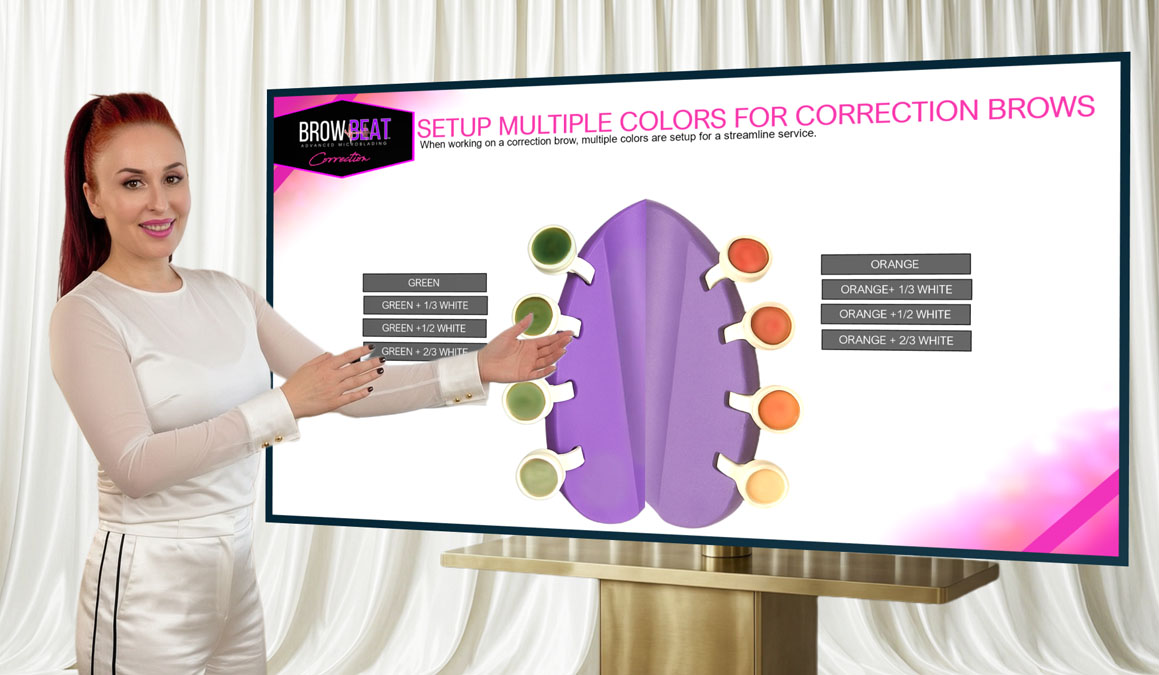
Every Healed Color Tells a Different Story
One of the most valuable lessons we’ve learned through eyebrow color correction is that healed pigment should never be judged by color alone.
- Two gray eyebrows can require completely different correction plans.
- Two red eyebrows may have healed differently.
- Two orange eyebrows may have entirely different levels of saturation.
- Successful correction begins by understanding the complete eyebrow—not simply identifying the color that concerns the client most.
That philosophy guides every recommendation we make throughout our complete Eyebrow Tattoo Correction library.
The Principles of Eyebrow Color Correction
Successful eyebrow color correction is not simply about choosing a different pigment. One of the biggest misconceptions we see is the belief that unwanted color can simply be covered with another color and immediately disappear.
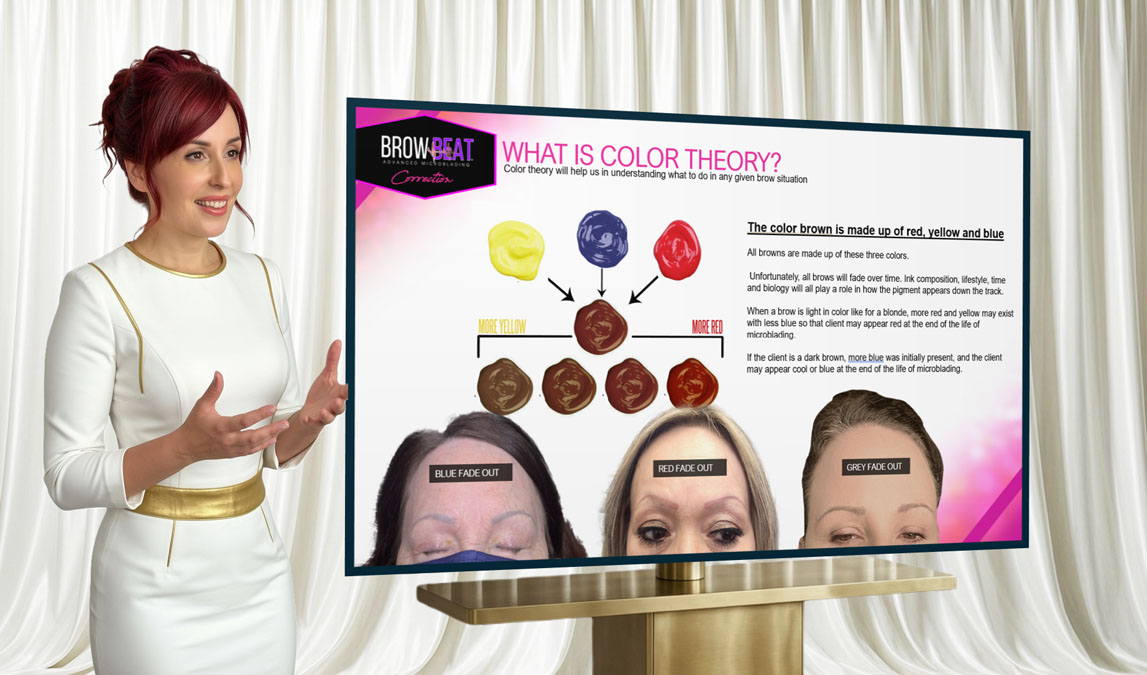
In reality, cosmetic eyebrow pigments continue existing within the skin. When new pigment is introduced, it visually interacts with the pigment already present rather than completely replacing it.
That is why correction should always begin with understanding the existing healed eyebrow rather than focusing only on the desired final color.
Pigments Visually Mix Rather Than Cover
One of the most important concepts for clients to understand is that eyebrow tattoo pigments visually mix inside the skin.
Unlike painting over a white canvas, cosmetic tattooing works with pigment that already exists beneath the surface. Every new treatment must consider the healed color already present within the eyebrow.
For example, placing brown pigment over red healed pigment may still produce a reddish-brown appearance because both pigments remain visible. Likewise, placing blue-based pigment over warm orange tones may create muddy-looking eyebrows rather than a clean neutral brown.
This is why experienced eyebrow color correction focuses first on understanding existing pigment before determining how future pigment should be approached.
Professional Insight
Successful correction usually comes from understanding how pigments interact visually—not from attempting to hide one color beneath another.
Why Every Color Correction Plan Is Different
Although clients often describe their eyebrows using the same words—gray, red, orange, blue, dark, or ashy—the correction strategy should never be based solely on those descriptions.
Instead, every eyebrow is evaluated individually. We consider:
- The current healed color.
- How saturated the pigment appears.
- Whether multiple colors are present.
- The age of the existing eyebrow tattoo.
- The overall brow shape.
- The relationship between the pigment and the client’s complexion.
- Previous cosmetic tattoo history.
- Whether other correction categories are also involved.
This individualized approach allows us to create correction plans that are based on the eyebrows we actually see—not assumptions about how previous pigment should behave.
Color Is Only One Part of the Correction Process
Many clients initially believe their only problem is color. However, during evaluation we often discover that shape, density, healed stroke patterns, symmetry, or previous tattoo placement also contribute to the overall appearance of the eyebrows.
For example:
- A gray eyebrow may also contain blurry microblading.
- An orange eyebrow may also have an oversized shape.
- A dark eyebrow may simply require a conservative refresh.
- One eyebrow may heal differently from the other.
Understanding these overlapping concerns helps determine whether another correction category should also become part of the treatment plan.
Why Two Similar Brows May Need Completely Different Correction
One of the most valuable lessons in eyebrow color correction is that appearances can be deceptive.
Two clients may arrive with eyebrows that both appear gray, yet one may have very soft healed pigment while the other has dense, highly saturated pigment. One client may have beautiful eyebrow proportions, while the other has significant shape concerns in addition to unwanted color.
Although both clients describe their eyebrows as “gray,” their correction plans may look completely different.
This is why eyebrow color correction should never be reduced to simple color matching. The entire eyebrow must be evaluated before treatment decisions are made.
Our Conservative Philosophy on Eyebrow Color Correction
Our philosophy is to improve what already exists rather than aggressively trying to overpower existing pigment.
Sometimes subtle improvements create the most elegant healed results. Carefully planned correction often produces more natural-looking eyebrows than repeatedly introducing additional pigment without understanding the existing tattoo.
The healthiest long-term correction plan respects the skin, the healed pigment, and the future appearance of the eyebrows rather than focusing only on today’s treatment.
Serving Dallas, Fort Worth & North Texas
Our eyebrow color correction appointments welcome clients from throughout Dallas and the surrounding DFW Metroplex, including Highland Park, University Park, Preston Hollow, Lakewood, Uptown Dallas, Irving, Plano, Frisco, McKinney, Richardson, Garland, Arlington, Fort Worth, Southlake, Grapevine, Colleyville, Keller, Coppell, Flower Mound, and neighboring North Texas communities.
Many clients travel specifically for eyebrow color correction because healed pigment often requires careful evaluation rather than a one-size-fits-all approach.
If you’d like to see examples of healed eyebrow correction, we invite you to browse our Before & After Gallery, continue learning through our educational blog, or read our complete Eyebrow Tattoo Correction Guide.
Who Is a Good Candidate for Eyebrow Color Correction?
Not every unwanted eyebrow tattoo color requires the same approach. Some clients simply have brows that have naturally changed over time, while others have healed pigment that no longer complements their skin tone or facial features.
A good candidate for eyebrow color correction is someone who already has healed cosmetic eyebrow tattooing and would like to improve the existing color while preserving the health of the skin and creating a more balanced long-term result.
The most important part of every appointment is understanding the pigment that already exists. We do not choose correction strategies based on what the pigment was originally supposed to look like. We evaluate what we actually see today.
You’ll Benefit From Eyebrow Color Correction If…
- Your eyebrows have healed gray or blue-gray.
- Your brows have developed red or reddish-brown tones.
- Your healed pigment appears orange or peach.
- Your eyebrows contain several different healed colors.
- One eyebrow is a different color than the other.
- Your brows appear darker than expected.
- Your healed color no longer complements your complexion.
- Your previous cosmetic eyebrow tattoo has changed significantly.
- You would like your eyebrows to look softer, and more natural.
Many clients experience more than one of these concerns at the same time. That is why every eyebrow color correction appointment begins with evaluating the complete eyebrow rather than focusing on one single color.
Our Approach to Eyebrow Color Correction
Throughout this website you’ll notice that we avoid describing eyebrow color correction as “covering” unwanted pigment. Instead, we focus on understanding the healed eyebrow first. Every recommendation is built around three principles:
- Evaluate the aged pigment currently visible in the skin.
- Understand how that pigment interacts.
- Create the most appropriate long-term correction strategy.
This approach helps us avoid oversimplifying color correction while producing more thoughtful recommendations for each individual client.
Professional Insight
One of the biggest mistakes people make is assuming that every gray eyebrow should be treated exactly like every other gray eyebrow.
Experienced correction artists know that healed pigment behaves differently from client to client. Understanding those differences is often far more important than simply identifying the visible color.
Serving Dallas, Fort Worth & The DFW Metroplex
Clients travel to us for eyebrow color correction from throughout Dallas, Highland Park, University Park, Preston Hollow, Lakewood, Uptown Dallas, Irving, Plano, Frisco, McKinney, Richardson, Garland, Arlington, Fort Worth, Southlake, Grapevine, Colleyville, Keller, Coppell, Flower Mound, and surrounding North Texas communities.
Many clients specifically seek out eyebrow color correction because they understand that correcting healed cosmetic tattoo pigment requires a different approach than simply performing another cosmetic eyebrow procedure.
If you’re researching your options before booking, we encourage you to browse our Before & After Gallery, read our educational blog, or explore our complete Eyebrow Tattoo Correction Guide to better understand how the different correction categories work together.
Ready to Improve Your Eyebrow Tattoo Color?
Whether your eyebrows have healed gray, red, orange, blue-gray, too dark, or simply no longer complement your complexion, understanding your healed pigment is the first step toward creating a thoughtful correction plan.
Our goal is to evaluate the eyebrow you have today and recommend the most appropriate path forward based on your existing pigment, overall brow design, and long-term goals.
If you’re ready to move forward, you can Book an Appointment.
If you’d like to ask questions before scheduling, please Contact Us.
Frequently Asked Questions About Eyebrow Color Correction
This outcome is normal for aged semi-permanent makeup. Gray aged pigment is one of the most common concerns following cosmetic eyebrow tattooing. Every gray eyebrow behaves differently, which is why each correction plan begins with evaluating the healed pigment rather than making assumptions.
Yes. Red and orange corrections can often fall into the least complicated catagory. Many red eyebrow tattoos can be improved after evaluating the existing healed pigment, overall saturation, and eyebrow design.
Orange aged pigment is another common reason clients seek eyebrow color correction. The visible color is evaluated alongside the rest of the eyebrow before treatment recommendations are made. Brows will often fade down to a singular primary color.
This result can often mean that there have been multiple treatments from different color lines. this could be from treatments being done by multiple artists at different times.
Yes. The existing pigment, healed appearance, brow shape, skin quality, and previous tattoo history all influence what correction strategy may be appropriate. but multiple colors can be targeted at the same time.
When you’re ready, you can Book an Appointment. If you have questions first, please Contact Us.
BrowBeat Blog