OVERWORKED MICROBLADING CORRECTION • DALLAS • NORTH TX
REAL RESULTS, INDUSTRY LEADER
Sometimes the concern is not just the color of the brows, the shape of the brows, or how faded the strokes have become. Sometimes the skin itself tells the story. Clients throughout Dallas, Highland Park, Preston Hollow, Plano and North Texas search for overworked microblading correction when previous brow work has left the skin feeling thickened, bumpy, irritated, shiny, textured, or difficult to work with. These brows need specialist treatments, so you’re in the right place.
Overworked microblading can happen after repeated treatments, aggressive technique, poor healing, too much pigment placed, or multiple attempts to refresh brows that were no longer good candidates for more hairstrokes. This does not always mean the brows are hopeless. It means the skin, pigment, and brow history need to be evaluated before deciding what should happen next.
If your brows are layered from years of repeated appointments, you may find our Layered Microblading Correction guide helpful.
What Does Overworked Microblading Mean?
Overworked microblading usually means the brow skin has been repeatedly opened, scratched, cut, treated, or implanted with pigment to the point that it no longer behaves like untouched skin. Instead of soft, flexible skin that accepts pigment predictably, the brows may feel thicker, tighter, raised, shiny, uneven, irritated, or slightly scarred.
Some clients describe the area as bumpy. Others say the skin feels firm under the fingers. Some notice that new pigment will not hold well anymore. Others feel the brows look heavy, fuzzy, or textured even when the color itself is not extremely dark. These kinds of brows need a new approach and a corrective technique.
This is where overworked microblading is different from simply faded microblading. Faded brows may still have healthy skin and a beautiful foundation. Overworked brows require a more careful conversation because the skin condition becomes part of the correction plan.
Overworked Brows Are Usually a History, Not One Moment
Most overworked brows do not happen from one single appointment. More often, they develop gradually.
A client may begin with microblading she loved. A year or two later, she returns for maintenance. Then another appointment happens. Then another artist adds more strokes. Then a color adjustment is attempted. Over time, the same delicate brow skin is repeatedly treated, and the skin may begin responding differently. The question is not simply, “Can we put more pigment in?” The better question is, “What has this skin already been through, and what is the best way forward?”
That shift in thinking is what separates thoughtful correction from another rushed procedure.
Signs Your Microblading May Be Overworked
Clients searching for overworked microblading correction often notice one or more of these concerns:
- The brow skin feels raised, bumpy, thick, or uneven.
- The strokes no longer look crisp and separate.
- The brows look dense, fuzzy, or muddy.
- The skin appears shiny or scar-like in some areas.
- New pigment does not seem to hold evenly anymore.
- The brows feel irritated after repeated procedures.
- Previous microblading has been worked over many times.
- The skin looks different from the surrounding forehead skin.
Not every textured brow is scarred, and not every brow with multiple procedures is unsafe to correct, in fact a lot is still possible with reframed thinking. The skin simply needs to be evaluated honestly. Some brows can still be improved beautifully. Others may need a more conservative plan and a different technique as disscussed in our Eyebrow Tattoo Correction guide.
Why Overworked Microblading Needs a Conservative Approach
The biggest mistake with overworked brows is trying to force them to behave like fresh skin. They usually will not. Skin that has been repeatedly treated may hold pigment differently, heal less predictably, or show texture more easily. Adding more strokes over compromised skin can sometimes make the brows look heavier instead of better. That is why modern correction focuses on restraint.
The goal is not to keep cutting new hairstrokes into skin that may no longer be ideal for hairstrokes. The goal is to understand what the skin can safely support now. For some clients, a softer powder or shaded approach may eventually create a more forgiving result than continuing to layer microblading. For others, the correct first step may be allowing the skin to rest, softening expectations, or correcting only selected areas rather than treating the entire brow aggressively.
color correctiNG
Microblading

Permanent makeup is cumulative. Every procedure contributes to the brows you wear today. During appointments we evaluate the complete history of the permanent makeup—not just the most recent appointment. Previous microblading, refreshes, corrections and the way the skin has naturally healed all provide valuable information. Understanding that history allows today’s treatment plan to protect the skin while creating softer, healthier permanent makeup moving forward.
overworked
Correction

This client had received several maintenance appointments over many years and felt her brows had gradually become dense and less natural. Rather than recommending more pigment, we evaluated the condition of the skin first. Our treatment plan focused on improving the existing permanent makeup while preserving healthy tissue. By taking a conservative approach instead of repeating the previous treatment, we were able to create brows that looked softer, more balanced and better suited for future maintenance.
overworked
Correction

This client loved her original microblading but continued maintaining it for several years until the brows gradually became heavier than she preferred. Rather than recommending another routine touch-up, we evaluated the accumulated pigment and developed a correction plan that restored softness instead of adding density. The result preserved the permanent makeup that still looked beautiful while creating a more natural overall appearance.
dense
Correction
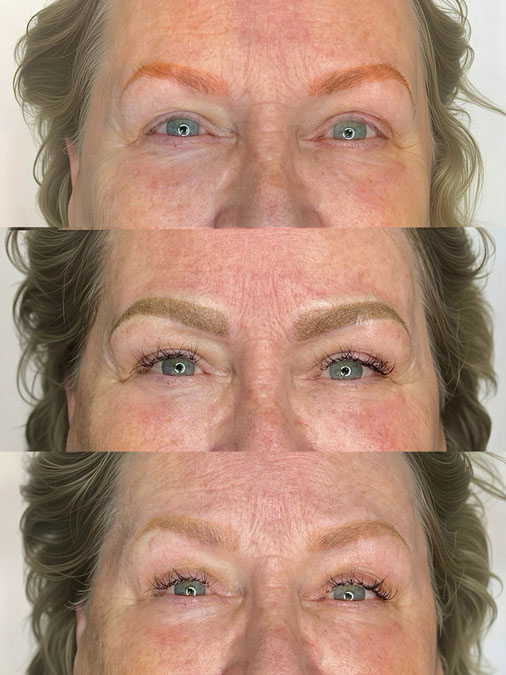
This client came to us after several maintenance appointments performed over many years. Although each appointment initially looked successful, the brows gradually became denser and no longer reflected the soft appearance she wanted. Instead of simply adding another layer of pigment, we developed a correction plan focused on preserving healthy tissue while improving the existing permanent makeup. The result created brows that looked lighter, healthier and more balanced without unnecessarily increasing pigment density.
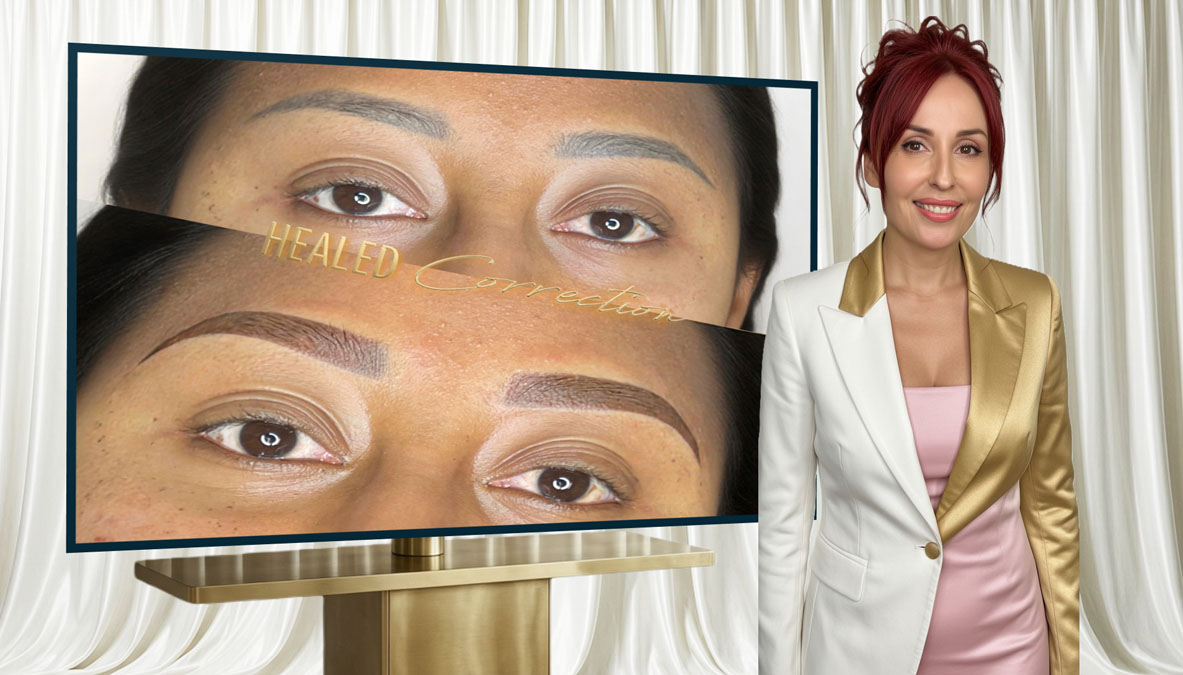
Scar Tissue From Microblading
Some clients worry they have scar tissue from microblading. That may be true in some cases, especially if the skin feels raised, shiny, thickened, or uneven. However, only an in-person evaluation can determine how much of the concern is scar tissue, how much is built-up pigment, and how much is simply long-term texture from repeated procedures.
Scarred or overworked brow skin can sometimes still be improved, but it should be approached differently from untouched skin. Pigment may not settle the same way. Hairstrokes may not heal as cleanly. Additional trauma may create more texture if the procedure is too aggressive.
This is why overworked microblading correction should never be treated like a standard refresh. The skin has already given us important information, and that information should guide every decision.
Damaged Skin From Microblading Does Not Always Mean No Options
Many clients arrive feeling embarrassed or worried that nothing can be done. They may have searched phrases like damaged skin from microblading, bumpy brows after microblading, fibrotic brows, or irritated skin from microblading before finally deciding to ask for help.
The first thing to understand is that overworked brows are not rare. As permanent makeup has become more popular, more clients are now reaching the long-term stage of their brow journey. Many have had several procedures over many years. Some have changed artists. Some have tried to refresh old work before the skin was ready. Some simply followed the maintenance advice they were given at the time.
The point is not blame.
The point is planning.
When we evaluate overworked microblading, we look at the current skin, the existing pigment, the amount of visible texture, the previous shape, the client’s goals, and whether more pigment will improve the brows or make them look more saturated. That evaluation helps determine whether the best path is correction, soft shading, color balancing, a redo strategy, or a more conservative approach.
Why Today’s Brows Matter More Than the Original Procedure
With overworked microblading, the original appointment is only part of the story. Today’s brows are what matter most.
- How does the skin feel now?
- How much pigment remains?
- Is the brow texture smooth, raised, shiny, or firm?
- Are the strokes still visible, or have they blended into a denser shape?
- Does the client want more hairstrokes, or would a powder brow age better?
These questions are more important than simply asking how many years ago the brows were done. Some older brows remain healthy and easy to maintain. Some newer brows already show signs of stress. Time matters, but skin condition matters more.

Overworked Microblading Correction in Dallas
Overworked microblading correction is not about rushing into another procedure. It is about slowing down, reading the skin, and choosing the most responsible next step. Sometimes that means subtle improvement. Sometimes it means changing the technique. Sometimes it means explaining why the brows need a gentler plan than the client expected.
The best correction is not always the most aggressive one. With overworked brows, the best correction is the one that respects the skin you have today and protects the brows you want to wear in the future.
How Does Microblading Become Overworked?
Overworked microblading rarely develops because of one appointment. More often, it is the result of many microblading refresh treatments performed over many years, where the artist chose microblading stacking instead of incorporating more subtle corrective techniques. These decisions are limited by the aritist you chose and what their specialty is. If they specialize in microblading, you will get more microblading. Eventually the delicate eyebrow skin reaches a point where it responds differently than it once did. Understanding when to change before that happens takes an experienced minset.
One of the biggest misconceptions is believing more microblading maintenance automatically creates better brows. While routine maintenance is an important part of permanent makeup, repeatedly placing new hairstrokes into the same areas without considering how the skin has evolved can gradually create thicker tissue, softer strokes and less natural definition.
This is why today’s maintenance philosophy is very different from the way permanent makeup was approached ten years ago. We now understand much more about how brows continue aging long after the original procedure.
Repeated Procedures Change the Canvas
Every microblading appointment leaves behind more than pigment. The skin remembers every procedure.
Fresh, untouched skin behaves differently than skin that has already experienced several microblading redo appointments. As permanent makeup accumulates over time, the tissue may become slightly firmer, the original hairstrokes may begin blending together and future pigment may heal differently than it did during the first appointment. This doesn’t mean future improvement is impossible. It simply means the treatment plan should evolve alongside the skin.
Modern overworked microblading correction is built around understanding today’s canvas instead of assuming the skin will continue behaving exactly as it did years earlier.
What Causes Brow Tissue to Become Thickened?
Several factors may contribute to thickened or overworked eyebrow tissue.
- Repeated microblading performed over many years.
- Aggressive pressure during previous procedures.
- Multiple artists working over the same brows.
- Repeated attempts to improve fading with additional hairstrokes.
Not every client experiences these changes, and the severity varies considerably from one person to another. Some brows remain beautifully soft after years of maintenance, while others naturally become more textured.
Can Overworked Skin Still Hold Pigment?
New skin accepts pigment differently than skin that has experienced years of previous treatments. In some clients, pigment continues healing beautifully. In others, the color may heal unevenly or appear softer than expected. Existing scar tissue, pigment density and skin texture all influence how the brows respond.
Rather than promising the same outcome for every client, experienced correction begins by evaluating how the skin is today.
When More Hairstrokes Aren’t the Best Answer
One of the biggest shifts in modern permanent makeup is recognizing that additional hairstrokes aren’t always the healthiest long-term solution.
Years ago, repeating the original microblading technique was common because artists had not yet followed thousands of brows through ten or fifteen years of maintenance.
Today we understand that repeatedly layering new strokes over older softened strokes can gradually reduce the airy appearance that makes microblading so beautiful in the first place. For some long-term clients, this becomes the point where the maintenance philosophy changes. Instead of asking how many more hairstrokes can be added, we begin asking what approach will create the healthiest, most natural-looking brows five years from now.

A Powder Brow Finish Ages More Beautifully
One of the most reassuring conversations clients have during an overworked microblading appointment is learning they do not have to continue repeating the same treatment forever.
As brows naturally evolve, many clients transition toward softer maintenance techniques that blend beautifully with existing pigment instead of continually adding additional hairstrokes.
Healthy long-term permanent makeup is about respecting the condition of the skin rather than forcing it to behave like untouched tissue. Every recommendation is made with today’s brows—and tomorrow’s brows—in mind.
If your previous microblading procedures have created multiple layers of pigment, blurry and patchy strokes and shape issues, visit Microblading Correction guide.
Living With Overworked Microblading
One of the hardest parts of overworked microblading isn’t always the appearance of the brows. It’s the uncertainty.
Many clients don’t know whether they should leave the brows alone, refresh them, remove them, or search for another artist. Some have already received conflicting opinions. Others have been told nothing more can be done, while someone else recommended simply adding more strokes. Understandably, this leaves many people feeling confused.
Every Brow Deserves an Individual Plan
No two overworked brows are identical. Some clients have very little texture but significant pigment buildup. Others have healthy color but noticeable thickening of the skin. Some have received maintenance from several different artists over many years. Because every brow has followed a different journey, every recommendation should also be different. Instead of following a standard protocol, we evaluate:
- The quality of the skin.
- The remaining pigment.
- The amount of visible texture.
- The previous brow design.
- The long-term health of the tissue.
- Your personal goals.
Only after understanding those factors do we recommend the next step. Read more on Eyebrow Tattoo correction, in our expert guide.

Can Overworked Microblading Be Improved?
In many cases, yes.
The degree of improvement depends on several factors, including the amount of existing pigment, the condition of the tissue, previous procedures and how the brows have aged over time.
Rather than making promises before evaluating the skin, we prefer helping clients understand exactly what is possible for their individual brows.
Many people are surprised to discover that their situation is far more manageable than they originally believed. Others appreciate having realistic expectations before beginning treatment.
Serving Dallas, Fort Worth & North Texas
Many Dallas clients have lived with their brows for years before deciding it is finally time to understand what can be improved. Our role is never to criticize previous work. Our role is to understand the brows you have today, protect the health of your skin and recommend the most appropriate path forward based on your long-term goals.
Your Brows Deserve a Thoughtful Next Step
Overworked microblading does not automatically mean your permanent makeup journey has reached the end. More often, it means the brows have reached another stage, not getting caught up in trends alone, but with long term thinking.
By understanding how previous procedures, natural healing and long-term maintenance have influenced today’s brows, it becomes possible to build a correction plan that protects both the appearance of the brows and the health of the skin.
Whether your concern is thickened tissue, blurred hairstrokes, repeated maintenance or years of accumulated pigment, every recommendation should begin with understanding the brows you have today—not simply repeating what was done before.

Ready to Understand What Your Brows Need Next?
If your microblading feels thicker, blurrier, more textured or simply different than it once did, the first step is understanding why those changes occurred. Every brow follows a unique journey, and today’s treatment should always be guided by today’s skin—not yesterday’s procedure.
Ready to discuss your brows? book your appointment online to receive an individualized evaluation and long-term correction plan.
Frequently Asked Questions About Overworked Microblading Correction
Often, yes. Many overworked brows can be improved, but the treatment depends on the condition of the skin, remaining pigment, previous procedures and your long-term goals. Every recommendation begins with evaluating the brows you have today rather than assuming every client needs the same solution.
Overworked microblading often appears thicker, softer, blurrier or more textured than healthy healed microblading. Some clients notice raised skin, shiny areas, fuzzy strokes, pigment buildup or brows that no longer heal as predictably after maintenance appointments.
Repeated microblading may contribute to scar tissue or thickened brow tissue in some clients. The amount varies considerably from person to person. During an appointment, the skin is evaluated to determine how much texture is present and what treatment options may be appropriate.
No. Continuing to place additional hairstrokes into already overworked skin may create more density instead of improving the overall appearance. Many long-term clients benefit from a different maintenance philosophy rather than simply repeating the original procedure.
Common signs include thickened skin, blurry hairstrokes, raised texture, shiny areas, repeated maintenance appointments and brows that no longer heal the way they once did. A professional evaluation is the best way to determine the current condition of the skin.
Yes, when implemented with a specific correction technique. Existing tissue quality plays an important role in future treatment planning.
In many cases, yes. Older permanent makeup often still provides valuable structure that can be incorporated into a thoughtful correction plan. The amount of improvement depends on today’s skin, today’s pigment and the long-term condition of the brows.
Repeated procedures, aggressive technique, multiple artists, strokes over strokes over strokes and individual healing characteristics may all contribute. Most overworked brows develop gradually rather than from one single appointment.
Yes. In many of these cases color is one of the most dominating factors.
No. Many clients are surprised to learn that removal is not automatically necessary. Some brows respond well to conservative correction, revised maintenance or alternative techniques that respect the existing permanent makeup.
Yes. As microblading ages, stacking strokes rarely solves these greater problems, a softer powder finish ages more gracefully than repeatedly placing additional hairstrokes over previous work. The best approach depends on the current condition of the brows.
The skin, pigment, previous maintenance history, brow design and long-term goals are evaluated together. The appointment focuses on understanding what your brows need today and planning the healthiest path forward.
Eyebrow Correction Blog