

There is a very specific tone that comes with this question. It is rarely casual. It is rarely neutral. It is usually accompanied by hesitation, concern, and a quiet hope that the answer will not involve starting over. “Can you fix this… without removing everything?” What is being asked is not simply about brows. It is about time, trust, and the fear of making a situation worse.
The answer, in many cases, is yes. But it is not a universal yes, and it is not a simple one. Many clients assume complete removal is their only option, only to discover that an experienced eyebrow tattoo correction specialist can often improve the existing work while preserving what still looks good. Correction is not about undoing everything that has been done. It is about understanding what already exists and working within those conditions to improve the outcome over time. If this process is unfamiliar, it is worth understanding what eyebrow correction actually involves before anything else. It changes expectations immediately.
Understanding What “Bad” Actually Means
The word “bad” is subjective. In practice, it can describe a wide range of situations, many of which are far more workable than they initially appear. There is a clear distinction between brows that are simply aged and brows that are structurally problematic. Aged brows are typically:
- softened over time
- lighter in appearance
- less defined than their original result
These are not failures. They are the natural progression of pigment within the skin. What clients often describe as “bad” is usually a reaction to imbalance. The brows may feel uneven, slightly off in tone, or no longer aligned with how they want to look. That emotional response is valid, but it does not always reflect the technical reality. From a correction standpoint, the evaluation is different. The focus is on structure, pigment density, placement, and the condition of the skin. The question is not whether the brows are “bad,” but whether they are workable. The real question isn’t whether your brows are “bad,” but whether they need a simple microblading redo or a genuine correction based on their current condition.
What Makes Brows Fixable
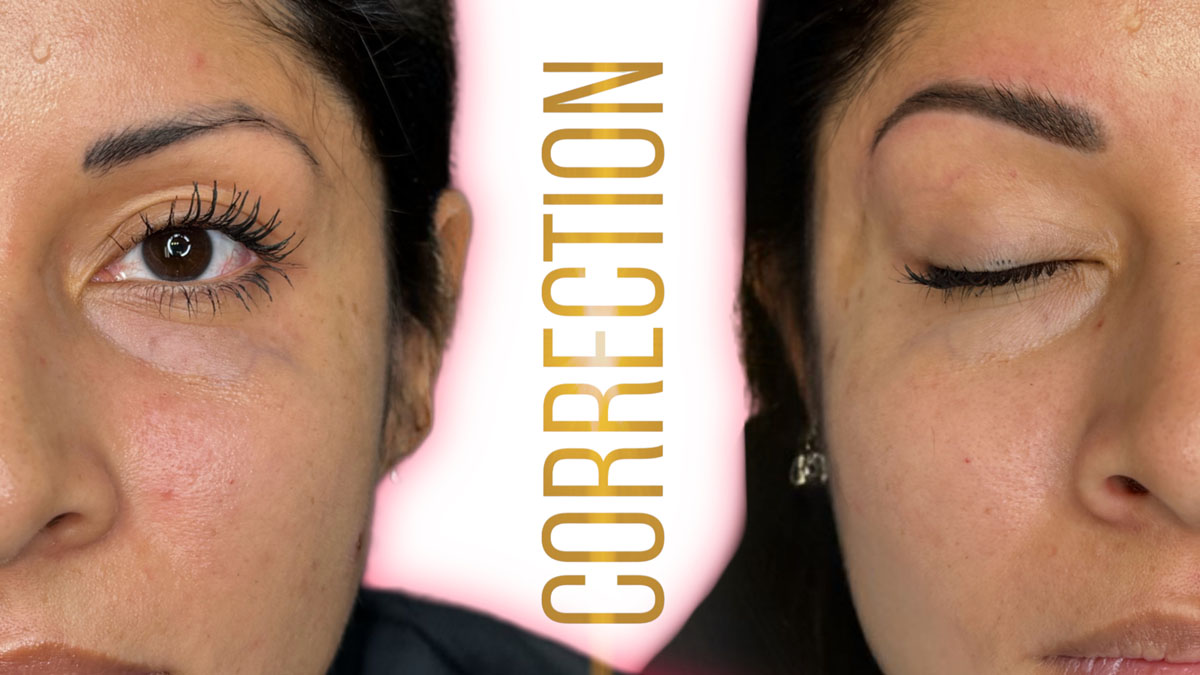
The most successful correction cases share certain characteristics. The pigment is not overly saturated, the shape has room for adjustment, and the overall structure allows for refinement rather than restriction. Brows that are lighter, thinner, or slightly uneven are often highly workable. Even if they appear asymmetrical or imbalanced, they can typically be adjusted through careful layering and controlled correction. In many cases, what feels like a significant issue is actually a matter of proportion. With the right approach, these can be improved without removing the existing work. This is where professional assessment becomes critical. The difference between what appears problematic and what is structurally correctable is not always obvious without experience. Not every unwanted eyebrow tattoo requires the same solution. Understanding eyebrow tattoo correction can help clarify which approach is most appropriate.
Where Limitations Begin
There are, however, boundaries to what can be achieved through correction alone. Brows that are heavily saturated, significantly oversized, or positioned too closely together present greater limitations. In these cases, the issue is not simply color or softness. It is the lack of available space to adjust. Correction relies on the ability to build, balance, and refine. When the existing structure occupies too much visual space, there is less room to create change without compounding the problem. This does not mean improvement is impossible. It means expectations must be managed carefully. The goal shifts from transformation to controlled enhancement.
Why Microblading Is Often More Forgiving
Microblading, by design, is typically placed more superficially than traditional tattooing. This allows for a softer fade and greater flexibility over time. Because of this, many microblading cases remain workable even when the initial result is not ideal. The pigment tends to disperse more gently, which creates opportunities for correction that may not exist with deeper, denser applications. However, this advantage can be lost when microblading is repeated without adjustment. Layering strokes over existing pigment changes how the skin behaves, often leading to increased density and reduced clarity. This progression is closely tied to how pigment evolves, which is explored further in how microblading changes over time.
How Brows Become More Complicated
Most challenging cases are not the result of a single appointment. They develop gradually through repetition. When the same technique is applied repeatedly without reassessment, the skin accumulates pigment in layers. What once appeared as individual strokes begins to merge into a more solid, less defined appearance. This is not always immediately noticeable. It often becomes apparent months or years later, when the clarity of the original design has softened and the underlying density is revealed. At that point, continuing with the same approach will not restore the original effect. It will only add to the existing buildup. This is why understanding how layering affects long-term results is essential before deciding on the next step.
Correction Requires a Different Approach
Correction is not an extension of standard brow work. It is a separate discipline with a different set of priorities. Rather than adding more pigment, the focus shifts to adjusting what is already present. This requires restraint, precision, and the ability to evaluate each case individually. Every decision is informed by existing pigment, not by a predefined pattern. This is what makes correction both more complex and more controlled. The process is not reactive. It is structured and intentional.
The Role of Color in Correction
One of the most important aspects of correction is understanding how color behaves in the skin. Pigment does not sit on the surface. It integrates into the tissue and interacts with whatever is already there. This means new pigment does not replace old pigment. It blends with it. For this reason, simply applying a new color over an existing one rarely produces a clean result. Instead, it creates a mixture that can appear dull or unbalanced.
Effective correction begins with restoring color balance. Only after that balance is achieved can the brow be refined and rebuilt.
Why Starting Over Is Not Always Necessary
The idea of removal is often associated with starting from a clean slate. While this may be appropriate in certain cases, it is not the default solution. In many situations, the existing pigment can be worked with rather than eliminated. This allows for a more controlled and gradual improvement without the need for complete removal.
The decision depends on the condition of the brows, not on a fixed rule. A careful assessment determines whether correction alone can achieve the desired result or whether additional steps are required. There are also situations where rebuilding portions of the design produces a better outcome than simply adjusting color, making it worthwhile to understand the difference between a redo and a correction.
The Correction Timeline
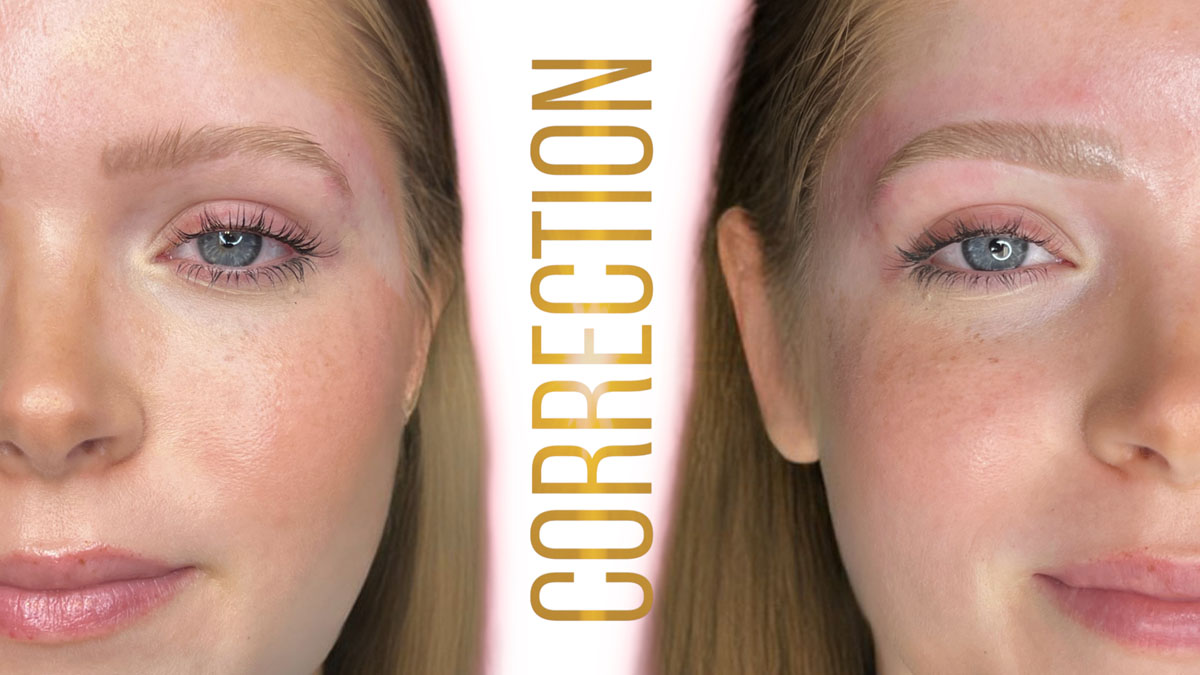
Correction is not a single appointment. It is a process that unfolds over multiple sessions. Most cases require two treatments, with more complex situations occasionally requiring a third. Each session builds on the last, allowing for incremental improvement and greater precision.
The first session typically focuses on adjustment. Color is balanced, and the overall structure is softened and realigned. The second session refines the result. Density is controlled, shape is enhanced, and the brow is brought into a more stable and cohesive form. This staged approach ensures that each step is informed by how the skin has healed, rather than by assumption.
Assessment Over Assumption
One of the defining characteristics of effective correction is the ability to assess rather than assume. Every brow presents a different combination of variables. Pigment depth, skin condition, previous treatments, and healing patterns all influence the outcome. The role of the artist is to interpret these variables and make decisions accordingly. This is not a standardized process. It is an adaptive one.
When Removal Becomes Necessary
Although many cases can be corrected without removal, there are situations where an alternative approach is required. Brows that are excessively saturated, significantly outside the natural brow area, or too dense to adjust effectively may benefit from partial or full pigment lightening before correction begins.
This is not a failure of correction. It is a recognition of the limitations of working within certain conditions. The priority is always the final outcome, not the method used to achieve it.
Reframing the Situation
One of the most important shifts for clients is moving away from the idea that they are “stuck.” In most cases, there is a path forward. It may not be immediate, and it may not be identical to starting from scratch, but improvement is often achievable. The key is understanding that correction works with what exists, not against it.
Final Answer
Bad microblading can often be corrected without starting over. However, the success of that correction depends on the condition of the existing pigment, the available structure, and the approach taken. The goal is not instant perfection. It is controlled improvement, balance, and long-term stability. Every treatment recommendation begins inside our Eyebrow Tattoo Redos, Refreshes & Revisions hub, where we explain how these decisions are made.
Correction is not about erasing the past. It is about refining it. When approached with the right level of understanding and precision, what initially feels like a mistake can be guided into a more balanced and natural result. The process requires patience, clarity, and experience—but in many cases, it leads to an outcome that feels intentional rather than reactive.