

Let’s talk about something that happens very slowly. So slowly, in fact, that most people do not even notice it at first. Then one day they look in the mirror and think: “Why do my brows look heavier?” Or: “Why do they look more solid now?” And this is the important part: Nothing suddenly went wrong. There usually was not one terrible appointment. There was not one dramatic mistake. There was not one day where the brow woke up and chose chaos. What happened is much slower than that. It built over time. If you already understand what a real eyebrow correction actually is, this makes much more sense, because one of the biggest reasons people end up needing correction is not sudden damage. It is gradual accumulation.
First: What Microblading Is Actually Trying to Do
Before we talk about why brows become more solid, we need to talk about what microblading is really doing in the first place. People hear phrases like:
- hair strokes
- natural brows
- 3D brows
And they think microblading is just a few little lines in the skin. But it is more specific than that. Microblading is called 3D brows for a reason. What it is trying to create is the illusion of depth. Your skin, even though it curves, is essentially flat. Brow hair is not flat. Real hair sits above the skin. It casts tiny shadows. It creates little bits of separation. That is what gives natural brows dimension. Microblading cannot create actual hair or actual depth. So instead, it creates the illusion of depth. And the way it does that is clever. It places:
- a stroke
- then a gap
- then another stroke
- then another gap
Those gaps are what make the brow feel airy, separated, and hair-like. That is the magic of microblading. But that illusion only works when the space is clean.
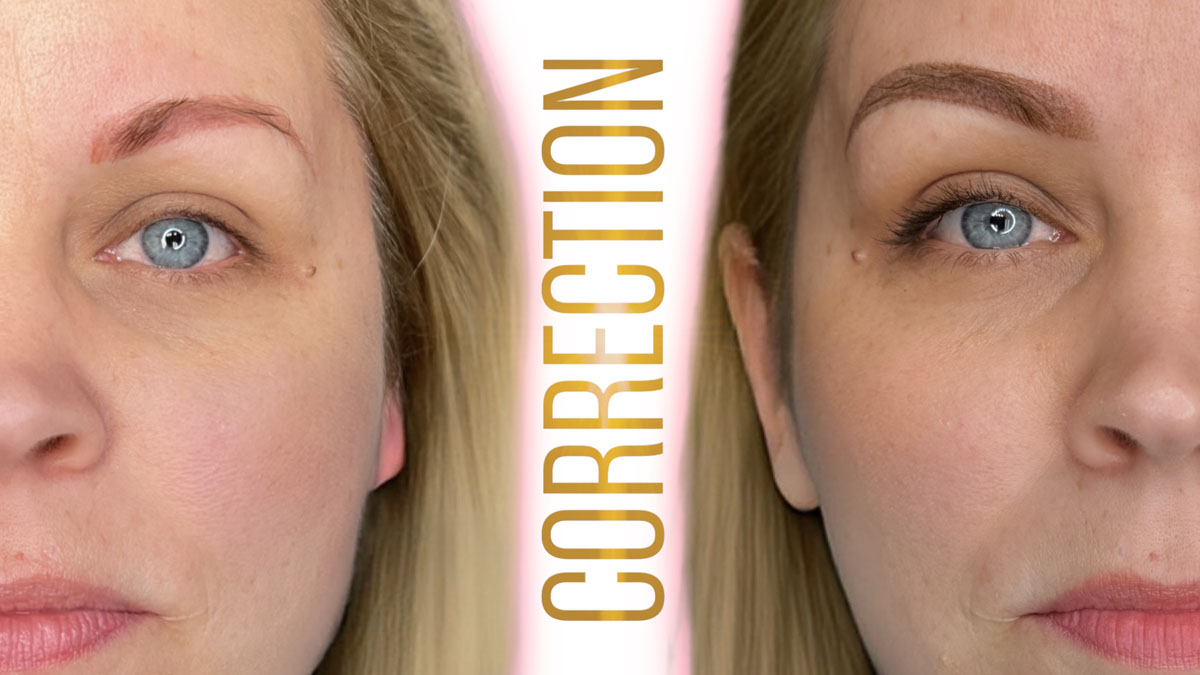
The Illusion Depends on Clean Separation
For microblading to look crisp, you need:
- clear separation
- visible gaps
- defined strokes
That is what makes the result feel delicate and realistic. Now let’s fast forward. You have had your brows done:
- once
- twice
- three times
Each time, pigment is being added. And this is the part many people do not realize: the skin does not reset. There is no point where your skin says, “Wonderful, let’s erase everything and start fresh.” No. The old pigment stays. So now you have:
- old strokes
- softened strokes
- pigment that has spread
And then you go back and add new strokes on top of that. On the day, those new strokes may still look visible. They may look sharp enough to make you think: “Perfect, we’re back.” But underneath, there is already existing pigment sitting in the skin. And that is where the illusion begins to break down. Dark saturation frequently requires methods developed specifically for dark eyebrow tattoo correction before additional pigment is considered.
Why the Gaps Stop Looking Like Gaps
Remember the original microblading formula: stroke → gap → stroke → gap That is what creates the airy effect. Now imagine those gaps slowly filling in. Not dramatically. Just enough. So instead of: stroke → gap → stroke You start getting: stroke → soft blur → stroke Then over time: stroke → color → stroke and eventually: just color. That is how the brow begins to look more solid. Not because someone did one awful thing. But because those clean spaces are no longer truly clean. They are holding:
- softened pigment
- blurred edges
- previous healed work
That is also one of the reasons microblading does not stay crisp forever. The “river” of pigment softens and spreads microscopically, and the visual separation that created the illusion becomes weaker over time.
Brows Do Not Suddenly Become Solid
This is the truth most people need to hear: brows do not suddenly become solid. they accumulate.
They build:
- session by session
- layer by layer
- decision by decision and over time, that accumulation becomes the final result you are looking at in the mirror. This is why someone can say, “I don’t know what happened,” when in reality what happened was simply repeated work on an already changing canvas. That is not the same thing as a one-time mistake. It is accumulated work. Stroke work can gradually become heavier as pigment ages beneath the skin, creating situations that extend well beyond ordinary touch-ups and into eyebrow tattoo repair and redo.
Why People Start Calling It “Patchy”
After four, five, or six treatments, many brows start to look more solid — but not in a beautiful, soft powder brow way. Instead, people start noticing:
- some areas are darker
- some areas are lighter
- some areas have merged more than others
And that is when clients often say: “It looks patchy.” And they are right. Because what they are seeing is:
- old work
- new work
- and everything in between
All sitting together. None of it has been reset, cleared, or strategically rebalanced. It has just been added to. This is exactly where many people misunderstand what “fixing” brows really means. Repeating the same process is not the same as correcting the existing result.
Why “Can’t We Just Make It Look Like the First Time?” Doesn’t Work
This is the part where clients usually look hopefully and say something like: “Can we just make it look like the first time again?” And honestly, we would love that for both of us. The canvas is no longer the same, so different things must be implemented to mimic the results, like put back missing colors, soften harsh solids and make them into soft blankets. The first appointment happens on fresh skin. Clear canvas. No history. No old pigment underneath. Everything behaves exactly the way you expect. But as brows move forward all existing surface and pigment must now be considered. Every appointment after the first appointment will be different. Because now you are working on something that already exists. And if you keep treating every appointment like it is the first appointment, you create long-term problems. If the original tattoo is many years old, treatment often includes techniques used during older eyebrow tattoo correction to safely modernize existing work.
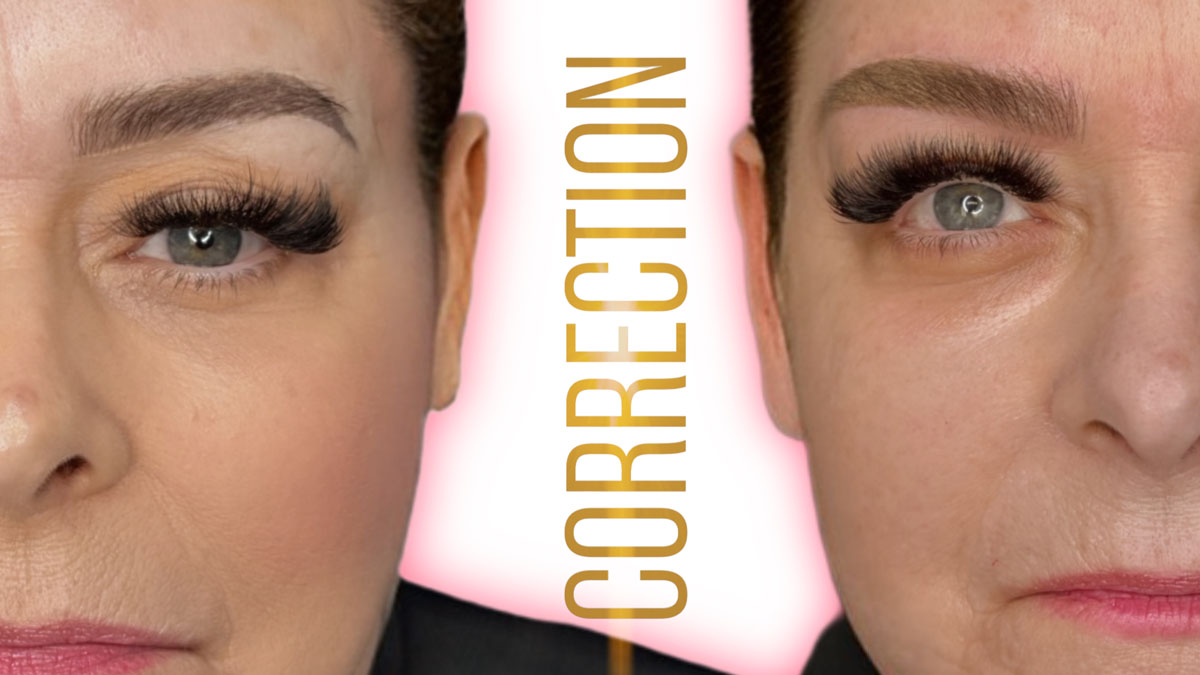
What Should Be Happening Instead
This is where the thinking has to change. Most people go back and say: “Let’s just freshen them up.” And what often happens is:
- the same technique
- in the same way
- across the same areas
But if pigment already exists there, then what is really happening is not refreshing. It is layering. And layering without adjusting reduces control. So, when someone comes back the thinking is not: “Where do I add more?” Its: “Where should I not touch?” That is the first question. Because not every part of the brow needs more pigment. Some areas already have:
- enough
- too much
- or the wrong color
So instead of covering everything again, the smarter approach is to work around what is there and adjust:
- color
- density
- structure
That is a completely different mindset. One approach says: “Do it again.” The other says: “Work with what’s already there.” That difference is everything.
Why Timing Changes the Outcome
Timing plays a huge role in why brows become more solid too. If you go back too soon, before pigment has:
- softened
- settled
- and fully revealed itself
You are making decisions too early. And early decisions often lead to:
- overworking
- over-layering
- and less control
But when you allow time, you can actually see what needs adjusting. Not guess. That is where better outcomes come from. This also connects with why eyebrow correction takes multiple sessions. Spacing and observation are not delays. They are part of accuracy.
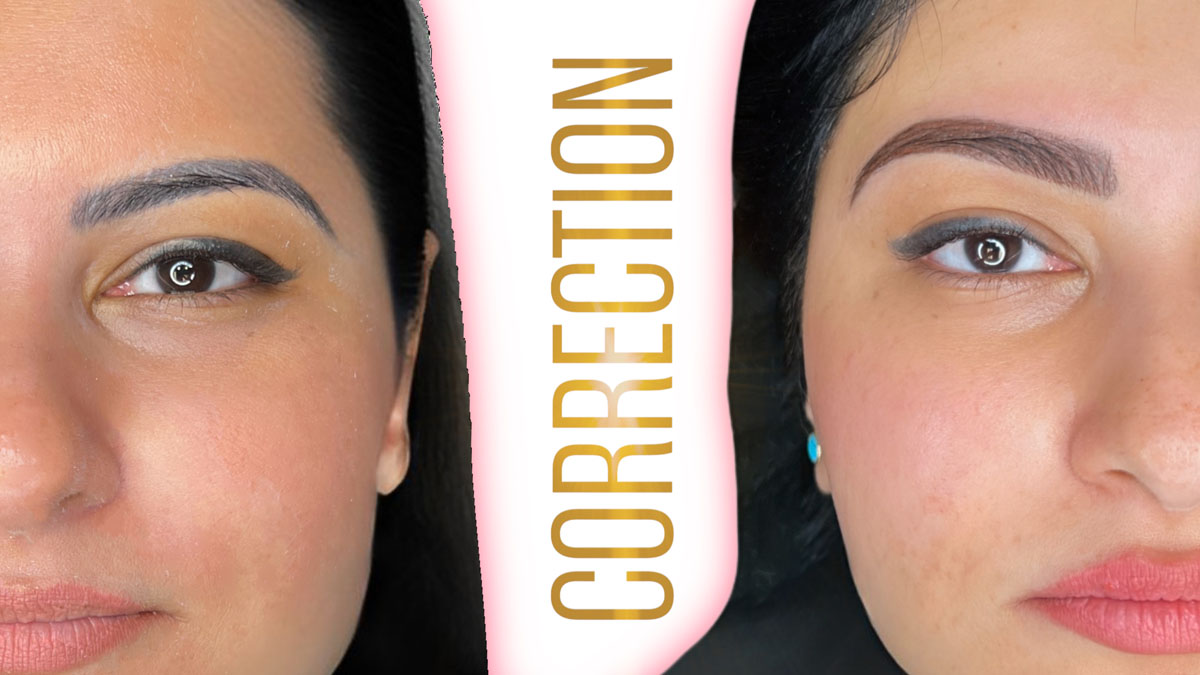
Solid Does Not Always Mean “Bad”
This is an important distinction. solid does not automatically mean bad. It simply means different. The problem comes when someone is still expecting:
- airy strokes
- clean separation
- a fresh, hair-like illusion
But what they now have is:
- accumulated pigment
- more density
- a more solid shape
That mismatch between expectation and reality is what creates dissatisfaction. Because the brow is no longer behaving like what the client originally signed up for. So, when brows are like this the thought is not: “This is bad.” It is: “This has been layered without adjustment.” That is the real issue.
Brows Accumulate — They Do Not Reset
If you take one thing from this, let it be this: brows don’t reset. they accumulate. Once you really understand that you stop looking at your brows as something that randomly went wrong. Instead, you start seeing them as something that aged. And that understanding is what allows you to:
- make better choices
- adjust the technique
- and stay in control of the result long term
That is where things start to make sense. Every repair begins by determining whether the current eyebrow tattoo can realistically be corrected rather than automatically recommending removal.
Final Answer
So why do your brows look more solid over time? Because they have been:
- layered
- and built up over repeated sessions
The clean gaps that once created the illusion of hair slowly fill in with softened pigment and previous work. So instead of: stroke → gap → stroke You slowly move toward: more color, more density, and more solidness. Not because everything went wrong. But because previous treatments fade, yes, but they always leave something behind.
Final Thought
Once pigment exists, the job is no longer to repeat the first appointment. The job is to adapt. To work with what is already there. To manage it properly. And when that adjustment happens, that is when brows start to feel softer, more balanced, and more under control again. Not by erasing everything. Not by pretending the history is not there. But by understanding it. If you want to see how real brows evolve and how correction brings them back into balance, you can view the gallery here. And if you’re ready to discuss what your existing pigment is doing and how to approach it properly, you can book an appointment here.