
One of the most common questions in this industry is also one of the most misunderstood: Can eyebrow tattoos be fixed? The short answer is yes—many can. But the more accurate answer is more nuanced. Correction is not a simple yes-or-no outcome. It is a process shaped by what already exists in the skin, how that pigment has aged, and what is realistically achievable over time. Understanding this distinction is the difference between frustration and successful results.
Why This Question Isn’t Simple
Clients often arrive expecting a quick transformation. They want a single appointment that erases the past and replaces it with something new. That expectation comes from how brow services are often presented—clean, immediate, and visually dramatic. Correction does not work that way. When previous pigment is present, the artist is no longer working on untouched skin. Instead, they are working with:
- existing pigment that remains in the tissue
- previous shape decisions
- varying depth of implantation
- uneven fading patterns
This means every correction begins with analysis, not application. If you’re unfamiliar with how this process works, it’s important to first understand what eyebrow correction actually involves and why it differs from standard brow treatments.
Correction Is Not Starting Over
A common misconception is that correction means “starting fresh.” In reality, nothing is removed or erased in a single step. Pigment remains in the skin and continues to influence every future decision. New pigment does not replace old pigment—it interacts with it.
This interaction is what makes correction both powerful and complex. Each adjustment must be planned with an understanding of how colors blend visually and how the skin will heal over time. Every successful treatment begins with understanding how pigment has changed beneath the skin, which is why our eyebrow color correction approach starts with a detailed consultation rather than an immediate procedure.
The Role of Time in Brow Correction
All semi-permanent makeup evolves. Even the most well-executed brows will eventually fade and shift in tone. Over time, this turns every set of brows into a potential correction case. This is not a flaw in the process—it is the nature of pigment in living tissue. Long-term maintenance is part of achieving stable, natural-looking results. Correction simply becomes the structured approach to managing that evolution.
What Makes a Brow “Correctable”
Not all brows present the same level of flexibility. Several key factors determine what can be improved and how quickly:
- Color: Whether the pigment has shifted warm, cool, or neutral
- Depth: How deeply the pigment was placed in the skin
- Saturation: The intensity and density of existing work
- Shape: The size, position, and structure of the brow
- Skin condition: Including texture, oil levels, and previous trauma
Lighter, softer, and more faded brows typically offer more flexibility. Heavily saturated or densely layered brows require a more gradual and strategic approach.
Why Color Matters More Than You Think
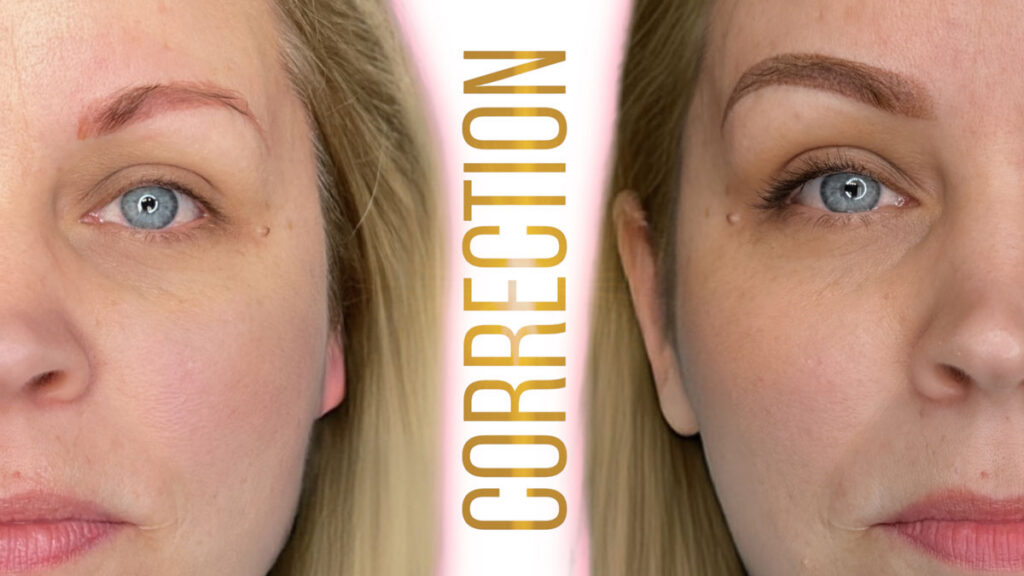
One of the most important principles in correction is that color cannot simply be covered. Placing a brown pigment over a grey or blue brow does not create a true brown result. Instead, the colors blend, often resulting in a muted or cooler version of brown. This is why correction begins with neutralization—adjusting unwanted tones before rebuilding the target color. If you’ve experienced unexpected tones such as grey, blue, or orange, this behavior is simply aged pigment.
Correction Is a Structured Process
Rather than a single appointment, correction typically unfolds in stages:
Step 1: Assessment
Detailed evaluation of pigment, shape, and skin condition.
Step 2: Neutralization
Balancing unwanted tones within the existing pigment.
Step 3: Healing
Allowing the skin to settle and reveal the true result.
Step 4: Refinement
Adjusting color, structure, and balance in subsequent sessions.
Each stage builds on the previous one. The goal is not immediate perfection, but gradual improvement that leads to a stable, natural outcome.
Why Multiple Sessions Are Often Necessary
Correction requires layering—but controlled layering. Each session introduces intentional adjustments. The skin must heal fully between sessions (typically 4–8 weeks) to accurately assess the result and plan the next step. Attempting to do too much in a single session increases the risk of over-saturation, blurred structure, and unpredictable healing. This is why patience is not optional in correction—it is part of the technique.
The Impact of Previous Work
The more times brows have been treated, the more complex the correction becomes. Multiple layers of pigment can create:
- uneven color distribution
- areas of higher and lower saturation
- blended or blurred structure
- conflicting undertones
In these cases, the artist is not simply creating a new brow—they are resolving a layered history of pigment. This is one of the reasons why many artists avoid correction work. It requires a different level of analysis, planning, and experience. Different pigment histories require different techniques, making microblading color correction highly individualized for every client.
Understanding Limitations
Correction can achieve significant improvement, but it is important to understand its boundaries. Heavily saturated brows, particularly those that are very dark, thick, or positioned close to the center of the face, offer less flexibility. Adjustments in these cases must be approached carefully and gradually. Realistic expectations are essential. The goal is not to erase the past, but to improve and stabilize what exists. Dark grey previous pigment is common in eyebrow correction and can be workable in a case-by-case scenario.
The Problem With Repeated Layering
One of the most common issues seen in correction cases is repeated application without long-term planning. Over time, this creates:
- increased density
- loss of definition
- heavier overall appearance
- less predictable color behavior
This is why continuous layering without strategy leads to more complex correction needs later. Maintenance must be controlled, not excessive.
Social Media vs. Real Outcomes
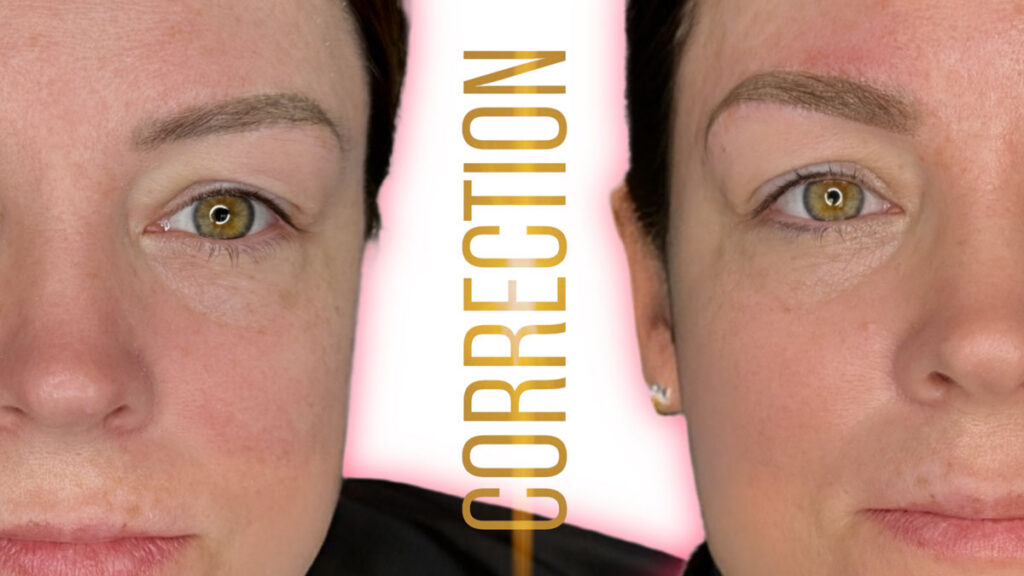
Many expectations around brow correction are shaped by immediate “before and after” images. These images often show fresh results, taken under ideal lighting conditions. However, brows do not live in that moment. They live in healed skin—weeks, months, and years after the procedure. True correction is measured by how the brows settle, soften, and stabilize over time—not how they look immediately after treatment. Some clients discover that what appeared to be a simple touch-up is actually a question of whether a refresh or correction is the better long-term choice.
What Correction Really Aims to Achieve
Correction is not about creating a perfect result in one session. It is about building a result that remains balanced over time. This means:
- correcting tone before adding new color
- adjusting structure gradually
- preserving skin integrity
- planning for long-term maintenance
The outcome is not just a better appearance—it is a more stable and predictable brow over time.
A More Accurate Answer
So, can eyebrow tattoos be fixed? In many cases, yes. But not instantly, and not without a structured approach.
Correction is a process that requires:
- accurate assessment
- strategic planning
- controlled execution
- time for healing and refinement
When approached this way, significant improvement is often possible. When previous work has created additional complications, we also evaluate whether the existing eyebrow tattoo can be corrected before recommending treatment.
Final Perspective
Choosing to correct your brows is not just about changing how they look today. It is about influencing how they will behave over time. The decisions made during correction determine:
- how pigment fades
- how color evolves
- how structure holds
- how future maintenance is managed
This is why the process matters as much as the result.
Next Step
If you are considering correction, the most important step is starting with a clear and accurate assessment. When you’re ready to approach your brows with a structured plan and realistic expectations, you can schedule your appointment and begin the process properly.