

One of the biggest misconceptions about brows is also one of the most understandable. People get microblading, love the crispness, love the detail, love the realism, and naturally assume: “This is how it stays.” And that is where the confusion begins. Because microblading can look incredibly precise in the beginning, but it does not stay crisp forever. That does not mean something has gone wrong. It does not mean the artist necessarily did a poor job. And it does not mean your skin is doing something unusual. It means microblading has a lifecycle. If you already understand what a correction actually is, this becomes much easier to understand. A lot of correction work is simply the natural next phase of pigment aging, not some dramatic failure.
The First Question
Before the focus is on technique this about long term desires. There are generally two kinds of brow clients. You have:
- the person who just wants to try it
- and the person who actually needs brows
Those two people should not always be guided the same way. If you are someone who wants to try microblading once or twice because you have a fair amount of natural brow hair and you just want some extra detail, microblading can work beautifully for that. You get the crisp strokes, the definition, the little “wow” moment, and you enjoy it for what it is. But if you are someone who has very little brow hair, relies heavily on your brow work, and knows this is going to be a long-term relationship with pigment, then the conversation changes. Because microblading has a shelf life. Understanding the factors that affect aged color and pigment retention is an important part of eyebrow tattoo correction and long-term results.
Why the Fresh Result Creates the Wrong Expectation
When people first get microblading, it looks:
- precise
- detailed
- realistic
That is why people love it. But the problem is that most people mentally lock onto the day-one result and assume that is the result. It isn’t. It is the beginning. The healed result is softer. The aged result is softer still. And the long-term result is no longer really about strokes at all. This is one of the same reasons people get confused when their brows later turn cooler or warmer. They think something unexpected has happened, when in reality they are just seeing pigment age. This why microblading turns grey, red, or orange is a helpful place to visit.
The “Tiny River” Explanation
When we microblade, we dip into pigment and create a cut in the skin. Inside that cut, pigment is left behind. That line of pigment is like a tiny river. Very fine. Very narrow. Very crisp at the beginning. On day one, that river looks sharp. It has edges. It looks like a line. But the pigment does not just sit there permanently in that perfect shape forever. Over the next:
- 7 days
- 14 days
- 4 weeks
That pigment starts to settle and absorb into the skin. And when it absorbs, it spreads microscopically. Not dramatically. But enough. And that microscopic spread is what changes everything. The crisp line starts to:
- soften
- blur slightly
- lose its sharp edge
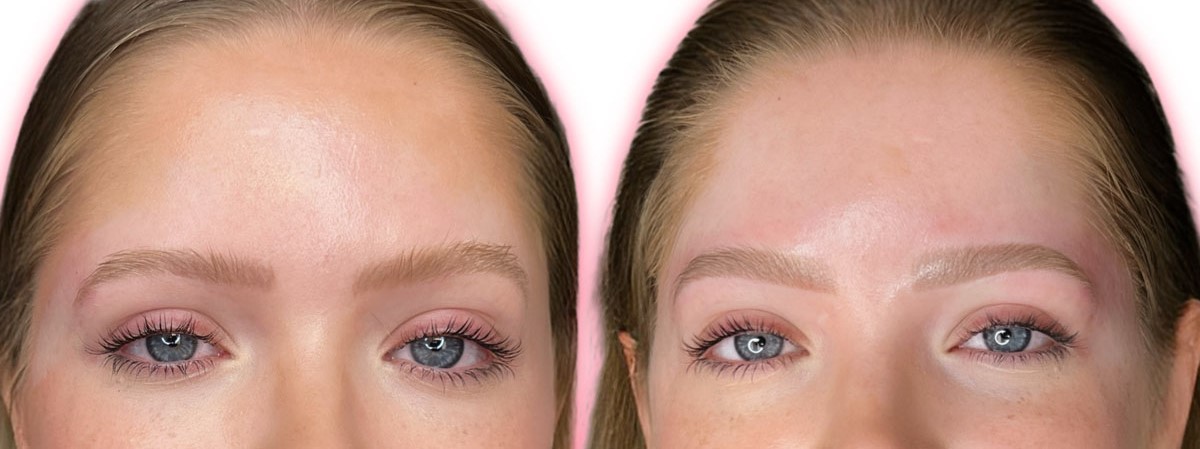
This happens on everyone. Some people hold crispness longer. Some people lose it faster. But the direction is always the same: softer, less defined, more blended. On many people this takes 1-2 years.
Strokes Don’t Stay Strokes
This is the core truth: strokes don’t stay strokes. Most strokes hold as recognizable strokes for a period of time, but not forever. Over time, what you are really left with is: color. Not individual crisp lines anymore. Just pigment sitting in the skin. That is why people often say: “It doesn’t look as crisp anymore.” And they are right. Because microblading is not actual hair. It is an illusion of hair. It is pigment placed in lines that mimic hair. And like any illusion, it has a limit.
What Happens When the Strokes Are Close Together
Now take this one step further. If the original strokes are placed very close together, and then that tiny amount of spreading happens over time, those strokes can start to visually join together. That is when the brow starts to look:
- more solid
- less separated
- less hair-like
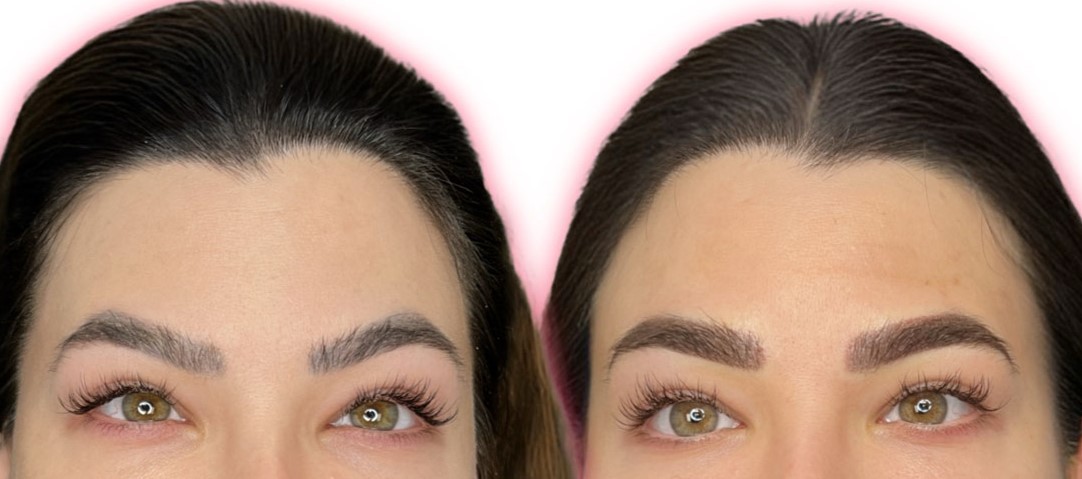
Not necessarily because anyone did something “wrong.” But because the skin is doing what skin does. And this is exactly why repeated microblading eventually changes the character of the brow. What began as lines gradually becomes more like a soft block of color. This also connects closely to why you cannot keep repeating microblading forever and expect the same result. The canvas changes every time.
Why Two Clients Can Age Very Differently
Now, not everyone experiences this at the same speed. Some people have:
- more natural brow hair
- drier skin
- a brow that breaks up the pigment visually
Those clients may feel like their brows stay looking nice for longer because their own hair helps carry the structure and soften the visual transition as the strokes age. But if someone has very little brow hair, or no brow hair, then microblading is doing all of the work. When the strokes soften, there is nothing underneath to visually break things up. So, what is left becomes much more obvious. That is when people start to feel like: “It looks heavier than I expected.” Not because something failed. But because the illusion changed. When structural reduction is involved, it’s important to determine the correct course of action for faded and aged microblading.
Why This Matters When Choosing a Technique
Once you understand that strokes do not stay strokes, the next question becomes: What does that mean for me? That is where the conversation needs to shift from: “Do you want strokes?” To: “What do you want this to look like long-term?” That is a much smarter question. Because now you are not choosing a technique based only on what looks amazing today. You are choosing based on what ages well. This is where microblading is not always the best first choice for every client, especially people who want long-term full brow structure and have very little natural hair.
Why Powder Brows Behave Differently
This is where powder brows and soft shading start to make more sense. With powder brow work, you are not creating individual lines. You are creating soft, layered color. Think of it more like:
- gently shading
- building depth slowly
- creating a soft background
So instead of relying on crisp edges, you are working with softness from the beginning. That means when the brow heals and ages, it is not going through that same dramatic sharp-to-soft transition, because it was never sharp to begin with. It was already:
- soft
- diffused
- controlled
And that makes it far more predictable over time. This is not about saying powder brows are automatically “better” for everyone. It is about saying they behave differently — and for many long-term clients, they behave better long-term. That is part of why older tattooed or repeatedly worked brows are often better managed with a softer overlay approach, something explained more in can you go over old eyebrow tattoo again.
Why Some Clients Need a Different Long-Term Plan
Thinking about long term pigment aging can help the decision made in the current space. Think about:
- what this will look like in 3 years
- what it will look like in 5 years
- how easy or hard it will be to maintain later That is why not everyone should automatically start with microblading just because microblading became the popular choice.
Popularity does not always equal longevity. If someone is going to keep returning because they truly need brow structure, then think beyond the first beautiful appointment. Think about what still makes sense after multiple treatments, after pigment ages, and after the skin has changed.
The Long-Term Reality: You Are Maintaining Soft Color
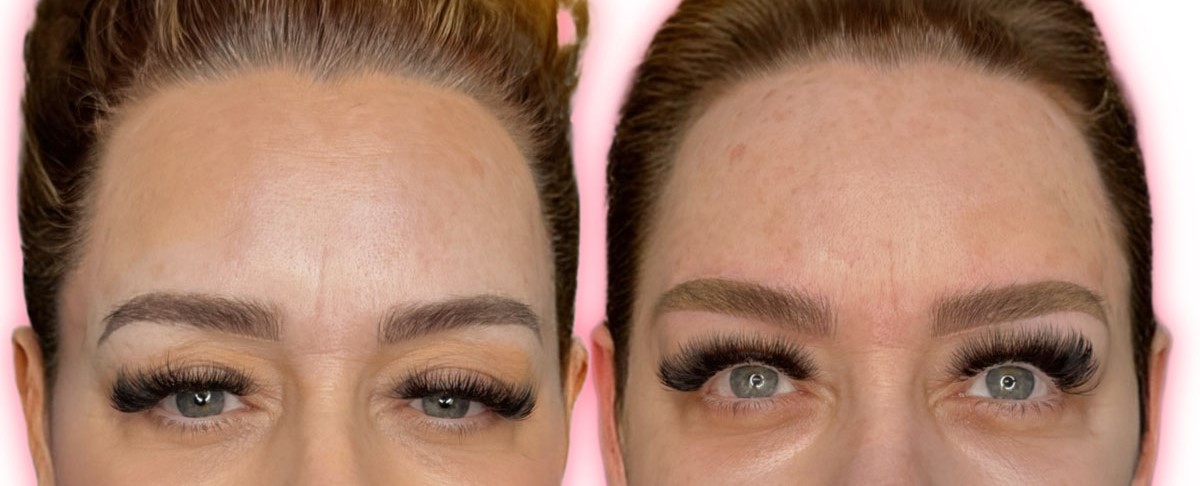
This is the part people need to hear very clearly. Long term, what you are maintaining is not individual strokes. You are maintaining soft color. That is not a negative thing. It is just clarity. Once you understand that, you stop being surprised by the change. You stop chasing the exact first result forever. And you start making better decisions. This is also one of the reasons why clients get confused about whether they need a refresh or a correction. Often what they are seeing is not “bad” work at all, just aging pigment. That distinction is explained more in the difference between bad brows and old pigment.
Why This Shouldn’t Be Taken as a Negative
When people hear “microblading doesn’t stay crisp forever,” they sometimes hear it as criticism of microblading. That is not the point. The point is understanding. Microblading is not bad. It just has a lifecycle. And once you understand that lifecycle, you can make:
- better choices
- better long-term plans
- better maintenance decisions
The goal is not just to love your brows on day one. The goal is to still understand and like what they become over time. So, what does this actually mean for you?
If you have strong natural brow hair and just want an enhancement, microblading may still be a beautiful option for the right phase of your life. If you need full-time brow structure and know you will be relying on this long term, then your plan needs to be built around longevity, not just initial effect. That is where questions like these matter:
- How much natural hair do I have?
- Do I need this to do all the work?
- What do I want this to look like in 5 years?
- Am I choosing a look, or a long-term strategy?
Those are the questions that lead to better outcomes. Finds more answers to these types of questions on Microblading Correction.
Final Answer
So why doesn’t microblading stay crisp forever? Because:
- pigment softens in the skin
- strokes lose their sharpness over time
- the illusion of hair becomes blended color
That is simply how pigment behaves. Not failure. Not mystery. Not drama. Just reality. If you take one thing from this, let it be this: strokes don’t stay strokes. And long term, what you are really maintaining is the brow — not the original line work. Once you understand that, everything becomes:
- clearer
- more intentional
- more predictable
You stop chasing a day-one illusion, and you start building a result that still makes sense years later. That is where real control begins. If you want to see how brows age and how correction or maintenance can bring them back into balance, you can view the gallery here. And if you want to discuss the right long-term direction for your own brows, you can book an appointment here.