
There is a moment almost every client experiences at some point.
It is quiet, subtle, and often unexpected.
You look in the mirror and notice that something has changed. The brows are still there. The shape is familiar. But the color no longer feels the same. What once appeared balanced now looks slightly warmer, slightly cooler, or simply different from what it used to be.
Naturally, the question follows: why has this happened?
The answer is not dramatic, and it is not necessarily a sign that something has gone wrong. In most cases, it is simply the natural progression of pigment in the skin.
To understand this properly, it helps to begin with a clear foundation of what eyebrow correction actually involves, because color change is not an isolated issue. It is part of a larger and very predictable pigment lifecycle.
Pigment Does Not Remain Static
One of the most common misunderstandings in semi-permanent makeup is the belief that pigment remains visually stable forever. It does not.
Once pigment is placed into the skin, it becomes part of a living system. The skin renews, responds, and evolves over time. As that happens, the pigment within it also changes. It softens, separates, and presents differently as the years pass.
This is not instability. It is biology.
The original result is simply the beginning. What clients often think of as the “true” brow color is really the freshest phase of the pigment, not its permanent final state.
Brown Is Not a Single Color
The most important concept in understanding color change is also one of the simplest:
Brown is not one color.
Brown is a composite. It is created from a balance of underlying tones, most commonly:
- red
- yellow
- blue
When pigment is first implanted, those tones are blended in a way that appears harmonious. The brow reads as brown because that balance is intact.
Over time, however, those tones do not fade at the same rate.

Why the Color Begins to Shift
As pigment ages in the skin, the balance between its underlying tones changes. Some components fade faster than others, which alters the way the remaining pigment is perceived.
One of the most common patterns is that yellow tends to fade more quickly. As that yellow diminishes, the tones left behind become more visible. Depending on the original pigment formula, the skin, and the depth of implantation, the brow may begin to appear:
- cooler, with grey or blue undertones
- warmer, with red, orange, or copper undertones
In other words, what clients are often reacting to is not a random color change. They are seeing what remains after certain tones have faded more than others.
This is explored further in this explanation of faded brow tones, where the shift is framed not as failure, but as pigment aging.
Color Does Not Disappear Evenly
A useful way to understand this is to think of pigment not as something that vanishes, but as something that separates.
It does not simply fade away in one uniform motion. It breaks down in stages. One tone becomes less visible, another begins to dominate, and the overall appearance changes accordingly.
This is why a brow that once looked neutral may later seem too warm or too cool. The original balance is no longer intact.
Once this is understood, the process becomes far less mysterious. The color shift may still be undesirable, but it is no longer confusing.
Depth Influences How Color Appears
Another major factor in how pigment is perceived over time is depth.
Pigment placed deeper in the skin often appears cooler as it ages. Pigment placed more superficially tends to fade softer and lighter. This does not mean one is automatically correct and the other is not. It means depth influences the visual result as pigment settles and evolves.
When tone separation and depth combine, they create the long-term color characteristics that clients eventually see.
This is one reason why two people can begin with very similar brows and end up with very different healed outcomes a year or two later.
Skin Type and Lifestyle Matter Too
Color change is not determined by pigment alone. The skin plays a significant role in how the brow evolves.
Factors that influence long-term pigment behavior include:
- skin type
- oil production
- sun exposure
- active skincare products
- healing response
Clients with oilier skin often experience faster diffusion and softer retention. Sun exposure can accelerate fading. Strong skincare ingredients may also affect how quickly pigment appears to lose balance.
This is why pigment aging varies from person to person. The brow is not aging in isolation. It is aging inside a specific skin environment.
Why Microblading Can Age Unevenly
This conversation becomes even more important when discussing microblading specifically.
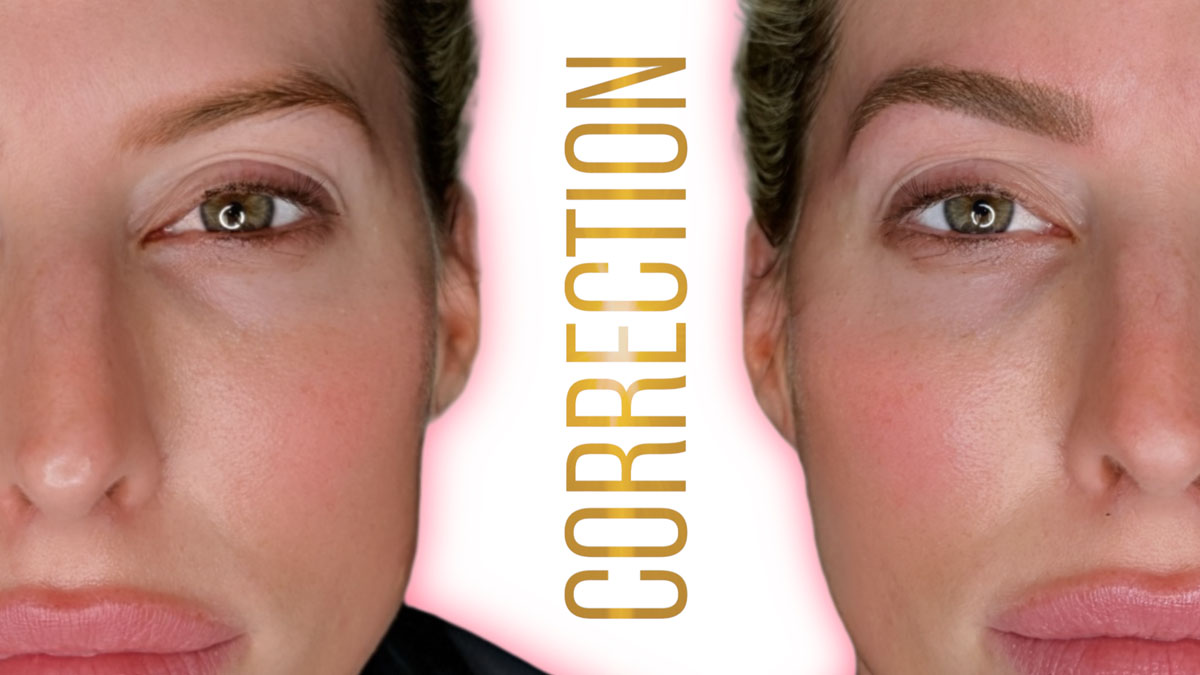
Microblading is built on individual strokes. Those strokes may look crisp at the beginning, but they do not all fade in exactly the same way. Over time, one part of a stroke may soften more quickly than another. One section may retain more visible color, while another fades more completely.
The result can be an uneven or patchy appearance, particularly as the brow moves further away from its original fresh stage.
This is one reason why soft shading and powder techniques often age more evenly. The pigment is distributed in a more uniform manner, which tends to produce a smoother fade over time.
This distinction is part of what makes technique selection so important long-term, as discussed in why experience and method matter in brow correction.
The Emotional Response to Color Change
The technical explanation is one part of the conversation. The emotional response is another.
When clients notice a shift in tone, there is often immediate concern. They assume something has gone wrong. They begin to question the original work, the pigment, the artist, or the entire process.
This reaction is understandable. Brows frame the face, and any visible change feels personal.
But often, what is needed first is not immediate treatment. It is understanding.
Once clients understand that color shift is part of the lifecycle of pigment, the panic tends to soften. The conversation becomes less reactive and more informed.
Why “Just Put Brown Over It” Is Not the Answer
This is where many people make the next mistake. They see a color change and assume the solution is simple: add more brown.
That is not how pigment correction works.
Color does not cover color. It blends with it.
If a brow has shifted grey and brown pigment is placed over it without correcting the undertone first, the result is not a fresh brown. It is a mixture of the existing cool tone and the new pigment. The same principle applies to warm or orange tones.
This is why repeated layering without correction often creates a heavier, less balanced result rather than an improved one.
The difference between true correction and simple layering is explained more clearly in this article on color correction as a normal part of the process.
Correction Is About Restoring Balance
Proper correction is not about placing more pigment over the top and hoping it resolves itself. It is about identifying what is missing in the current color balance and reintroducing that missing element strategically.
If the brow has shifted too cool, warmth may need to be reintroduced. If it has shifted too warm, cooler balancing tones may be required.
This is not guesswork. It is controlled color adjustment.
The goal is not simply to make the brow darker or fresher in the moment. The goal is to guide it back toward a more stable and believable tone.
Why Correction Requires a Different Technique
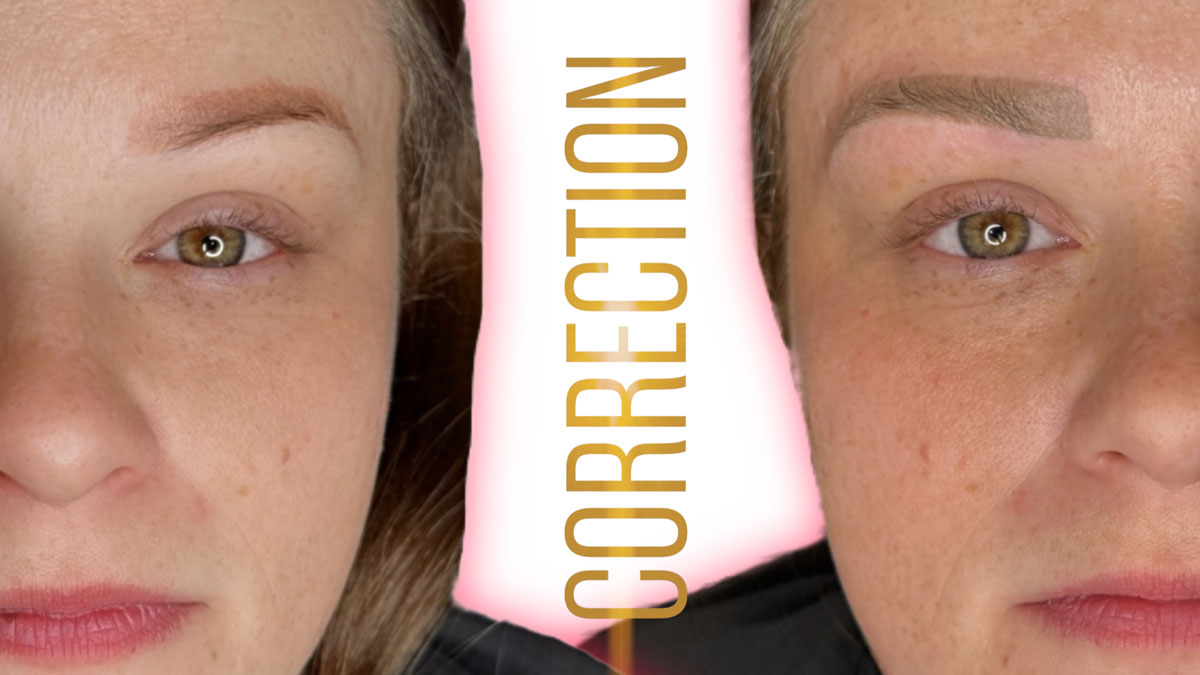
Once pigment has already aged in the skin, the correction approach must change.
At this stage, the issue is no longer stroke creation. It is tone management, blending, and control. That means the technique used to correct existing pigment should not simply mimic the original technique that was applied to untreated skin.
Correction is more precise. More layered. More selective.
It requires working with what is already there, not pretending it is not there.
This is exactly where many artists struggle, not because they lack talent, but because correction demands a different kind of judgment. That distinction is part of what is addressed in the hidden gaps in correction training and understanding.
Color Shift Is Not Failure
Perhaps the most important perspective shift is this:
Color shift does not mean the treatment failed.
It means the pigment has aged.
That may sound simple, but it changes everything. Once color change is understood as part of the natural lifecycle of pigment, it stops feeling like an unexpected problem and starts feeling like a phase that can be evaluated and managed correctly.
Brows are not static. Pigment is not permanent in its original visual form. Skin is not unchanging.
All three are in motion.
What This Means Long-Term
Long-term brow success is not about expecting pigment to remain exactly as it looked on day one. It is about understanding how it will evolve and working with that evolution intelligently.
That means:
- expecting change rather than fearing it
- recognizing color shift as normal
- choosing correction based on balance, not panic
- avoiding repeated layering without proper analysis
When these principles are understood, brow maintenance becomes far more controlled and far less reactive.
Final Thought
Color changes in the skin over time because pigment is made of multiple tones, and those tones fade at different rates within a living, changing medium.
That is the reality of semi-permanent makeup.
The most refined results do not come from ignoring that reality or trying to cover over it quickly. They come from understanding how pigment behaves, how the skin responds, and how balance can be restored when change inevitably occurs.
Once that understanding is in place, the process begins to feel exactly as it should: calm, controlled, and entirely manageable.