
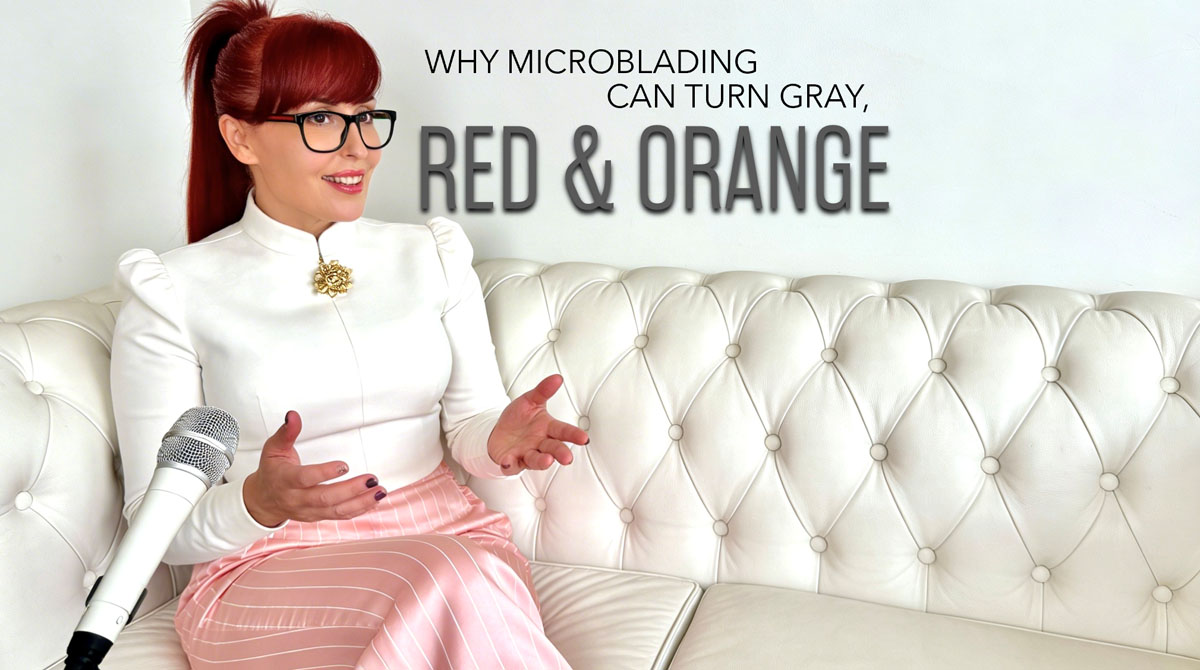
There is a moment almost every client experiences at some point after microblading. You look in the mirror and notice something has changed. The color is no longer the same. It may appear slightly grey, warmer than expected, or even take on a faint red or orange tone. The immediate assumption is that something has gone wrong. In reality, what you are seeing is not an error. It is the natural evolution of pigment in the skin.
Understanding this removes uncertainty and replaces it with clarity. It also explains why color correction is not a repair of failure, but a normal and expected phase in the life cycle of semi-permanent makeup. If you are unfamiliar with how this process unfolds over time, it is worth reviewing how eyebrow correction is approached as a structured process.
Pigment Does Not Remain Static
Microblading is often introduced through its initial result: crisp strokes, defined structure, and a natural hair-like appearance. That fresh result is accurate, but it is also temporary in its exact form. Once pigment is placed into the skin, it becomes part of a living system. Over time, the skin heals, regenerates, and slowly disperses that pigment. As this happens, the sharpness softens and the color evolves. This transition is not abrupt. It is gradual and continuous. What appears to be a sudden change is usually the result of months of subtle shifts becoming noticeable all at once.
Why Color Changes Occur
The most important concept to understand is that brown pigment is not a single color. It is a composite of multiple colors — red, yellow, and blue—blended to create balance. As the pigment ages, these colors do not fade evenly. Certain components break down faster than others, which alters the visual balance of the color remaining in the skin. Red brows rarely appear overnight—they’re usually the result of pigment chemistry, sun exposure, and natural fading, all of which are covered in our guide to eyebrow color correction.
When this balance shifts, underlying tones become more visible. This is why brows may appear cooler, warmer, or slightly different from their original color. This is not a flaw in the pigment. It is the predictable behavior of color over time. Examples of how these tones present can be seen in this breakdown of faded brow color changes.
The Role of Yellow in Fading
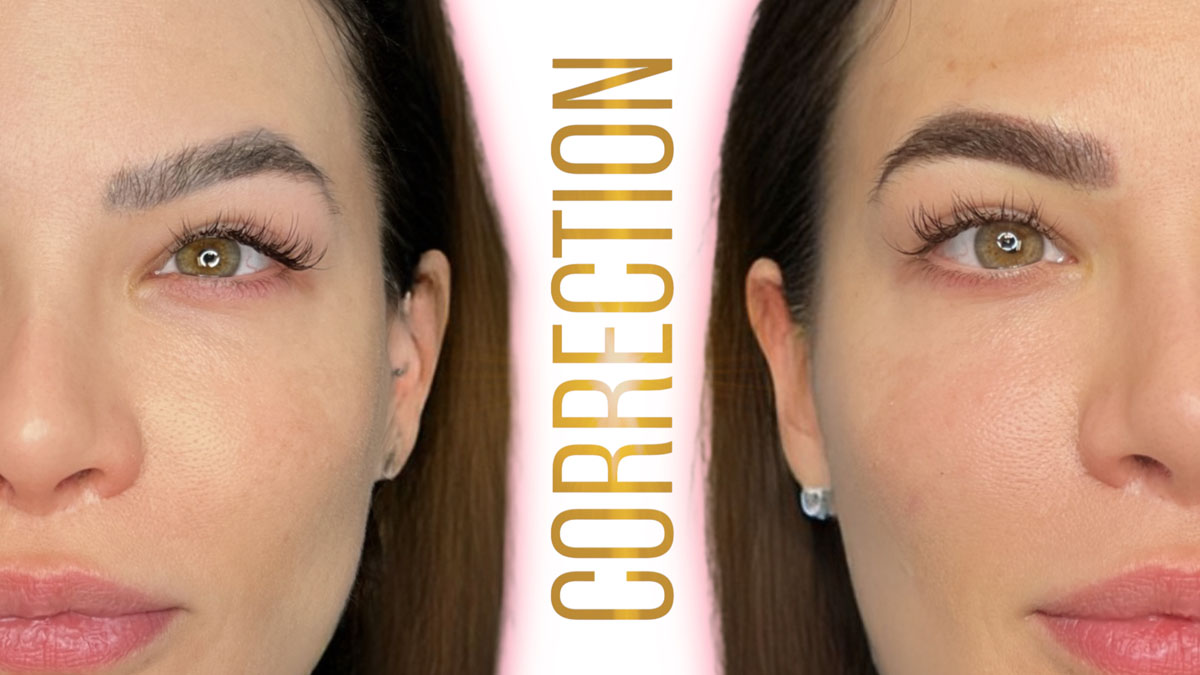
One of the most consistent patterns in pigment aging is that lighter components—particularly yellow—tend to fade more quickly. As yellow diminishes, the remaining colors become more dominant. Depending on the original formulation and how the skin has retained the pigment, this may present as a cooler grey tone or a warmer red or orange tone. This is why two individuals with similar starting colors can experience different results over time. The outcome is influenced by how each component fades within their skin.
Depth Influences Appearance
The depth at which pigment is placed also plays a significant role in how color is perceived as it ages. Shallower pigment tends to fade more softly and gradually. It often appears lighter and more diffused over time. Deeper pigment, by contrast, retains more intensity and may display stronger tonal shifts as it evolves. This can make color changes appear more noticeable, even though the underlying process is the same. Once the underlying cause has been identified, say red, red eyebrow tattoo correction can restore a far more natural-looking result. Many red brows also contain secondary color shifts, making microblading color correction an important part of long-term success. Understanding this distinction is essential when evaluating why one set of brows appears to have changed more dramatically than another.
Skin Type and Environment
No two individuals will experience identical results, even when the same technique and pigment are used. Skin type, oil production, lifestyle, and environmental exposure all influence how pigment behaves. Oilier skin tends to diffuse pigment more quickly, which softens definition and can accelerate the appearance of color change. Sun exposure and active skincare can also contribute to faster fading.
These variables do not indicate a problem. They simply mean that pigment responds differently depending on the conditions it exists within.
Technique and Long-Term Outcome
Technique plays a foundational role in how pigment ages. Consistent depth and controlled application create more predictable results over time. When depth varies or pressure is inconsistent, pigment may settle unevenly. As it ages, these variations can become more visible, presenting as patchiness or subtle differences in tone. This does not necessarily mean the work has failed, but it does affect how the brow evolves and how correction may need to be approached later.
Why Adding More Brown Is Not the Solution
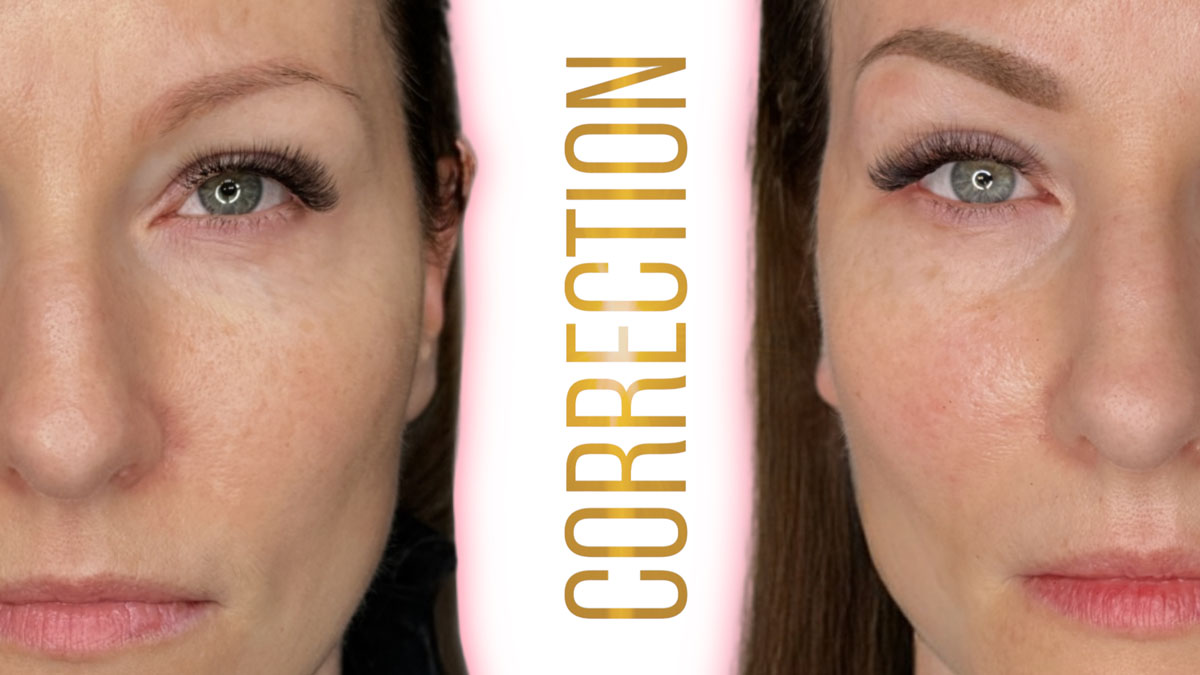
A common misconception is that faded or discolored brows can simply be corrected by applying more brown pigment. This approach does not produce the intended result because pigment does not replace what is already in the skin. It blends with it. For example, applying brown over a cool grey base does not restore a true brown. It creates a mixture of tones that can appear muted or imbalanced. This is why color correction must be approached methodically.
What Correction Actually Involves
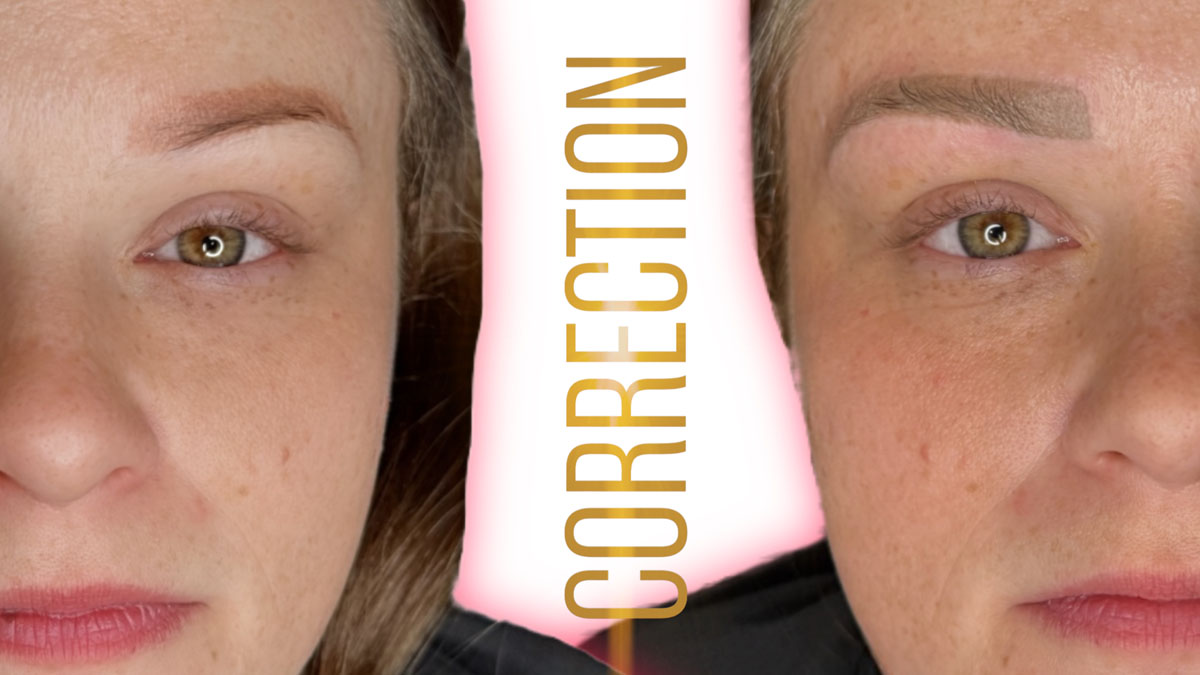
Correction is not about covering previous work. It is about understanding the current state of the pigment and adjusting it strategically. If the brow has shifted too cool, warmth is reintroduced in a controlled manner. If it has shifted too warm, cooler tones are used to rebalance it. This process is layered and intentional. It is guided by color theory, but more importantly, by experience and observation. In certain cases, warm pigments continue shifting until they become noticeably orange, requiring techniques used for orange eyebrow tattoo correction.
Why Repeating Microblading Is Not the Answer
Once pigment has settled and evolved, the brow is no longer a clean canvas of individual strokes. It has become a base of color within the skin. Attempting to recreate strokes over this base does not restore the original effect. Instead, it adds density and can reduce clarity. Correction at this stage requires a different approach—one that focuses on color correction, structure, and controlled layering rather than repetition of the original technique.
How Brows Become More Complex Over Time
Brow complications rarely occur from a single treatment. They develop gradually through repeated layering without adjustment. When pigment is added without addressing existing color shifts or density, the result can become heavier, less defined, and more difficult to refine. This is often the point at which clients feel their brows no longer look balanced. Not because of one decision, but because multiple small decisions have accumulated over time.
Correction as a Structured Process
The key distinction between standard brow work and correction is that correction does not repeat the same process. It evaluates, adjusts, and builds strategically. Each step is based on what is already present in the skin. This is why experience plays a significant role in outcomes. The ability to assess and adapt is what defines effective correction, and is why experience matters in brow correction.
The Life Cycle of Pigment
All pigment follows a life cycle. It is placed, it settles, it softens, and it changes. Fading does not mean disappearance. It means evolution. Over time, every set of brows becomes a version of aged pigment. Correction is not an exception to the process—it is part of it.
Final Answer
Microblading turns grey, red, or orange because pigment breaks down over time, and its components fade at different rates. The tones that remain become more visible as balance shifts within the skin. This is expected behavior, not an indication of failure. When color changes occur, the goal is not to cover what is there, but to understand it. With the right approach, balance can be restored and the brow can be guided back to a natural, stable result. This is the foundation of correction—not reacting to change but working with it in a controlled and informed way.